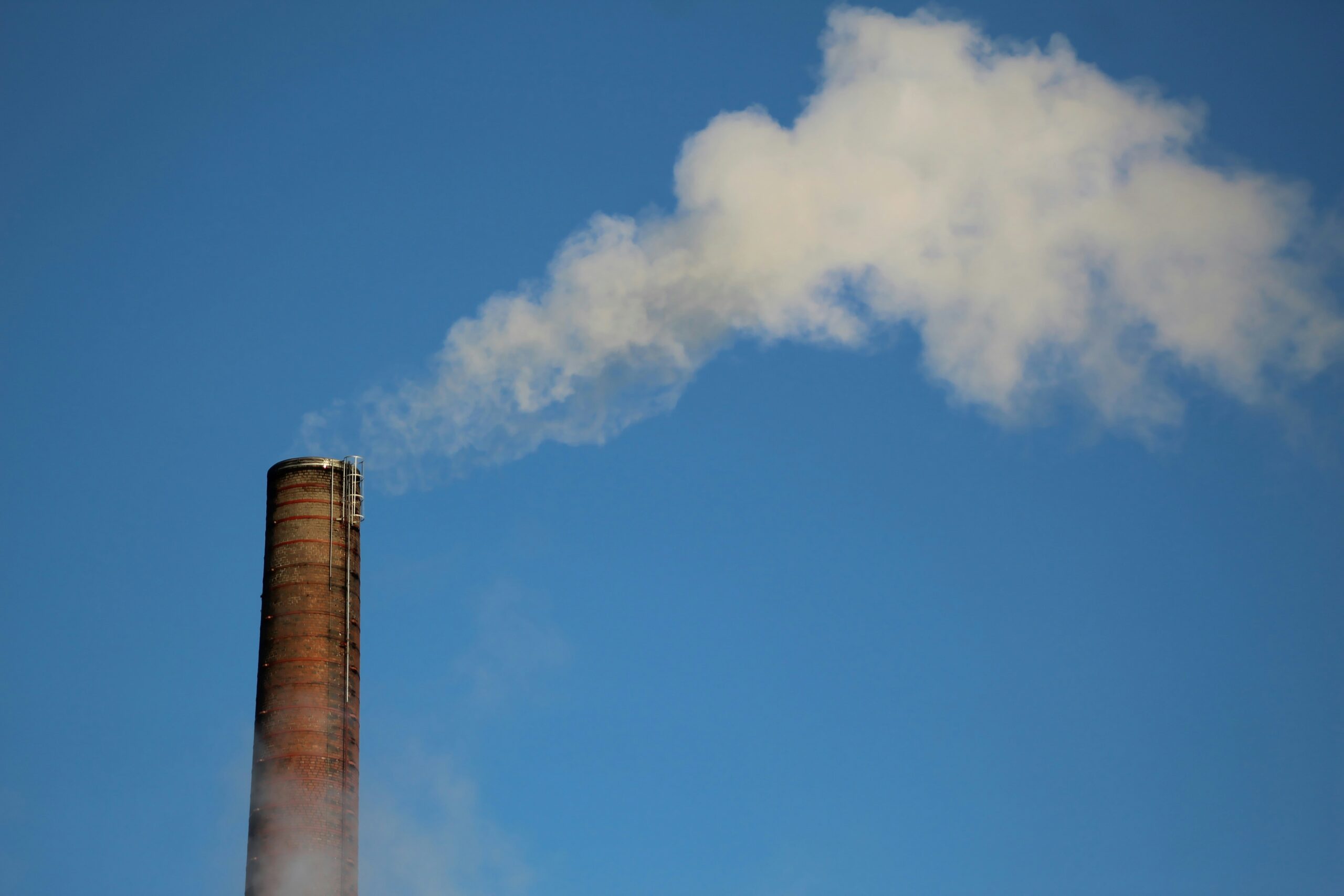
Broad coalition of groups condemns illegal inaction, puts EPA on legal notice.
WASHINGTON, D.C. — February 11, 2026
The Trump administration’s Environmental Protection Agency (EPA) has failed to meet a Feb. 7 deadline to designate areas in violation of the strengthened 2024 national air quality standard for soot, as required under the Clean Air Act. These designations are the first step toward bringing dangerous soot pollution levels down into compliance with that health-based standard, which the EPA projects will save thousands of lives annually.
Yesterday, nearly 20 health, community, and environmental groups around the country officially put the EPA on notice of their intent to pursue legal action unless the EPA issues the overdue designations.
“The EPA’s inaction isn’t just illegal; it’s a reckless forsaking of human health,” said Seth Johnson, senior attorney at Earthjustice. “The 2024 soot standard is the law, supported by EPA’s own scientific evidence, so this is an indefensible move. It is absolutely EPA’s legal responsibility to designate the areas that are not in compliance so that they can start taking the commonsense steps the Clean Air Act requires to ensure all Americans breathe clean air. Implementing the 2024 standard is not about assigning blame, it’s about saving lives.”
Last year, EPA reversed course and asked a federal court to strike down the updated National Ambient Air Quality Standard limit for PM2.5, also known as soot, which EPA strengthened in 2024. The rule requires reductions in the amount of deadly pollution in the air people breathe to protect people’s health. The EPA did not dispute the overwhelming scientific evidence supporting the more protective standard and projects the 2024 standard will save 4,500 lives in 2032 alone.
“As physicians, nurses and respiratory therapists who treat patients with lung disease, we know air pollution kills,” said Dr. Alison Lee, MS, ATSF, chair of the American Thoracic Society Environmental Health Policy Committee. “Exposure to particulate matter pollution triggers asthma attacks, chronic obstructive pulmonary disease exacerbations, heart attacks, emergency room visits, hospitalizations, and premature death. The EPA has a duty to protect the American public from the dangers of air pollution by ensuring all communities meet the existing pollution standards.”
Health, environmental, and community groups, along with a coalition of states led by California, have asked the federal court to uphold the 2024 standard. The case is pending, and the 2024 soot standard remains in effect.
The Clean Air Act requires EPA to designate areas that are in violation of the standard as “nonattainment” and put them on a path to clean air, but the agency has failed to do so by the legally required deadline. The most recent official data shows over 75 million people live in counties that have air quality that violates the 2024 soot standard. Read more about Earthjustice’s analysis of EPA’s failed implementation.
Soot pollution stems largely from burning fossil fuels for electricity, manufacturing, transportation, and agriculture. It causes premature death and is further linked to cancer, asthma attacks, and hospitalizations and emergency room visits for severe heart and lung diseases.
See national data on soot and smog pollution.
The groups sending the letter announcing possible legal action are Alliance of Nurses for Healthy Environments, American Lung Association, American Public Health Association, American Thoracic Society, Center for Biological Diversity, Northeast Ohio Community Resilience Centre (Cleveland, OH), Rio Grande International Study Center (Laredo, TX), RiSE4EJ (Kansas City, KS & MO), and Sierra Club, all represented by Earthjustice; NRDC (Natural Resources Defense Council); Environmental Defense Fund; Citizens for Pennsylvania’s Future, Clean Air Council, Conservation Law Foundation, and Michigan Environmental Council, all represented by Clean Air Task Force; and CleanAIRE NC, Savannah Riverkeeper, and Georgia Interfaith Power & Light, all represented by Southern Environmental Law Center.
“By failing to make timely designations, EPA has once again failed to take mandatory action to safeguard public health under the Clean Air Act and instead subverts its obligation to regulate air pollution and hold polluters accountable,” said Hayden Hashimoto, attorney at Clean Air Task Force. “EPA’s own findings show that reducing soot pollution would save thousands of lives, yet the Trump administration’s EPA has ignored the science in its efforts to dismantle Clean Air Act regulations. EPA’s inaction blatantly disregards the law it claims to be following – and our communities will suffer.”
“The 2024 PM2.5 standard represents a step towards stronger public health protections, especially for communities who are disproportionately harmed by continuous exposure to particulate matter. Delaying designations puts Midwest communities that need it the most at continued risk and represents a step backwards for ensuring that no community, and no child, is left to breathe unhealthy air regardless of their zip code,” said Beto Lugo Martinez, of RiSE4EJ, a Kansas City-based group.
“Nurses witness firsthand the toll that air pollution, especially particle pollution, has on people’s health,” said Katie Huffling, DNP, RN, CNM, FAAN, executive director of the Alliance of Nurses for Healthy Environments. “Nurses advocated for a strong and health protective PM2.5 standard because the science is clear – soot pollution harms health. It is critical that EPA fulfill its legal obligation to protect communities across the country from hazardous air pollution.”
“Particle pollution kills thousands of people in the United States each year,” said Harold Wimmer, president and CEO of the American Lung Association. “The Lung Association and other health organizations championed these limits on soot because the science is clear: they will save lives and prevent asthma attacks. But that promise is only fulfilled if EPA does its job and ensures that places with unhealthy levels of soot put in place measures to clean it up. EPA’s failure to take this step on time means people will suffer health harms that should have been prevented.”
“Particulate matter pollution can cause asthma attacks, chronic obstructive pulmonary disease exacerbations, heart attacks, strokes, lung cancer and premature death. It can harm even the healthiest, but millions of individuals across the U.S. are at greater risk if they have respiratory disease or are one of the nearly 25 million Americans with asthma. PM exposure also disproportionately impacts the health of low-income and minority communities, who often live near polluting sources,” said Dr. Georges C. Benjamin, executive director of the American Public Health Association. “EPA must act now to designate areas that are not meeting the 2024 standards and hold them accountable to protect the public’s health.”
“Every day of the Trump EPA’s illegal delay is another day that over 75 million people across the country are exposed to soot pollution that kills, causes cancer, and chokes lungs,” said Ryan Maher, a staff attorney at the Center for Biological Diversity. “Instead of shielding children, the elderly and pregnant people, who are all especially vulnerable to soot pollution, the EPA is protecting only the profits of the industries creating the filthy air.”
“Trump’s EPA is trying to weaken a life-saving health standard and keep the public in the dark about where the air is unsafe — so polluters can dodge the cleanup the law requires,” said John Walke, senior attorney and director of federal clean air at NRDC. “That’s like disabling the smoke detector and telling families to sleep through the danger.”
“EPA’s attempt to delay or dodge its obligation to give states the tools they need to reduce deadly soot pollution puts Southern communities at even greater risk, especially communities of color and those living below the poverty line often surrounded by industry,” said Caroline Cress, senior attorney for the Southern Environmental Law Center. “Cities including Atlanta, Augusta, and Charlotte can’t afford for EPA to continue to push off designating these areas where people are already suffering from the serious health risks of breathing unhealthy air.”
“The Clean Air Act is not a suggestion; it is a mandate to protect the very air we breathe,” said Jeffrey Robbins, executive director of CleanAIRE NC. “By missing this deadline, the EPA is effectively choosing to leave millions of Americans in the dark about the safety of their air while delaying the urgent work of reducing deadly soot pollution.”
“Augusta communities have some of the highest asthma rates in the nation, and our health suffers because of poor air quality,” said Tonya Bonitatibus of Savannah Riverkeeper. “Instead of protecting human health, EPA is catering to industry and ignoring the very real risks communities are facing. Our children’s health and ability to breathe should take priority over industry saving money on air quality control controls.”
“EPA’s delay is unlawful and deadly,” said Rachel Briggs, staff attorney at Conservation Law Foundation. “Soot pollution kills, and every day the agency fails to act is another day communities are left unprotected. The law is clear, the science is clear, and EPA must do its job.”
“When people inhale soot, the particles are so small that they can pass through the lungs directly into a person’s bloodstream,” said Lawrence Hafetz, legal director of Clean Air Council. “The EPA ignoring its duty to identify areas with illegally high soot levels means more unnecessary funerals, heart attacks, and cardiovascular disease, as well as more children sickened with asthma.”
“Delaying action on deadly soot pollution is a moral and regulatory failure that puts communities of color and vulnerable families at greater risk,” said Codi Norred, executive director of Georgia Interfaith Power & Light. “Caring for our shared Sacred Earth means ensuring that no one is forced to sacrifice their health just to breathe. Everyone deserves the right to clean air.”
“Soot is one of the deadliest types of pollution, and it puts people across the country at increased risk of serious illnesses and early deaths,” said Richard Yates, clean power attorney at Environmental Defense Fund. “EPA’s designation of areas is essential to efforts to limit this pollution in the air we breathe. But EPA has now entirely failed to make any designations – leaving numerous counties with unhealthy levels of soot. EPA must take the actions required by law to protect communities nationwide from this dangerous pollution.”

Philadelphia, PA (December 18, 2025) – Clean Air Council, PennFuture, and Sierra Club appeal Homer City gas plant air quality plan approval no. 32-00457A, issued by the Pennsylvania Department of Environmental Protection (“the Department”) last month.
On November 18, 2025, the Department issued an air quality plan approval for the Homer City Redevelopment project, paving the way for what would be the nation’s largest fracked gas power plant to open in Pennsylvania. Although a plant that size could produce enough electricity to power over three million homes, this plant is being built for a 3,200-acre AI data center campus. Local communities would suffer the consequences of increased air pollution, noise, odors, and compromised drinking water with minimal return benefits. Additionally, each year the plant operates, the toxic air pollution it spews could cause the premature deaths of dozens of people across the country and millions of dollars in health costs. The effect of the climate pollution it emits would likely contribute to the deaths of additional thousands of people globally by the end of the century for each year the plant operates, caused by the increased global heating. This unlawful permit was issued in spite of 571 comments submitted by the public, strongly opposing (and identifying significant errors in) the proposed plant’s draft plan approval.
Clean Air Council, PennFuture, and Sierra Club have filed a Notice of Appeal with the Pennsylvania Environmental Hearing Board challenging errors in the plan approval, including violations of the Clean Air Act, the Air Pollution Control Act, Pennsylvania’s Environmental Rights Amendment (Article 1, Section 27 of the Pennsylvania Constitution), and the Department’s own Environmental Justice Policy.
“We will not stand by idly while our government greenlights a devastating and illegal toxic data center power plant,” said Alex Bomstein, Clean Air Council Executive Director. “The people of Indiana County are rising up to say no to job-killing data centers and their private power plants, and Clean Air Council is proud to stand arm-in-arm with them.”
“Building the country’s largest fracked-gas power plant to generate electricity primarily for AI data center operations runs entirely counter to the goal of moving towards the clean energy economy Pennsylvanians want and deserve,” said Jessica O’Neill, PennFuture’s Managing Attorney for Litigation. “In issuing this permit, DEP has failed to fulfill its obligations under Pennsylvania’s Environmental Rights Amendment, as well as its obligations to consider and work to minimize the climate change consequences of electrical power generation.”
Local residents express support for this lawsuit:
“As members of Concerned Residents of Western PA (CROW), an area group opposed to the planned power plant in Homer City, we fully support the legal appeal by the Clean Air Council, PennFuture, and Sierra Club challenging the air permit recently granted by DEP to the Homer City Redevelopment LLC. Given that the plant will have long-lasting and devastating impacts on our region’s environment, we are grateful for the legal action by the Clean Air Council, PennFuture, and Sierra Club. This appeal will help to ensure that project developers act in the public interest to follow air quality standards intended to protect our health and the future of our community,” said Concerned Residents of Western PA (CROW).

July 29, 2025 – It seems like no matter how you’re using technology these days, artificial intelligence (AI) is lurking nearby: in a search result, in a navigation menu, or even popping up as a chatbot with a human name. Tech companies are promising a brighter future fueled by AI and investors are buying the hype, literally: during the first quarter of 2025, 57.9% of global venture capital investments went to AI and machine learning.
But what are users getting in return? As society seemingly jumps into the deep end of the AI pool, we need to understand the harms it’s inflicting on the world.
AI Needs Huge Data Centers to Run, And They Are Major Polluters
The data centers that power AI models and their tools (sometimes called hyperscale data centers) require an immense amount of power because every prompt or task requires supercomputers to complete countless calculations. That’s much different than traditional computing or how a search engine works, for instance. As MIT News reports, “researchers have estimated that a ChatGPT query consumes about five times more electricity than a simple web search.”
This demand for electricity is rising at four times the rate of the overall rise in consumption and, according to one report, is expected to equal that of the entire country of Japan by next year. The power plants that provide the electricity often burn fossil fuels to create it, emitting lots of harmful pollution along the way. Research by Morgan Stanley projects that data center emissions globally will be 2.5bn metric tons of CO2 equivalent by 2030 – that’s like adding an extra 116 million gasoline cars to the road each year.
Take, for example, the case of Memphis, Tennessee and Elon Musk’s xAI. The Tennessee Lookout reports, “The facility’s behemoth methane gas turbines increase Memphis’s smog by 30-60% as they belch planet-warming nitrogen oxides and poisonous formaldehyde around the clock, pollutants linked to respiratory and cardiovascular disease.”
Despite touting commitments to reduce the carbon emissions which are baking our planet, major tech companies have actually been increasing their emissions due to their expanding AI programs. Between 2020 and 2023, the emissions of Amazon, Alphabet (Google), Meta, and Microsoft have each increased, on average, by 150%.
They Strain Our Already-Strained Energy Grid
The Energy Department has reported that AI could suck up 12% of the U.S. energy supply by 2028. Meanwhile, the general rise in consumption has strained much of the world’s energy infrastructure already while we struggle to build out renewable alternatives that protect the planet. Meeting the sudden increased demand of these data centers not only sets back the climate goals of tech companies, it sets back progress around the world.
“It’s not sustainable to keep building at the rate [Google is] building because they need to scale their compute within planetary limits,” one researcher told The Guardian. “We do not have enough green energy to serve the needs of Google and certainly not the needs of Google and the rest of us.”
Similarly, another researcher told MIT News, “The demand for new data centers cannot be met in a sustainable way. The pace at which companies are building new data centers means the bulk of the electricity to power them must come from fossil fuel-based power plants.”
This surge in growth is already impacting how the rest of us receive energy. A 2024 Bloomberg report found data centers are “distorting the normal flow of electricity for millions of Americans,” which stresses power grids and can damage home appliances and power equipment. The scale of these operations means that when things go wrong, they can go really wrong, putting entire regions at risk of power outages.
They Soak Up Water Like a Giant Sponge
Energy isn’t the only resource AI depends on. If you’ve ever heard a laptop fan turn on or felt a phone warm up after hours of scrolling, you already understand the basics of why data centers also require immense amounts of water. When supercomputers parse through user prompts and train new models, they heat up. To cool them, many data centers run cold water through pipes.
When tech companies seek sites for their facilities, “Because electricity is more costly for data centers than water, companies often prioritize building their facilities in places with cheap power, even if the area is drought stricken. That has exacerbated water shortages across the world,” a Stanford hydrologist told The New York Times.
Their water consumption makes these sites particularly bad neighbors. The New York Times also reports that in areas with data centers “local wells have been damaged, the cost of municipal water has soared and the county’s water commission may face a shortage of the vital resource.” This has done so much damage in Newton County, Georgia, for example, that it’s on track to be in a water deficit by 2030.
Supercomputers Aren’t for “Super Users.” They’re Meeting Our Demand
Make no mistake: this massive energy consumption is not only fueling industrial and commercial-scale AI projects. Every instance of generative AI, including public-facing tools, contribute to this waste.
The International Energy Agency recently studied the impacts of individual user actions. They estimate that the power required to generate a large amount of text is equivalent to running an LED bulb for an hour, and that the power required to create an eight-second video is equivalent to charging a laptop twice. Another study indicated that text generation (like what ChatGPT does) “used 10 times as much energy compared with simple classification tasks like sorting emails into folders.”
It’s no secret that generative AI models frequently “hallucinate” by making up information or otherwise answering queries incorrectly. If you do want the right answer, it turns out sustainability is a significant trade-off. One study found that more accurate (and thus more complex) models produced as much as three times more emissions.
And public AI tools are popular. A 2023 study found that 1 in 4 Americans say they use AI several times a day and another 28% say they use it about once a day. ChatGPT has 400 million weekly active users. That is a lot of energy consumption, and a lot of pollution.
In the end, fighting the climate crisis is a systemic and collective issue requiring systemic and collective solutions. Plus, tech companies are making it harder and harder to opt out of AI. But as with any system, individual choice does play a role and widespread adoption of resource-intensive, polluting products instead of existing, efficient tools is a big part of the problem.
The “AI revolution” is not inevitable, despite what public figures would like us to think. Any major shift in technology requires public buy-in. It is up to us all to demand a future that allows us to take advantage of progress without compromising the environment.
PHILADELPHIA, PA (June 27, 2024) – Today, the U.S. Supreme Court issued a ruling in Ohio v. EPA stalling the U.S. Environmental Protection Agency’s Good Neighbor Plan. The Good Neighbor Plan protects air quality by requiring 23 upwind states to reduce emissions of air pollutants that are contributing to dangerous ozone pollution levels in downwind states. Ozone pollution can worsen health issues like asthma, bronchitis, and emphysema, and cause premature death. As part of the Good Neighbor Rule, states must file plans indicating how they would meet these standards and reduce air pollution traveling to other states. In 2023, EPA found that the plans submitted by several states were insufficient, and so EPA fulfilled its obligation to generate a plan those states must follow to meet the standards and reduce the harm they are inflicting on residents of downwind states. Big polluters and certain states had asked that the courts put the Plan on hold.
Alexander G. Bomstein, Esq., Clean Air Council Executive Director issued the following statement:
“This ruling is a victory for corporate greed at the expense of human life. As Clean Air Council and other environmental advocates argued to the Supreme Court, the Good Neighbor Plan ‘ensure[s] upwind power plants and other large industrial facilities take reasonable measures to eliminate dangerous ozone emissions that significantly contribute to air quality problems in other States.’ EPA estimated the benefits of the Plan at $200 billion, mostly through lives saved and illnesses avoided. Putting this plan on hold at a time when fossil fuel air pollution is causing one in five deaths worldwide shows a callous disregard for all of our lives.”
PENNSYLVANIA (June 21,2024) – The U.S. Environmental Protection Agency (EPA) and U.S. Department of Energy (DOE) announced today, June 21, the availability of $850 million in funding for projects led by agencies, tribes, states, communities, and industry that will monitor and reduce methane emissions from the oil and gas sector. Potentially-funded projects can help small operators monitor methane emissions so that leaks can be better quantified and repaired in a timely manner. The funding will also aim to create collaborative monitoring efforts between frontline communities and equipment providers, so that impacted residents will have better access to empirical data and a role to play in the air monitoring process. Overall, this funding will help states and tribes reduce methane emissions to comply with the waste emissions charge and the U.S. EPA methane rule published this past spring.
This announcement is part of EPA’s Methane Emissions Reduction Program (MERP), which was authorized under the Inflation Reduction Act of 2022. MERP provides financial and technical assistance as well as new regulations that will reduce pollution – including greenhouse gases such as methane, volatile organic compounds, and hazardous air pollutants – from the oil and gas sector. The funding made available today will build on the $350 million awarded to states last December, of which Pennsylvania received nearly $44.5 million for the plugging and monitoring low-producing conventional wells.
Matt Walker, Clean Air Council Advocacy Director issued the following statement:
“President Biden has already taken serious policy actions that will guide Pennsylvania and other states to significantly cut methane pollution from the oil and gas industry to help meet our climate goals. Today’s funding announcement builds on those solid policies with major investments for cutting edge methane-reducing technologies, and air monitoring that will provide accurate data to frontline communities. These efforts will better protect the health of Pennsylvania residents and help curb climate change.”
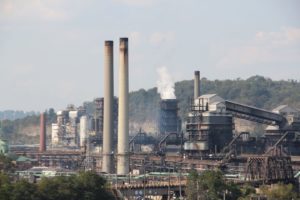
PENNSYLVANIA (March 26, 2024) Today, federal Judge Hardy signed the proposed consent agreement between Clean Air Council, PennEnvironment, and U.S. Steel. This is the final step in finalizing this historic consent decree and citizen suit penalty against U.S. Steel for their ongoing air pollution violations due to power outages at the Clairton Coke Works. The agreement mandates that U.S. Steel will pay a $5 million penalty — by far the largest in a Clean Air Act citizen enforcement suit in Pennsylvania history, and one of the three largest ever nationally. Most of the penalty money ($4.5 million) will fund public health projects directly benefiting Mon Valley communities suffering from poor air quality near the three U.S. Steel plants.
Clean Air Council Executive Director Alex Bomstein issued the following statement:
“Today marks a historic step forward in protecting Mon Valley residents from harmful pollution. It is a huge win that Judge Hardy has approved this settlement without changes and that it now has the power of the court behind it. This landmark agreement will go a long way in funding much-needed public health projects and holding U.S. Steel accountable for their operations.”
Read the original blog post when we proposed this historic consent agreement settlement.
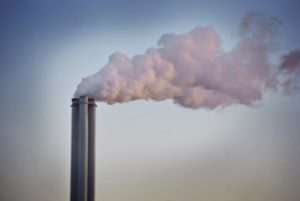
$42 million settlement of Clean Air Act enforcement suit will upgrade Clairton plant, reduce emissions, create public health funds
PITTSBURGH – The statewide environmental groups PennEnvironment and Clean Air Council announced Friday that they will file in U.S. District Court on Monday a proposed consent decree in settlement of their Clean Air Act lawsuit against United States Steel Corporation. If the court, as expected, approves the $42 million agreement, it would resolve a case alleging thousands of violations of air pollution standards that stemmed from a catastrophic 2018 fire and subsequent pollution control system breakdowns at the company’s three Mon Valley Works facilities: the Clairton Coke Works and the Edgar Thomson and Irvin steel mills.
The agreement mandates that U.S. Steel will pay a $5 million penalty — by far the largest in a Clean Air Act citizen enforcement suit in Pennsylvania history, and one of the three largest ever nationally. Most of the penalty money ($4.5 million) will fund public health projects directly benefiting Mon Valley communities suffering from poor air quality near the three U.S. Steel plants.
“Clean air is a right, not a privilege, for all Pittsburghers,” said David Masur, executive director of PennEnvironment, the citizen-based non-profit and state group for Environment America. “This historic announcement shows that we will not sit by while illegal air pollution rains down on nearby communities and the Pennsylvanians who live in them.”
The settlement also includes approximately $37 million worth of pollution control and plant reliability upgrades to prevent future breakdowns of essential pollution control systems. To further reduce toxic emissions, U.S. Steel must permanently close more than 10% of the pollution-spewing coke ovens used to process coal used in steel-making.
“This settlement will achieve the three objectives we had when we filed this case,” said Alex Bomstein, Clean Air Council Legal Director. “First, U.S. Steel must upgrade the aging Clairton Coke Works to reduce toxic emissions and prevent future breakdowns; second, the company must pay a substantial monetary penalty to deter future violations; and third, most of that penalty money will directly benefit the communities suffering from poor air quality near U.S. Steel’s Mon Valley facilities.”
U.S. District Judge W. Scott Hardy cannot approve the settlement until a legally required 45-day waiting period ends. Attorneys for the groups say that the announced sale of U.S. Steel to Nippon Steel Corporation will not affect the settlement. The agreement expressly states that any sale of the company requires the purchaser to agree to assume all outstanding terms, conditions and obligations of the proposed consent decree.
The suit, in which the Allegheny County Health Department (ACHD) intervened as a co-plaintiff, was filed in response to 102 consecutive days of massive, illegal emissions of sulfur dioxide and hydrogen sulfide after a catastrophic fire at the Clairton Coke Works on Christmas Eve in 2018. That blaze, caused by corroded equipment and defective safety systems, knocked out several essential pollution controls at Clairton, which the Irvin and Edgar Thomson steel mills also rely on – yet U.S. Steel continued to run those plants without these legally mandated controls. Violations caused by two subsequent breakdowns at the Clairton Coke Works, in June 2019 and July 2022, were also included in the suit.
The terms of the proposed settlement agreement include:
- The aforementioned $37 million worth of improvements. U.S. Steel spent $17.5 million to replace deteriorating equipment and dramatically upgrade preventive maintenance programs after this suit was filed, and must now complete two additional capital projects, costing approximately $19.5 million, to prevent pollution control outages.
- Payment of $5 million, split between ACHD, the Jefferson Regional Foundation, and Allegheny County Department of Economic Development. The latter groups must use their combined $4.5 million portion exclusively to fund public health programs and air quality improvement projects in the Mon Valley communities affected by U.S. Steel’s emissions.
- U.S. Steel must pay automatic penalties for any future pollution control system outages, no matter the cause. These penalties increase with the seriousness and duration of an outage, to as much as $112,500 per day.
- U.S. Steel must accept more stringent permit limits on the allowable amount of hydrogen sulfide in the treated coke oven gas it uses as fuel.
- U.S. Steel must permanently shut down coke oven Battery 15, which consists of 60 highly polluting ovens – more than 10% of the remaining coke ovens at Clairton Works.
The federal Clean Air Act authorizes private citizens affected by violations of the act to sue violators directly, and to seek civil penalties and court-ordered compliance orders when government regulators have not done so. A separate class action lawsuit, seeking damages on behalf of roughly 100,000 Mon Valley residents for exposure to the excess pollution following the 2018 fire, is currently being litigated in state court.
“The Clean Air Act was created to protect people from threats to the quality of their air, which, in turn, often negatively affect their quality of life,” said Douglas H. Phelps, chair of Environment America’s board of directors. “Our goal with this case was not only to hold U.S. Steel accountable for its illegal pollution, but also to protect people well beyond the Mon Valley by creating an incentive for other polluting companies to keep their neighbors safe.”
Clairton Coke Works and the Edgar Thomson steel mill have long been a focus of the regional environmental community. PennEnvironment Research & Policy Center ranked the Clairton Coke Works as Allegheny County’s worst air polluter in its 2023 “Toxic Ten” study because the facility released more than 1.1 million pounds of toxics to the county’s air in 2021. The Edgar Thomson mill was the only non-power plant ranked in PennEnvironment Research & Policy Center’s “Dirty Dozen” list of Pennsylvania’s top climate-polluting facilities.
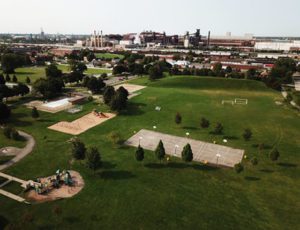
HARRISBURG, PA (October 30, 2023)– Today, a number of speakers from environmental and public health organizations, as well as academia and industry gave testimony about House Bill 170 to members of the House Environmental Resources and Energy Committee and the public. In HB 170, a setback or buffer refers to the minimum required distance between various oil and gas industry infrastructure, like fracking wells, a specific use (shale gas well pad) and an existing structure, boundary, natural resource, or any other area that needs protection in the interest of health, safety, and the general welfare of the public. Five speakers called for increased protective buffers, or setbacks, from oil and gas infrastructure. The two industry-related speakers were not supportive of the current bill, but were open to further discussions about increased setback distances. Right now, oil and gas infrastructure is allowed within an easily waived 500 feet of homes, schools, and buildings, but testifiers supported House Bill 170 and recommended that operations be moved back to at least 2,500 feet between unconventional wells and buildings, as well as greater distances for schools, nursing homes, hospitals, and places that serve people with intellectual or developmental disabilities. Twenty Pennsylvania environmental and health organizations submitted a written comment supporting the bill. The Protective Buffers Coalition, comprised of some of those same organizations, have long called for even greater distances and setbacks and from additional gas-related infrastructure.
“There is broad support for increased setback distances between gas infrastructure and Pennsylvania residents,” said Lois Bower-Bjornson, Washington County Resident, Clean Air Council. “A 2021 poll conducted by Data for Progress showed that Pennsylvanians support increased setback distances between gas infrastructure and homes, schools, hospitals, childcare centers, and other residential buildings by a 60% margin. Since 2021, Clean Air Council and partners have assisted 4,392 Pennsylvania residents in expressing their support for increased setbacks to their local elected officials.”
Recent health studies found that people living in close proximity to oil and gas infrastructure are at risk for a host of health issues including cancer, respiratory disease, low birth weight, and cardiovascular disease. By creating larger setbacks, or buffers, Pennsylvanians will be protected from harmful pollutants like benzene, hydrogen sulfide, and carbon disulfide.
“It’s clear that a 500 foot buffer from homes, childcare centers, schools, businesses, hospitals, and nursing homes is way too small, said Ned Ketyer, MD, President of Pennsylvania Physicians for Social Responsibility. “Increasing the distance between the activity and where people (especially children) live, work, learn, and play is only one step, but an important one, to protect the health of Pennsylvanians from dangerous fracking emissions consisting of fine particulate matter (PM2.5), volatile organic compounds (VOCs like benzene, toluene, and formaldehyde), ozone-forming nitrogen oxides, heat-trapping methane, radon gas, and many other toxics.”
“We observed elevated odds of cancer associated with UOG (unconventional oil and gas) activity within 2 km (more than 6,560 ft), which far exceeds any existing setback distance,” said Cassandra Clark, PhD, Postdoctoral Fellow, Yale School of Public Health. “Further, although effect sizes diminished with increasing buffer size, the odds of developing ALL (acute lymphoblastic leukemia) were still elevated for children living within 5 and 10 km of UOGD. Our results in the context of the broader environmental and epidemiologic literature suggest that existing setback distances are insufficiently public health protective, particularly for vulnerable populations like children, and should be revisited and informed by more recent data.”
“The optical gas imaging footage Earthworks has captured shows air pollution from unconventional oil and gas development regularly goes beyond facility fencelines,” said Melissa Ostroff, MPH, Earthworks Pennsylvania Policy and Field Advocate. “While this pollution is not visible to the naked eye, our camera provides visual evidence that communities living in close proximity to well pads and other fracking infrastructure are breathing in pollution from the industry. Policymakers must take this reality into account by increasing setback distances for oil and gas facilities.”
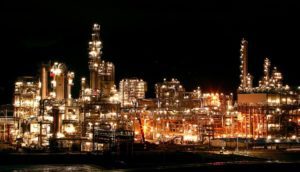
Environmental Integrity Project and Clean Air Council Sue Shell Polymers Monaca Plant Near Pittsburgh to Halt Illegal Emissions of Smog-Forming Pollutants
Pittsburgh — The Environmental Integrity Project and Clean Air Council filed a federal lawsuit against Shell today for repeatedly violating permitted air pollution limits from a massive new plastics production plant northwest of Pittsburgh, which opened last year.
In a lawsuit filed in the U.S. District Court for the Western District of Pennsylvania, the environmental groups called for strict penalties and a halt to the illegal release of smog-forming pollutants from the Shell Polymers Monaca plant in Beaver County, on the banks of the Ohio River.
“Shell received $1.6 billion in taxpayer subsidies from the state to build this plant. The very least this international corporation can do is to follow the law and not make Pennsylvania taxpayers breathe in their illegal pollution,” said Sarah Kula, attorney for the Environmental Integrity Project.
Joseph Minott, Executive Director of the Clean Air Council, said: “Shell’s persistent law-breaking must end. The community will not tolerate dangerous pollution events that risk the health of families across Beaver County and beyond.”
The roughly $6 billion Shell Monaca plant transforms a product of natural gas (ethane), extracted through hydraulic fracturing in the region’s shale formations, into tiny plastic pellets used to manufacture single-use plastic goods like soda bottles and plastic packaging.
The plant has repeatedly violated limits that must be met on a 12-month rolling basis for nitrogen oxide (NOx) and volatile organic compound (VOC) air pollution, which contribute to smog, asthma attacks, and lung disease, according to state records and the lawsuit. The VOCs include benzene, a known carcinogen.
The facility has also shaken the surrounding community by releasing clouds of black smoke from its flares during malfunctions and odors that have caused residents to feel sick.
Pennsylvania Department of Environmental Protection (DEP) records show 12 state notices of air pollution violations at the Shell plant since January of 2022, but no enforcement actions or penalties by the state.
State records also show that Shell submitted 39 reports of malfunctions at the plant during the same time period, including flaring on February 13 that released large plumes of black smoke and flames for hours during an “upset” incident in the ethylene cracking unit.
The most recent problems at the Shell plant include an accident on April 11, when a malfunction at its wastewater treatment plant released high levels of benzene, as measured by fenceline air monitors. The air monitors measured benzene as high as 185 micrograms per cubic meter – which is more than six times higher than federal guidelines for short-term exposure to this pollutant.
Local residents reported strong odors, headaches, watery eyes, irritated throats, and nausea during the benzene release incident.
Because of all the violations and ongoing problems at the plant, the Clean Air Council and Environmental Integrity Project sent a letter to DEP on February 17 urging the state to temporarily halt operations at the Shell plastics plant to protect the health of nearby residents.
The same day, the groups sent Shell a notice of intent to sue for violating, within a few months, the chemical plant’s 12-month permit limit on nitrogen oxides. Previously, the groups sent Shell another notice on February 2 because of other violations of the plant’s air permit, including a violation of prohibition on certain “visible emissions,” including black smoke from flares.
Under the federal Clean Air Act, plaintiffs must send notices of intent to sue at least 60 days before filing a complaint in federal court.
“The repeated and ongoing … violations at the plant harm the health and disrupt the lives of the (Clean Air Council’s) members and other individuals who live, go to school, recreate, and work near the plant,” the lawsuit filed today states.
For a copy of the lawsuit, click here.
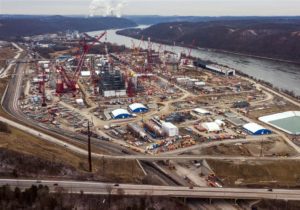
Pittsburgh, PA — A pair of environmental organizations today sent a letter to Pennsylvania urging the state to temporarily halt operations at a Shell plastics chemical plant northwest of Pittsburgh that has repeatedly violated air pollution limits and recently released plumes of black smoke for several hours.
Clean Air Council and the Environmental Integrity Project asked the Pennsylvania Department of Environmental Protection to temporarily halt operations of the Shell Polymers Monaca plant in Beaver County until the company can demonstrate it can operate in compliance with pollution control laws.
The two groups also today filed a notice of intent to sue Shell for violating the chemical plant’s 12-month permit limit on nitrogen oxides (NOx), which contribute to asthma attacks, lung disease, and (in the environment) smog and acid rain. This is the second notice from the groups in three weeks: On February 2, the organizations sent a notice to Shell for other violations of the plant’s air permit, including a 12-month limit on volatile organic compounds (VOCs), which also contribute to smog and health problems, and a prohibition on certain “visible emissions,” including black smoke from flares.
Under the federal Clean Air Act, plaintiffs must send notices of intent to sue at least 60 days before filing a complaint in federal court.
“DEP must act quickly to stop Shell’s ongoing violations of pollution limits that are meant to protect public health” said Sarah Kula, attorney for the Environmental Integrity Project. “Since the plant has come online, Shell has struggled to meet its permit limits, and DEP needs to order a pause to operations until Shell can comply with the law.”
“We will continue to hold Shell accountable as long as they continue to violate the law,” said Joseph Minott, Clean Air Council Executive Director and Chief Counsel. “The health and environmental risks that come with pollution exceedances can harm communities and the region for generations to come. DEP must put the plant on hold until Shell can get its act together.”
On Monday, the Shell plant’s flare released large amounts of black smoke over the course of several hours. BreatheCam.org footage of the February 13th event can be found here. Plants often use these flaring events to burn off chemicals rather than vent directly into the atmosphere, but Shell’s permit does not allow the kind of visible emissions that occurred on Monday. When a flare is not operating properly, it can release dangerous air pollution, including fine particulate matter, benzene, hexane, formaldehyde, mercury, arsenic, and other organic hazardous air pollutants.
In 2022, Shell emitted 346 tons of NOx, which exceeded its permitted annual NOx emissions (328.8 tons of NOx in a 12-month period). From August to December 2022 alone, the plant emitted 310 tons of NOx – nearly reaching the 12-month limit during this five month period.
For a copy of the letter to the Pennsylvania Department of Environmental Protection, click here. For the most recent notice of intent to sue with exhibits, click here.
