Take Action Sign Up!
Tell Congress Gas Exports are Not in the Public Interest
Increased liquified natural gas (LNG) exports raise domestic gas and electricity costs while creating dangerous air pollution. The LNG Export Security Act, introduced by Pennsylvania Senator John Fetterman and Texas Senator John Cornyn, would make it harder to oppose LNG exports that harm our communities and increase costs for everyday Americans.
The LNG Export Security Act would define the “development of natural gas facilities” as being in the public interest. This is simply not true. LNG exports raise gas prices and damage public health. In 2025, the U.S. exported more gas than Americans used in their homes. The same year, LNG exports increased by 25% while gas prices rose by 61%.
Take Action Now: Stop Harmful Data Centers
People across the country are standing up against data centers because they are loud, polluting, drain local waters, and raise household energy bills.
In March, the White House released a National Policy Framework for Artificial Intelligence to “accelerate AI infrastructure buildout.”
As proposals for AI data centers increase, Americans need local and state governments to protect the availability of clean water and electricity. AI infrastructure buildout accelerated by the federal government could seriously jeopardize water and electricity resources while increasing air pollution and energy bills.
Clean Air Council is working with residents across Pennsylvania to oppose the construction of gas fired power plants that pollute our air with millions of tons of carbon dioxide per year and other pollutants that can sicken and harm. Click here to contact your federal elected officials and tell them not to accelerate AI data center development.
Demand a Pause on Data Center Development
Residents and elected officials in Pennsylvania are pushing back on data center development. Data centers are large facilities that contain thousands, or even hundreds of thousands, of computers hosting information for companies like Amazon and Microsoft. Many data centers also support the use of artificial intelligence (AI) while consuming massive amounts of electricity and water and producing significant air pollution.
State Senator Katie Muth and Lackawanna County Commissioner Bill Gaughan are both demanding a three-year moratorium (pause) on data center development in Pennsylvania. You can join the growing crowd of concerned residents demanding a three-year moratorium on data center development to ensure the responsible use of our electricity and water.
Current Pennsylvania policies were not intended to allow massive amounts of water, electricity, and “emergency” generators to power warehouses full of computers.
Click here to contact Governor Shapiro and your state elected officials.
Support A Critical Environmental Justice Bill
In early April, the Pennsylvania House Environmental and Natural Resources Committee voted to pass House Bill 109 out of committee. This bill would establish a permit review program within the Department of Environmental Protection (DEP) to consider cumulative impacts of pollutants on environmental justice communities.
Cumulative impacts describe the combined effects people experience from multiple sources of pollution and stressors throughout life. For example, if a gas power plant is proposed in a community that already has pollution from a refinery, impacts from all pollution sources should be considered during permitting. By requiring DEP to consider cumulative impacts in permit reviews, this bill would allow for proposed projects to be reviewed in the context of the community they would be located in.
Click here to contact your state representatives about HB 109.
Pass SB1157/HB2178 and Clean Hazardous Spills Now
Spills of dangerous chemicals impact residents across Pennsylvania. For example, on May 2, the Delaware County Times reported that gasoline vapors were found in two homes in Aston, PA, caused by a spill of hundreds of thousands of gallons of gasoline from Monroe Energy’s Chelsea Tank Farm. This spill began in August 2025 and if SB1157 were enacted, the Pennsylvania Department of Environmental Protection (DEP) would have been able to take immediate action, instead of continuing to wait for Monroe Energy to address the spill.
Pennsylvania residents deserve protection from hazardous leaks and spills. You can contact your state legislators and tell them to pass SB1157/HB2178, giving the state government the authority to immediately address hazardous environmental conditions in residential areas.
Please click here to contact your state legislators.
Help the City Stop Burning Your Trash in Chester
Philadelphia’s contract to incinerate trash in Chester, PA ends in June 2026 and residents have an opportunity to improve regional air quality by supporting Councilmember Jamie Gauthier’s new bill, the “Stop Trashing Our Air” Act. Reworld’s (formerly Covanta) facility in Chester is the largest waste incinerator in the country, burning 2,688 tons of waste per day, including about 30% of Philly’s trash. The facility constantly operates in High Priority Violation of the Clean Air Act and in May received a violation from the Pennsylvania Department of Environmental Protection (DEP) for not monitoring radioactive waste.
Chester, PA is a well-known example of environmental racism caused by the clustering of polluting facilities in a municipality that’s 70% Black. The largest trash incinerator in the country, a sewage incinerator, and several chemical facilities as well as an oil refinery and a natural gas liquids export facility in neighboring municipalities all combine to create dangerous air quality in Chester. According to the University of Pennsylvania’s Center for Excellence in Environmental Toxicology, Chester has the highest infant mortality rate in Pennsylvania and twice the rate of asthma as the PA state level. Chester’s 27% pediatric asthma rate is more than four times the national average. Click here to contact your Philadelphia City Councilpeople.
CHOP Parking Garage is Wrong for Grays Ferry
The Children’s Hospital of Philadelphia (CHOP) is currently constructing a 7-story parking garage in Grays Ferry with over 1,000 parking spaces. CHOP has applied for a “complex source” air pollution permit from the City of Philadelphia’s Air Management Services (AMS). However, CHOP has not yet received a “complex source” air pollution permit and AMS has not opened an official public comment period. You can ask AMS to hold a public hearing about this proposal that would bring additional air pollution to South Philadelphia’s Grays Ferry neighborhood. The Philadelphia Inquirer even reported that “there are no regulatory hurdles to the development.”
CHOP plans to build a 1,012-space parking lot in Grays Ferry in order to shuttle employees between the parking garage and its University City Campus. Grays Ferry already suffers significant air pollution and residents will be exposed to the additional air pollution from thousands of vehicle trips per day, plus the air pollution from CHOP’s shuttle buses. CHOP is currently redeveloping its University City Campus and could have easily chosen to include a parking garage in this redevelopment.
Tell the Pentagon Not to Incinerate Toxic Firefighting Foam
The Department of Defense (DOD) is currently developing PFAS disposal guidance, and you can impact these decisions. Take action now to demand that DOD not resume PFAS incineration as it will likely contribute to soil contamination as well as to air pollution and groundwater contamination.
PFAS were created in the 1940s and have since been used in a variety of products like fire-fighting foams, cosmetics, fabrics, clothing and cooking pans.
You can reach out to the Defense Logistics Administration (DLA), which manages waste disposal for the DOD, and demand that they find an alternative disposal method for PFAS-laden fire-fighting foam.
Reject the Trump Administration’s Attack on Federal Funding
The Trump Administration’s attempt to halt federal funding was an aggressive effort to take power away from your elected Senators and Congresspeople. Although the memo has been rescinded, we at Clean Air Council are quite concerned that it could be revived in some form in the near future.
You can still make your voice heard to make sure this never happens again.
Federal grants fund programs that are essential to Clean Air Council’s mission, including programs that monitor air quality in residential communities and that ensure safe drinking water for Pennsylvania residents. Federal grants also fund programs such as Head Start, which provides pre-kindergarten education across the country, as well as federal infrastructure grants distributed to states and localities.
Please click here to contact your federal Senators and Congresspeople and tell them to stand up to any future authoritarian attempts to undermine the federal legislature and deprive U.S. residents of vital public services.
Tell Governor Shapiro to adopt no-drill zones now!
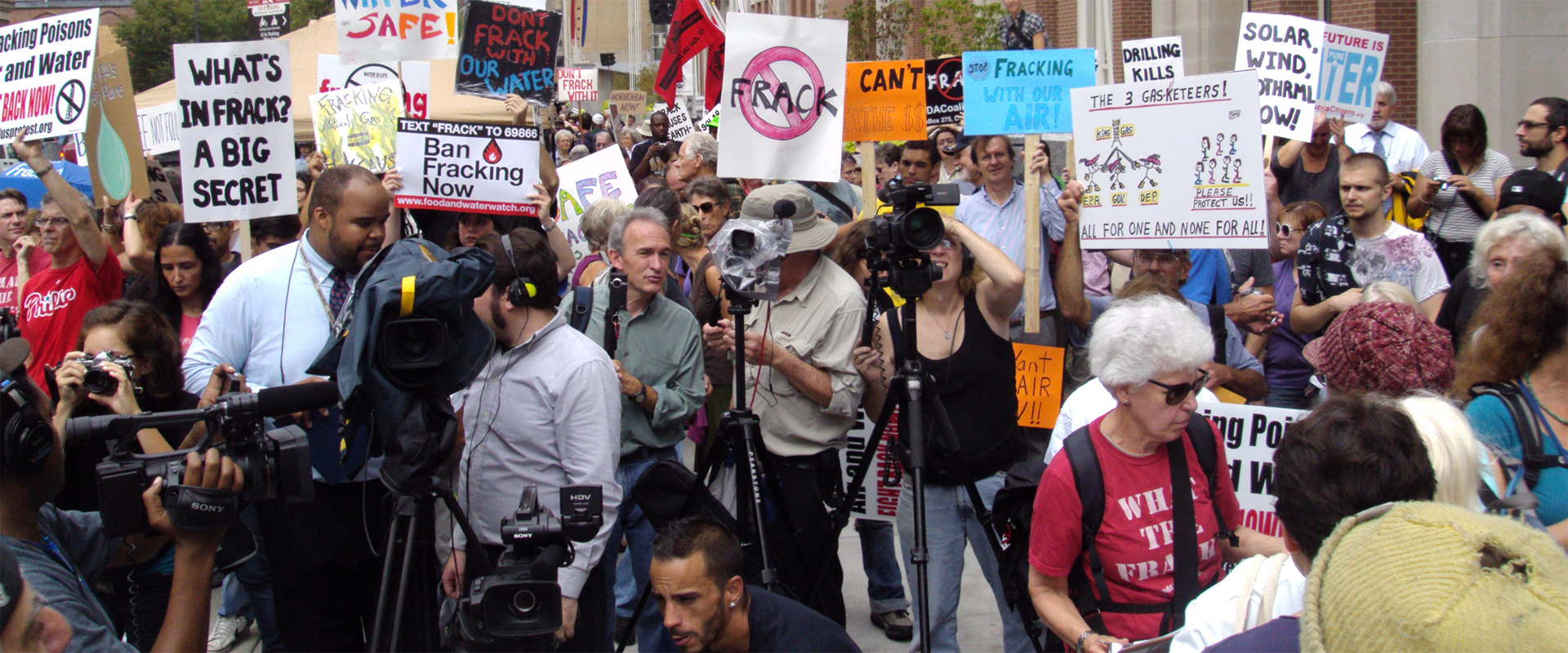
In October of 2024, Clean Air Council and Environmental Integrity Project filed a rulemaking petition with the Environmental Quality Board, Pennsylvania’s environmental rulemaking body, to enact stronger, protective distances for fracking wells from buildings such as homes, schools, and hospitals. The Department of Environmental Protection has deemed the petition complete and moved it to the Environmental Quality Board for review.
Tell Governor Shapiro we want strong, protective setbacks from fracking wells now!
Tell Gov. Shapiro: Cut Methane From Oil and Gas Industry
The EPA methane rule is important because it tackles a range of new and existing pollution sources, including gas wells and compressor stations, which pressurize gas and transport it through pipelines. Notably, the rule will require enhanced monitoring for leaks from wells regardless of the size, use of certain zero-emission devices, elimination of routine flaring at large wells, and the creation of a Super Emitter Program, which would respond to large methane leaks.
Tell Governor Shapiro today that you want a strong methane rule state plan for Pennsylvania.
