As we approach the new year, many of us like to think of resolutions for the coming months. Clean Air Council would like to recommend adding composting to your new habits for 2026. This blog post will provide you with what you need to start composting in your own backyard.
If you’re located in Clairton, Braddock, North Braddock, or Swissvale, PA, and are interested in getting involved with a local composting effort in your community, fill in our contact form. The Council will be distributing more FREE compost bins to households and community centers in the new year. Fill out the form now to apply for yours!
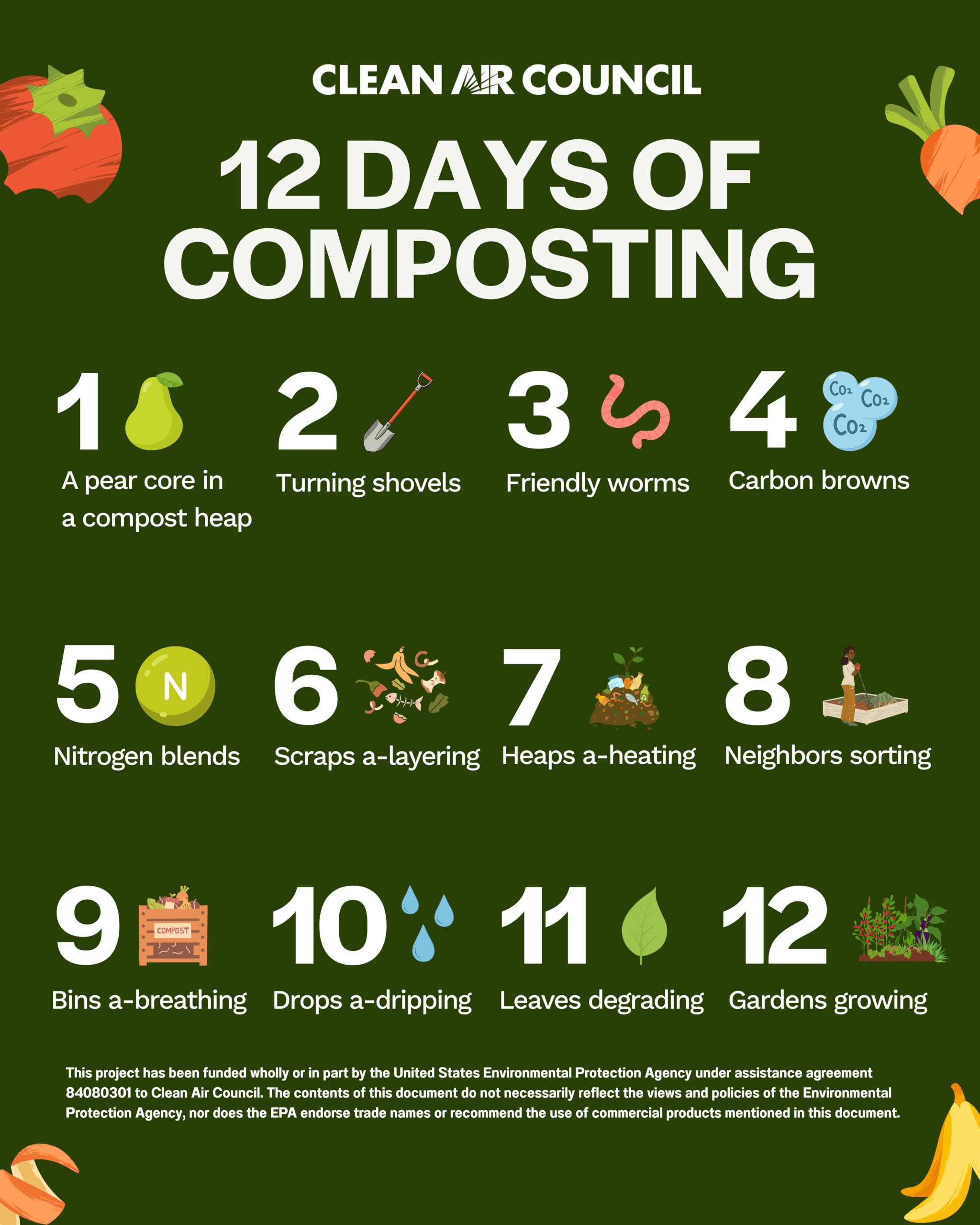
On the 12 days of Compost my true love gave to me…
- A pear core in a compost heap
To get started with composting, you’ll need access to a compost bin or heap. Whether you prefer composting in an open pile, a multi-stage bin, a worm composter, or a tumbling bin, make sure to have an area or a container for this purpose.
- Two turning shovels
Other equipment you might want to consider for your composting needs include a shovel or pitchfork, a kitchen countertop bin for collecting your kitchen scraps, and a thermometer to keep track of the health of your compost pile.
- Three friendly worms
While vermicomposting is its own ecosystem altogether, compost bins of most kinds will benefit from having some friendly earthworms in the mix, breaking down your compost waste quicker and more efficiently. You can buy red wigglers to add to your bin, or you can wait for them to naturally turn up in an open-bottom stationary bin.
- Four carbon browns
It’s important to know what can and cannot be composted. One crucial element to add into your pile is browns, or carbon-rich materials, like dry leaves, straw, or plain shredded cardboard.
- Fiiiive nitrogen blends
The second essential material to add to your bin is greens, or nitrogen-rich materials, such as grass clippings, fruit peels, or coffee grounds.
- Six scraps a-layering
Adding greens and browns to your bin, make sure to layer them to the best of your ability to ensure the two types of materials mix together well. This will kickstart the biodegrading process and offers microbes, bacteria, and fungi ideal conditions to get to work.
- Seven heaps a-heating
It’s very important for your pile to achieve a high enough temperature in order for your compost waste to mature into nutrient-rich compost. You can track this by using a compost thermometer – very similar to the meat thermometer you might use for cooking your Christmas meal.
- Eight neighbors sorting
Composting can be more fun and efficient if you team up with your neighbors! Maybe one of you has a bigger yard with ample space for a compost bin, but is lacking enough greens. Recruit the vegetable-loving family of four across the street to donate their scraps to an effort to create you both organic, home-made compost.
- Nine bins a-breathing
It’s also essential for the microscopic friends in our compost bins to have enough oxygen to break down matter effectively. Help them by turning or mixing your compost pile regularly, ideally once a week or two.
- Ten drops a-dripping
In reality, you don’t want your compost bin to be soggy – the texture of your compost should resemble a wrung-out sponge. If the bin gets too wet, add more browns and mix well.
- Eleven leaves degrading
Ensuring all these conditions are met, composting will be a breeze and you’ll help divert waste from landfills to save you money in the garden instead!
- Twelve gardens growing
The final result is fresh, earthy compost for your garden beds, potting mixes, and lawns. The best part is that you get to share these results with your neighbors and community, creating a healthier environment for us all.
