

Council Wins:
Solar Project to Reclaim 2,000 Acres of Toxic Mineland
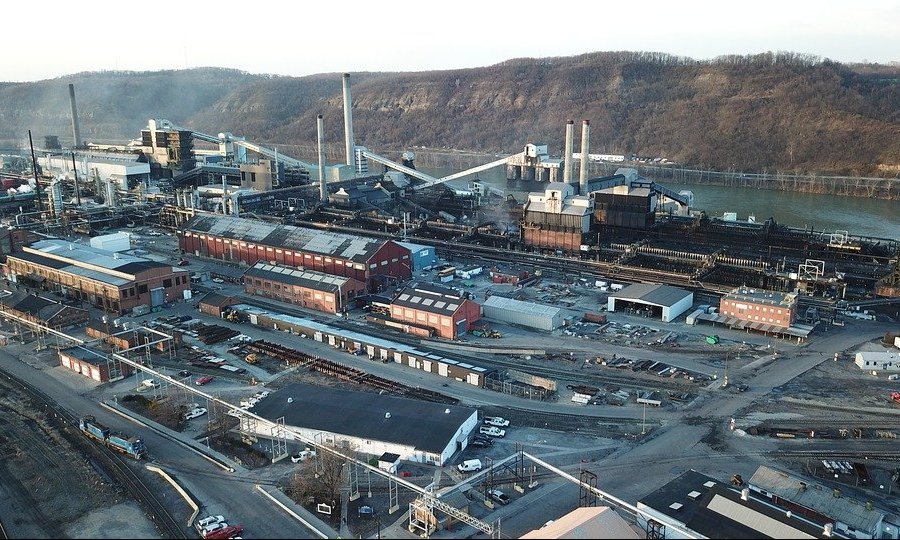
“Approval of the Black Moshannon Solar project is a victory for the people of Rush Township, a victory for clean energy, and a victory for a sustainable economy,” stated Tom Pike, Clean Air Council Director of Campaigns. “This is the kind of forward-thinking work that communities across the Commonwealth should be looking to replicate.”
FROM THE BLOG

Clean Air Council Appeals Air Pollution Permit for Nation’s Largest Proposed Fracked Gas Power Plant
The Homer City Redevelopment project would be the nation’s largest fracked gas power plant to open in Pennsylvania. This plant is being built to power a 3,200-acre AI data center campus, even though a plant this size could produce enough electricity to power over three million PA homes. The Notice of Appeal was filed with the Pennsylvania Environmental Hearing Board challenging errors in the plan approval.

Feet First Philly Awards 16 Public Space Enhancement Projects to Improve Communities Across Philadelphia
After receiving over 70 applications for the Public Space Enhancement Program, a selection committee selected the 16 projects to be awarded funding to improve walkability in neighborhoods across Philadelphia. All of the funded organizations and their projects are located in communities that have experienced a lack of historical investment, or even active disinvestment in their public spaces.
Gifts from supporters like you are the most important dollars we receive because they allow us to respond quickly to urgent issues as they emerge rather than waiting for traditional grant funding.
MEMBER Q&A
Clean Air Council is so effective because our staff is a team of experts in their field and our members are so passionate about the environment. We wanted to share the expertise of our team by inviting members to ask about environmental issues they care about most. Below are just a few of the questions we received from dedicated members, like you.
Q: Does Clean Air Council do local air monitoring and do you have any takeaways from the Purple Air data? – Alex S, member since 2026 and Eunice A, member since 1988
A: Yes, the Council operates a network of around 60 PurpleAir brand particulate matter 2.5 (PM2.5) monitors in the Philadelphia region. You can view the entire network at here. We saw higher air pollution readings than local governmental monitors at times, due to capturing hyperlocal air pollution events. The data is clearly demonstrating that more local air monitoring is needed to keep communities safe from pollution.
– Russell Zerbo, Clean Air Council Advocate since 2012
Q: With the IRA gutted, what other resources are available to help residents wanting to switch to renewable options or Electric Vehicles? – Molly W, member since 2023
A: At the state level, all large electric utility companies offer energy efficient rebate and incentive programs under Pennsylvania’s flagship energy efficiency law, Act 129. These programs differ, but PECO, for example, offers a rebate for installing rooftop solar. Electric utility companies may pay customers with solar panels for the excess electricity generated (known as “net metering”) but check with your utility company to see what’s available to you.
– Alice Lu, Clean Air Council Policy Analyst since 2023
Q: Are there ways that we can, by negotiations, force the data centers to use renewable energy / help communities develop renewable energy? – Ann J, member since 2026
A: Data centers are being proposed at lightning speed, but we’re working with state lawmakers to prioritize bills that offer protections for residents and the environment. Local governments can also adopt zoning ordinances, which determine how land is used. Data center ordinances can spell out water usage standards, noise limits, setback requirements, and requirements for energy usage.
– Alice Lu, Clean Air Council Policy Analyst since 2023
Q: What is the current status of the role of the PM2.5 particles released into the air by burning organic substances? – Merv K, member and volunteer since 2008
A: In a regulatory sense, almost all counties in PA meet the 2012 National Ambient Air Quality Standards (NAAQS) for PM2.5. In 2024, the EPA finalized a stricter standard based on rigorously vetted health data, however, the current administration asked the court to revert back to the old standard. It also failed to identify which areas do not meet the new standard, a necessary step to trigger air quality improvement measures. Clean Air Council and other groups are fighting to ensure that EPA retains and enforces the new standard. Specific regulations regarding burning organic waste are usually local.
– Nathan Johnson, Clean Air Council Engineer since 2017
Q: How can we streamline the permitting process for solar energy in PA to make it the cheapest, fastest, cleanest way to generate electricity? – Madeline D, member since 2023
A: There are several permitting barriers for large-scale solar in PA. For one, the interconnection authority PJM needs to expedite and solve its ‘queue’ approach that delays every solar project 5-7 years. The legislature also needs to create a centralized siting standard for solar farms because local zoning ordinances often take the form of de facto bans on solar. Finally, solar developers could do a better job of working with residents to offer comprehensive community benefits and reduce local opposition.
– Tom Pike, Clean Air Council Director of Campaigns since 2025
IN THE NEWS |
THE GUARDIAN
US leads record global surge in gas-fired power driven by AI demands, with big costs for the climate
“The coal plant was an environmental monstrosity, but it was a pillar of the local economy and some people are nostalgic for that,” said Clean Air Council Director of Campaigns Tom Pike, and continued with “But no one wants to live next to a datacenter.
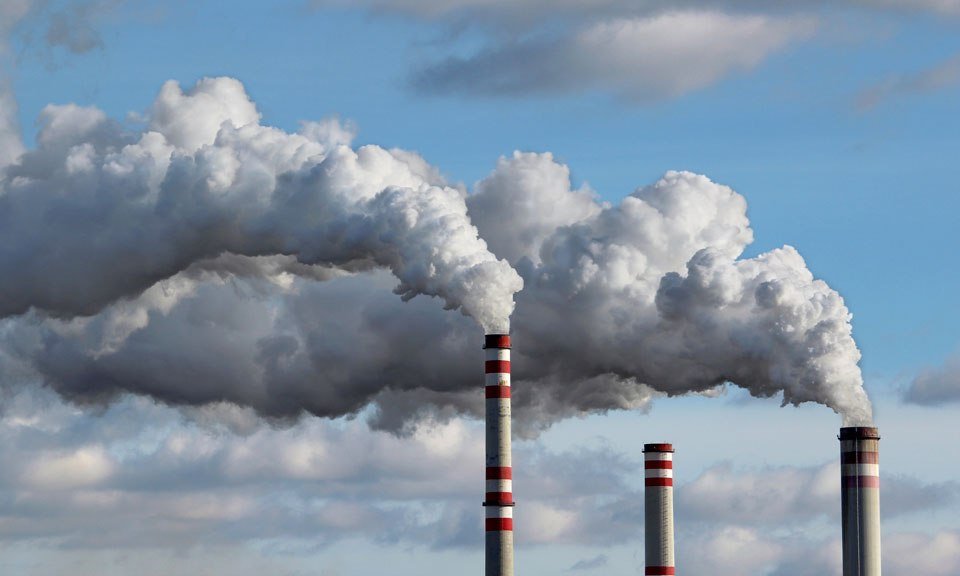

Philadelphia, PA (December 18, 2025) – Clean Air Council, PennFuture, and Sierra Club appeal Homer City gas plant air quality plan approval no. 32-00457A, issued by the Pennsylvania Department of Environmental Protection (“the Department”) last month.
On November 18, 2025, the Department issued an air quality plan approval for the Homer City Redevelopment project, paving the way for what would be the nation’s largest fracked gas power plant to open in Pennsylvania. Although a plant that size could produce enough electricity to power over three million homes, this plant is being built for a 3,200-acre AI data center campus. Local communities would suffer the consequences of increased air pollution, noise, odors, and compromised drinking water with minimal return benefits. Additionally, each year the plant operates, the toxic air pollution it spews could cause the premature deaths of dozens of people across the country and millions of dollars in health costs. The effect of the climate pollution it emits would likely contribute to the deaths of additional thousands of people globally by the end of the century for each year the plant operates, caused by the increased global heating. This unlawful permit was issued in spite of 571 comments submitted by the public, strongly opposing (and identifying significant errors in) the proposed plant’s draft plan approval.
Clean Air Council, PennFuture, and Sierra Club have filed a Notice of Appeal with the Pennsylvania Environmental Hearing Board challenging errors in the plan approval, including violations of the Clean Air Act, the Air Pollution Control Act, Pennsylvania’s Environmental Rights Amendment (Article 1, Section 27 of the Pennsylvania Constitution), and the Department’s own Environmental Justice Policy.
“We will not stand by idly while our government greenlights a devastating and illegal toxic data center power plant,” said Alex Bomstein, Clean Air Council Executive Director. “The people of Indiana County are rising up to say no to job-killing data centers and their private power plants, and Clean Air Council is proud to stand arm-in-arm with them.”
“Building the country’s largest fracked-gas power plant to generate electricity primarily for AI data center operations runs entirely counter to the goal of moving towards the clean energy economy Pennsylvanians want and deserve,” said Jessica O’Neill, PennFuture’s Managing Attorney for Litigation. “In issuing this permit, DEP has failed to fulfill its obligations under Pennsylvania’s Environmental Rights Amendment, as well as its obligations to consider and work to minimize the climate change consequences of electrical power generation.”
Local residents express support for this lawsuit:
“As members of Concerned Residents of Western PA (CROW), an area group opposed to the planned power plant in Homer City, we fully support the legal appeal by the Clean Air Council, PennFuture, and Sierra Club challenging the air permit recently granted by DEP to the Homer City Redevelopment LLC. Given that the plant will have long-lasting and devastating impacts on our region’s environment, we are grateful for the legal action by the Clean Air Council, PennFuture, and Sierra Club. This appeal will help to ensure that project developers act in the public interest to follow air quality standards intended to protect our health and the future of our community,” said Concerned Residents of Western PA (CROW).
PHILADELPHIA, PA (November 18, 2025) – On November 18, the Pennsylvania Department of Environmental Protection issued an air pollution permit for the Homer City Redevelopment project, paving the way for what would be the nation’s largest fracked gas power plant to open in Pennsylvania. Although the plant would produce enough electricity to power over three million homes, that power would mostly feed its massive AI data center. Local residents would suffer the consequences of increased air pollution, noise, odors, and compromised drinking water with minimal return benefits, and the toxic air pollution from the plant could lead to the deaths of dozens of people across the country for every year of its operation. This permit was issued in spite of the many speakers at September’s DEP hearing on the project, as well as the 571 comments submitted by the public, strongly opposing (and identifying significant errors in) the proposed plant’s draft air quality permit.
Harrisburg has fallen in line across the aisle to support rapid buildout of AI infrastructure, even though the new power plants being proposed to run data centers in Pennsylvania are almost universally plants that would burn methane from local fracking wells. Science and experience tells us that this new fracking, and these new power plants, would pollute, sicken, and kill people in our region, exacerbate the climate crisis, and drive up the cost of electricity.
Alex Bomstein, Clean Air Council Executive Director, issued the following statement:
“This illegal permit is a death sentence for many of those who will breathe its toxic fumes in Indiana County and across the nation. Rushed-through, riddled with errors, and for what? It’s not to keep our lights on. It’s for New York hedge fund investors and for tech billionaires to get rich off of technology designed to lay people off. Indiana County and Pennsylvania will rise up and defend our health and our lives from this dangerous, pointless plant.”

Harrisburg, PA (Tuesday, November 18) – Clean Air Council, Representative Rabb, Environmental Health Project, and impacted residents gathered at the Capitol Rotunda in Harrisburg Tuesday to demand that Pennsylvania’s leaders end their plans to use fossil fuel power plants to power AI data centers across the Commonwealth.
In July, Pennsylvania political leadership, including Senator Dave McCormick and Governor Josh Shapiro, joined President Donald Trump and executives from ExxonMobil, Google, and BlackRock to announce a $20 billion data center project as part of the Commonwealth’s headfirst jump into the AI race. Harrisburg has fallen in line across the aisle to support rapid buildout of AI infrastructure, even though the new power plants being proposed to run data centers in Pennsylvania are almost universally plants that would burn methane from local fracking wells. Science and experience tells us that this new fracking, and these new power plants, would pollute and sicken our region.
Shapiro, Senator McCormick, President Trump, allied legislators, and powerful executives are attempting to make the AI boom seem inevitable and unstoppable. In rejection of this vision of Pennsylvania’s future and in solidarity with the majority of Americans who are concerned about the increased use of AI, Clean Air Council, Representative Rabb, Environmental Health Project, and impacted residents hosted a rally where speakers made it clear that this fossil fuel-backed industry is not welcome.
“The unchecked proliferation of data centers across Pennsylvania threatens our grid, our environment, and the well-being of communities already overburdened by pollution and corporate extraction,” said Representative Christopher Rabb. “When private profit drives public risk, the legislature must draw a hard line to protect our residents, our land, and our energy future.”
“The data center boom is already straining Pennsylvania resources and raising utility bills for people across the state. Even worse, global data center emissions are projected to be 2.5bn metric tons of CO2 equivalent by 2030 – which is like adding an extra 116 million gasoline cars to the road,” said Clean Air Council Executive Director Alex Bomstein. “Pennsylvania should not push aside its own people in order to lead an industry that does incalculable harm to the environment and the economy.”
“We already know that there are myriad health and climate risks associated with fossil gas development—including cardiovascular and respiratory diseases, birth impacts, cancers, heat-related illnesses, and insect-borne diseases,” said Environmental Health Project Executive Director Alison L. Steele. “A hyperscale data center boom that demands more fossil fuel consumption will make those health risks worse, not better.”
Because of what my family has lived through, I know we deserve better,” said Shakira Johnson, Washington County Resident. “By choosing cleaner energy over fossil fuels, we can create a healthier, stronger future for everyone in southwestern Pennsylvania and Washington County.”

July 29, 2025 – It seems like no matter how you’re using technology these days, artificial intelligence (AI) is lurking nearby: in a search result, in a navigation menu, or even popping up as a chatbot with a human name. Tech companies are promising a brighter future fueled by AI and investors are buying the hype, literally: during the first quarter of 2025, 57.9% of global venture capital investments went to AI and machine learning.
But what are users getting in return? As society seemingly jumps into the deep end of the AI pool, we need to understand the harms it’s inflicting on the world.
AI Needs Huge Data Centers to Run, And They Are Major Polluters
The data centers that power AI models and their tools (sometimes called hyperscale data centers) require an immense amount of power because every prompt or task requires supercomputers to complete countless calculations. That’s much different than traditional computing or how a search engine works, for instance. As MIT News reports, “researchers have estimated that a ChatGPT query consumes about five times more electricity than a simple web search.”
This demand for electricity is rising at four times the rate of the overall rise in consumption and, according to one report, is expected to equal that of the entire country of Japan by next year. The power plants that provide the electricity often burn fossil fuels to create it, emitting lots of harmful pollution along the way. Research by Morgan Stanley projects that data center emissions globally will be 2.5bn metric tons of CO2 equivalent by 2030 – that’s like adding an extra 116 million gasoline cars to the road each year.
Take, for example, the case of Memphis, Tennessee and Elon Musk’s xAI. The Tennessee Lookout reports, “The facility’s behemoth methane gas turbines increase Memphis’s smog by 30-60% as they belch planet-warming nitrogen oxides and poisonous formaldehyde around the clock, pollutants linked to respiratory and cardiovascular disease.”
Despite touting commitments to reduce the carbon emissions which are baking our planet, major tech companies have actually been increasing their emissions due to their expanding AI programs. Between 2020 and 2023, the emissions of Amazon, Alphabet (Google), Meta, and Microsoft have each increased, on average, by 150%.
They Strain Our Already-Strained Energy Grid
The Energy Department has reported that AI could suck up 12% of the U.S. energy supply by 2028. Meanwhile, the general rise in consumption has strained much of the world’s energy infrastructure already while we struggle to build out renewable alternatives that protect the planet. Meeting the sudden increased demand of these data centers not only sets back the climate goals of tech companies, it sets back progress around the world.
“It’s not sustainable to keep building at the rate [Google is] building because they need to scale their compute within planetary limits,” one researcher told The Guardian. “We do not have enough green energy to serve the needs of Google and certainly not the needs of Google and the rest of us.”
Similarly, another researcher told MIT News, “The demand for new data centers cannot be met in a sustainable way. The pace at which companies are building new data centers means the bulk of the electricity to power them must come from fossil fuel-based power plants.”
This surge in growth is already impacting how the rest of us receive energy. A 2024 Bloomberg report found data centers are “distorting the normal flow of electricity for millions of Americans,” which stresses power grids and can damage home appliances and power equipment. The scale of these operations means that when things go wrong, they can go really wrong, putting entire regions at risk of power outages.
They Soak Up Water Like a Giant Sponge
Energy isn’t the only resource AI depends on. If you’ve ever heard a laptop fan turn on or felt a phone warm up after hours of scrolling, you already understand the basics of why data centers also require immense amounts of water. When supercomputers parse through user prompts and train new models, they heat up. To cool them, many data centers run cold water through pipes.
When tech companies seek sites for their facilities, “Because electricity is more costly for data centers than water, companies often prioritize building their facilities in places with cheap power, even if the area is drought stricken. That has exacerbated water shortages across the world,” a Stanford hydrologist told The New York Times.
Their water consumption makes these sites particularly bad neighbors. The New York Times also reports that in areas with data centers “local wells have been damaged, the cost of municipal water has soared and the county’s water commission may face a shortage of the vital resource.” This has done so much damage in Newton County, Georgia, for example, that it’s on track to be in a water deficit by 2030.
Supercomputers Aren’t for “Super Users.” They’re Meeting Our Demand
Make no mistake: this massive energy consumption is not only fueling industrial and commercial-scale AI projects. Every instance of generative AI, including public-facing tools, contribute to this waste.
The International Energy Agency recently studied the impacts of individual user actions. They estimate that the power required to generate a large amount of text is equivalent to running an LED bulb for an hour, and that the power required to create an eight-second video is equivalent to charging a laptop twice. Another study indicated that text generation (like what ChatGPT does) “used 10 times as much energy compared with simple classification tasks like sorting emails into folders.”
It’s no secret that generative AI models frequently “hallucinate” by making up information or otherwise answering queries incorrectly. If you do want the right answer, it turns out sustainability is a significant trade-off. One study found that more accurate (and thus more complex) models produced as much as three times more emissions.
And public AI tools are popular. A 2023 study found that 1 in 4 Americans say they use AI several times a day and another 28% say they use it about once a day. ChatGPT has 400 million weekly active users. That is a lot of energy consumption, and a lot of pollution.
In the end, fighting the climate crisis is a systemic and collective issue requiring systemic and collective solutions. Plus, tech companies are making it harder and harder to opt out of AI. But as with any system, individual choice does play a role and widespread adoption of resource-intensive, polluting products instead of existing, efficient tools is a big part of the problem.
The “AI revolution” is not inevitable, despite what public figures would like us to think. Any major shift in technology requires public buy-in. It is up to us all to demand a future that allows us to take advantage of progress without compromising the environment.
