“The Hub” is a weekly round-up of transportation related news in the Philadelphia area and beyond. Check back weekly to keep up-to-date on the issues Clean Air Council’s transportation staff finds important.
Join the Transit For All PA! campaign for sustainable transit funding to keep our state moving forward.
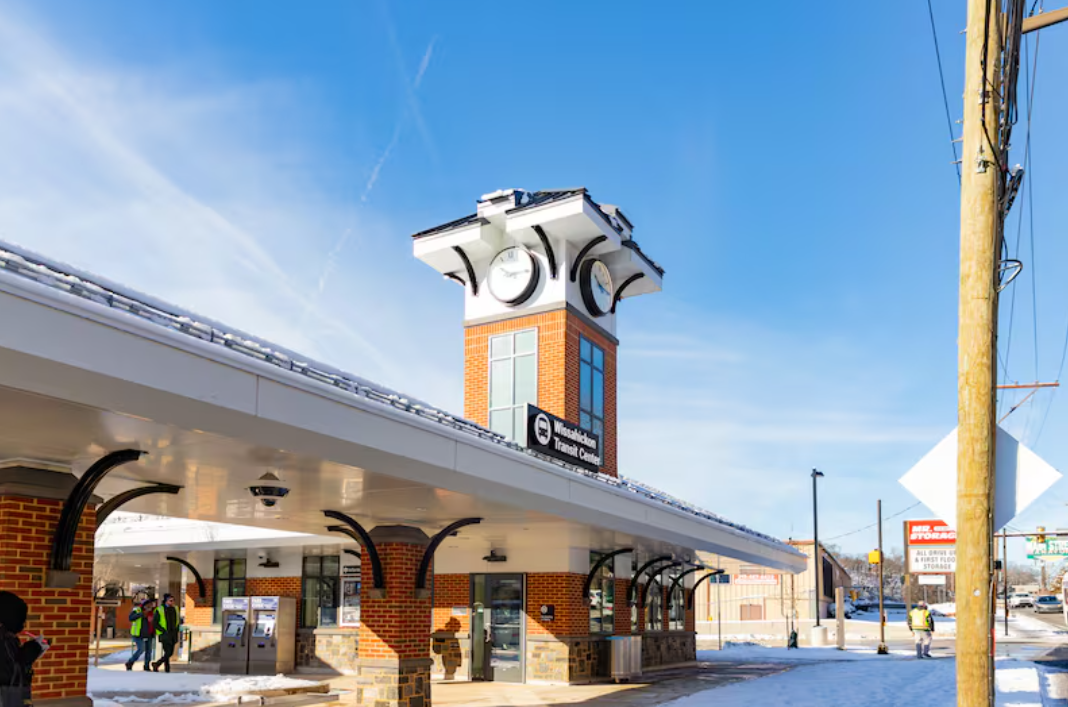
The Inquirer: SEPTA opens new $50M Wissahickon Transit Center in Manayunk – SEPTA finished the long-awaited Wissahickon Transportation Center, and it’s expected to serve 5,000 bus riders a day. The center is just down the street from the Wissahickon Regional Rail station, and construction on the $50 million project began in 2023. The transportation center is one of SEPTA’s busiest. The upgraded space was set to be the first of a wave of upgrades, many of which have since been paused due to a lack of funding.
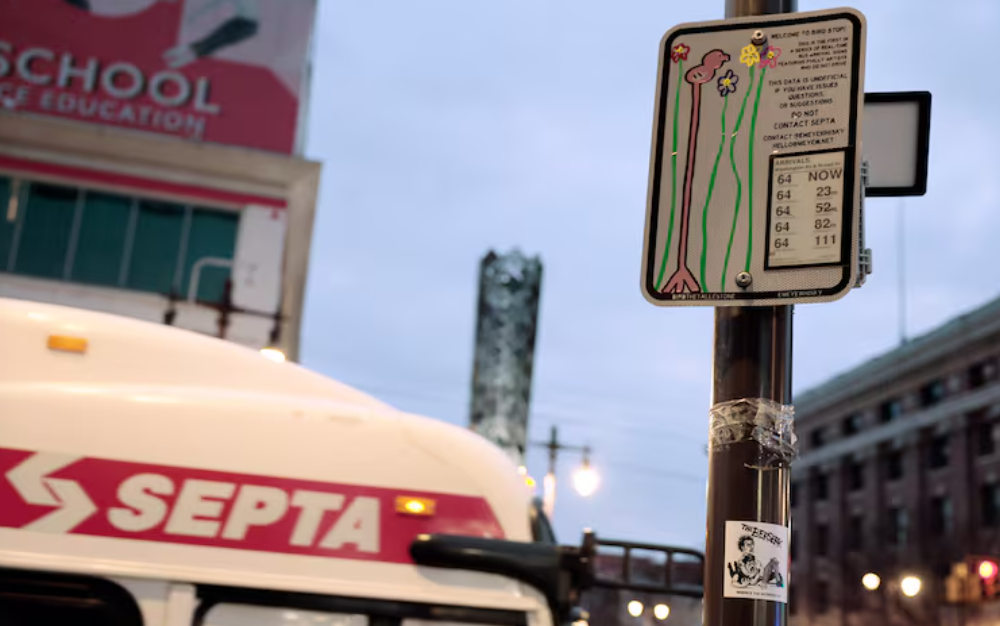
Fox Philadelphia: South Philly street artist helps create signs displaying SEPTA bus arrival times – SEPTA bus signs are getting a makeover from a local Philly street artist known as “Mr. Bird.” Solar-powered signs display arrival times of buses on painted metal signs that connect to SEPTA’s website. The first route to get this unauthorized upgrade was Route 64 at Broad and Washington. Signs are also being installed along Route 47. Riders have reacted positively to the signs, and SEPTA has plans to upgrade bus signs in the next few years, but it’s unclear if a collaboration will occur.
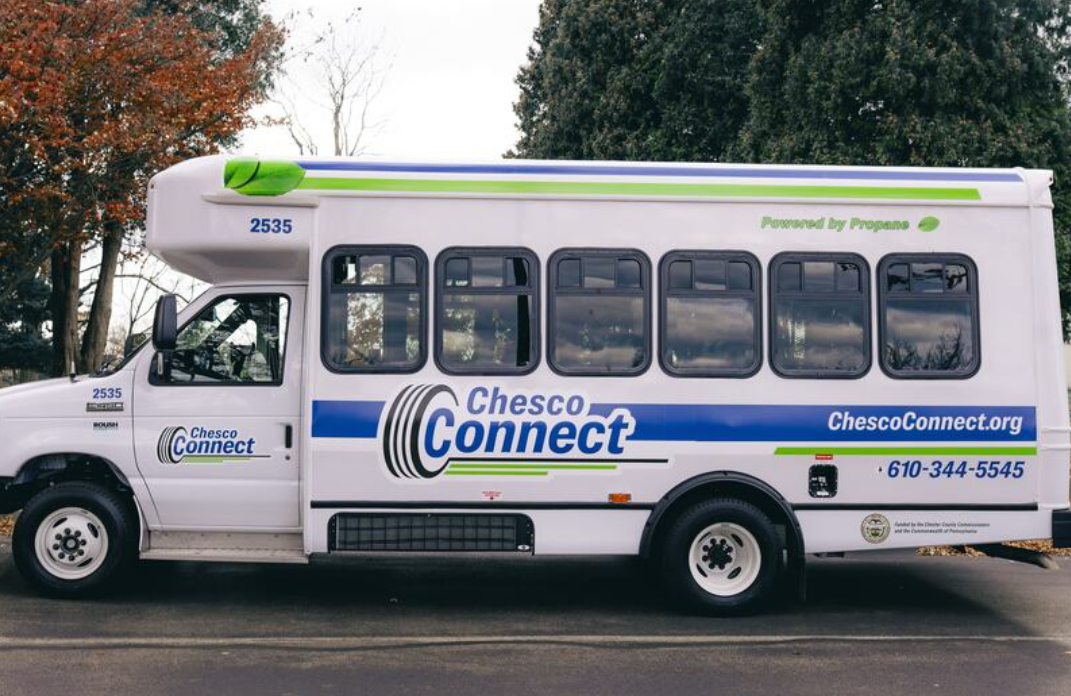
Chester County: Chesco Connect Drives Into the Future with Propane Buses – A new fleet of buses is expected to hit the streets of Chester County by February. The fleet offers a way to cut costs for the County, and seven are already on the road. Chester County plans to add more propane buses in 2027, due to the significant price difference per gallon compared to gasoline or diesel. Montgomery and Lancaster Counties have both adopted propane bus integration to fleets, and it is a marginally ‘cleaner’ fuel source than gasoline. With a federal shift away from supporting electric vehicles, moving fleets to environmentally friendly alternatives is becoming more difficult.
Other Stories
6ABC: SEPTA reaches deal with SMART Local 1594 to avert strike
PhillyVoice: Delaware County trolley riders should plan for longer trips during weekends through May
6ABC: Philadelphia City Council votes to reopen Greyhound Bus Terminal
Bicycle Coalition: Bringing safety and joy at the 13th Annual Bike Light Giveaway
WHYY: Road salt remains in Pa., N.J. and Del. waterways months after winter storms, according to new data
CBS Philadelphia: NJDOT brings back holiday-themed highway signs to raise awareness about reckless driving
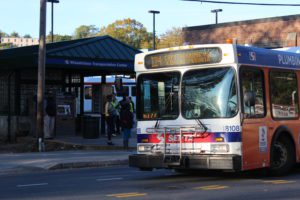
The point where the Wissahickon Creek meets the Schuylkill River has been an important link to travel in the area for thousands of years. Today, it’s highly congested with transit and vehicle traffic entering and exiting the Roosevelt and Schuylkill Expressways.
It’s a hub for SEPTA with 11 bus routes stopping at the Wissahickon Transportation Center, and the Wissahickon Regional Rail Station just a few hundred feet away, Two of the region’s most popular trails, the Schuylkill and Wissahickon, converge here as well. “We have all these modes of transportation butting heads here,” said Matt Wysong, Senior Planner at the Philadelphia Planning Commission. “That was an obvious issue we identified in this plan.”
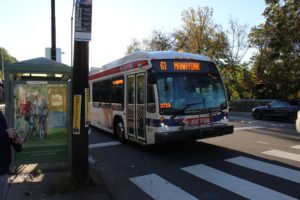
Thousands of commuters pass through the Wissahickon Transportation Center (WTC) and along Ridge Avenue every day heading into Center City, and also west to the suburbs. The city’s Planning Commission has identified this part of the city as a focus area for improving service and accessibility to riders, and recently conducted a boots on the ground survey to find out what people think about their commute through this area.
“We are here today to talk to the people that use the area,” Wysong said. “To get a better understanding of what they see as the conditions on the ground, the issues and the greater opportunities.”
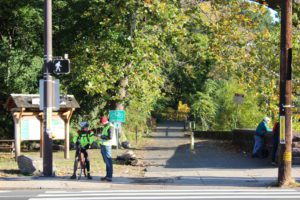
Wysong and a small group of surveyors from Clean Air Council and the city’s Planning Commission were out during peak hours, speaking to people getting off buses and riding bikes along the Wissahickon trail. Wysong told us that many people riding SEPTA often took more than one bus to get to their destination, and some even had commutes that were two hours long.
Wysong says he noticed the area is particularly hard for cyclists to navigate. “What I am observing here is that there is a lot of conflicts for bicyclists,” Wysong said. “They’re just trying to use every inch of space to kind of get through it somehow.” He pointed out that with no clear path through the area, cyclists run the risk of colliding with cars and pedestrians.
SEPTA recently received federal funding to update WTC, and Wysong tells us that SEPTA is looking to expand to the lot next door. He says this would allow for double the capacity of the current WTC. He also tells us that once SEPTA completes this project, Parks and Recreation wants to connect the Schuylkill River trail along the water.
Currently, trail users are forced to travel through this congested area before getting back on the Schuylkill River Trail. Once finished, the trail will eventually connect to the Pencoyd bridge over the Schuylkill River and allow riders to enjoy trails on either side of the river. This is one of the last remaining undeveloped segments of the Schuylkill River Trail, and once it’s linked up here, riders will be able to enjoy a safe ride all the way up to Pottsville.
For more info on the project and public hearings regarding the study click here.
