Council Wins:
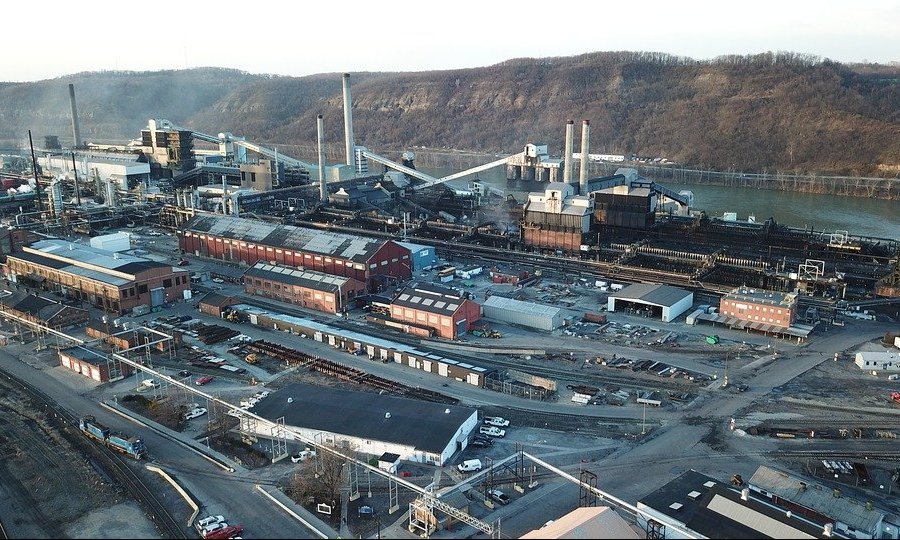
Solar Project to Reclaim 2,000 Acres of Toxic Mineland
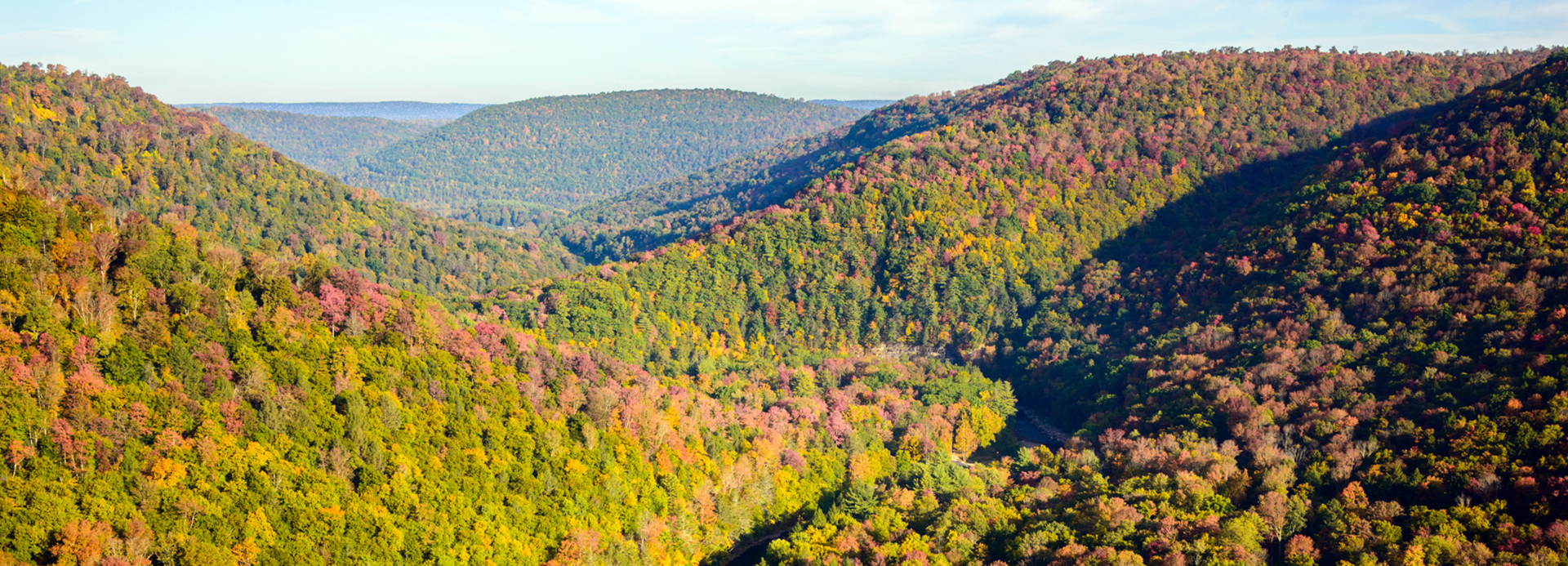
“Approval of the Black Moshannon Solar project is a victory for the people of Rush Township, a victory for clean energy, and a victory for a sustainable economy,” stated Tom Pike, Clean Air Council Director of Campaigns. “This is the kind of forward-thinking work that communities across the Commonwealth should be looking to replicate.”
FROM THE BLOG

Clean Air Council Appeals Air Pollution Permit for Nation’s Largest Proposed Fracked Gas Power Plant
The Homer City Redevelopment project would be the nation’s largest fracked gas power plant to open in Pennsylvania. This plant is being built to power a 3,200-acre AI data center campus, even though a plant this size could produce enough electricity to power over three million PA homes. The Notice of Appeal was filed with the Pennsylvania Environmental Hearing Board challenging errors in the plan approval.
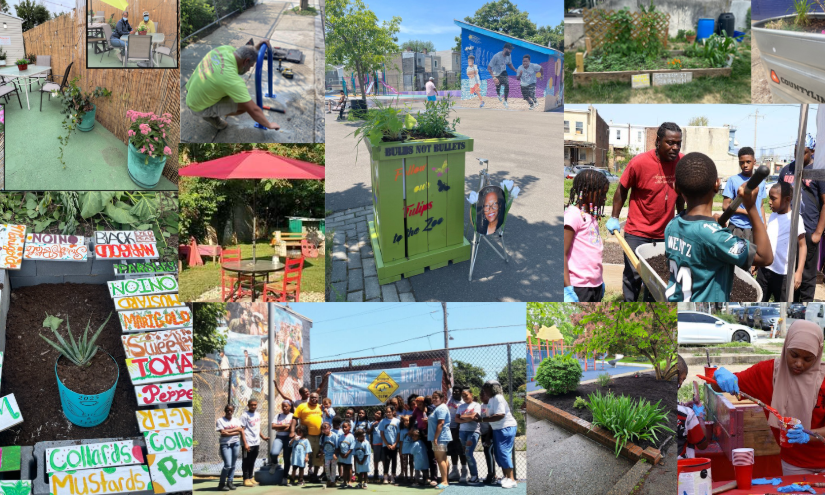
Feet First Philly Awards 16 Public Space Enhancement Projects to Improve Communities Across Philadelphia
After receiving over 70 applications for the Public Space Enhancement Program, a selection committee selected the 16 projects to be awarded funding to improve walkability in neighborhoods across Philadelphia. All of the funded organizations and their projects are located in communities that have experienced a lack of historical investment, or even active disinvestment in their public spaces.
Gifts from supporters like you are the most important dollars we receive because they allow us to respond quickly to urgent issues as they emerge rather than waiting for traditional grant funding.
MEMBER Q&A
Clean Air Council is so effective because our staff is a team of experts in their field and our members are so passionate about the environment. We wanted to share the expertise of our team by inviting members to ask about environmental issues they care about most. Below are just a few of the questions we received from dedicated members, like you.
Q: Does Clean Air Council do local air monitoring and do you have any takeaways from the Purple Air data? – Alex S, member since 2026 and Eunice A, member since 1988
A: Yes, the Council operates a network of around 60 PurpleAir brand particulate matter 2.5 (PM2.5) monitors in the Philadelphia region. You can view the entire network at here. We saw higher air pollution readings than local governmental monitors at times, due to capturing hyperlocal air pollution events. The data is clearly demonstrating that more local air monitoring is needed to keep communities safe from pollution.
– Russell Zerbo, Clean Air Council Advocate since 2012
Q: With the IRA gutted, what other resources are available to help residents wanting to switch to renewable options or Electric Vehicles? – Molly W, member since 2023
A: At the state level, all large electric utility companies offer energy efficient rebate and incentive programs under Pennsylvania’s flagship energy efficiency law, Act 129. These programs differ, but PECO, for example, offers a rebate for installing rooftop solar. Electric utility companies may pay customers with solar panels for the excess electricity generated (known as “net metering”) but check with your utility company to see what’s available to you.
– Alice Lu, Clean Air Council Policy Analyst since 2023
Q: Are there ways that we can, by negotiations, force the data centers to use renewable energy / help communities develop renewable energy? – Ann J, member since 2026
A: Data centers are being proposed at lightning speed, but we’re working with state lawmakers to prioritize bills that offer protections for residents and the environment. Local governments can also adopt zoning ordinances, which determine how land is used. Data center ordinances can spell out water usage standards, noise limits, setback requirements, and requirements for energy usage.
– Alice Lu, Clean Air Council Policy Analyst since 2023
Q: What is the current status of the role of the PM2.5 particles released into the air by burning organic substances? – Merv K, member and volunteer since 2008
A: In a regulatory sense, almost all counties in PA meet the 2012 National Ambient Air Quality Standards (NAAQS) for PM2.5. In 2024, the EPA finalized a stricter standard based on rigorously vetted health data, however, the current administration asked the court to revert back to the old standard. It also failed to identify which areas do not meet the new standard, a necessary step to trigger air quality improvement measures. Clean Air Council and other groups are fighting to ensure that EPA retains and enforces the new standard. Specific regulations regarding burning organic waste are usually local.
– Nathan Johnson, Clean Air Council Engineer since 2017
Q: How can we streamline the permitting process for solar energy in PA to make it the cheapest, fastest, cleanest way to generate electricity? – Madeline D, member since 2023
A: There are several permitting barriers for large-scale solar in PA. For one, the interconnection authority PJM needs to expedite and solve its ‘queue’ approach that delays every solar project 5-7 years. The legislature also needs to create a centralized siting standard for solar farms because local zoning ordinances often take the form of de facto bans on solar. Finally, solar developers could do a better job of working with residents to offer comprehensive community benefits and reduce local opposition.
– Tom Pike, Clean Air Council Director of Campaigns since 2025
IN THE NEWS |
THE GUARDIAN
US leads record global surge in gas-fired power driven by AI demands, with big costs for the climate
“The coal plant was an environmental monstrosity, but it was a pillar of the local economy and some people are nostalgic for that,” said Clean Air Council Director of Campaigns Tom Pike, and continued with “But no one wants to live next to a datacenter.
As I remember it — The Start of the Clean Air Council
I’ve been a Clean Air Council member since the nonprofit first began to fight for everyone’s right to breathe clean air. On a steamy late August day in the summer of 1967, I arrived at the University of Pennsylvania to start my graduate degree program in “Operations Research”. I had been accepted as a dorm proctor in the Upper Class Triangle Dorms at 37th and Spruce Streets and assigned a single dorm on the second floor, which had a screened window that looked out the back to a walkway. I had bought an Inquirer newspaper at a coin newspaper box and dropped the paper on the window sill, which was open to allow for a breeze.
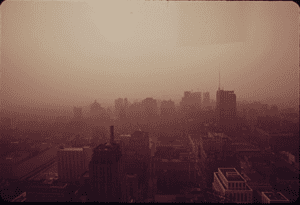
After unpacking and traveling around campus to run my many errands, I returned late that afternoon exhausted and ready to eat my hoagie and read the Inky. I picked up the paper on the window sill and was astonished to see the black newsprint on the front page slide right off the page! This illusion was caused by a layer of fine black soot, likely air particulate matter, in the air that deposited through the window screen over roughly 5 hours and landed on the newspaper. I was astounded and concerned that I had been breathing this same air all day!
Black soot and fine particulate matter is a public health problem that kills millions of people each year. As someone concerned about air quality and the environment, I was a regular contributor and member of the American Lung Association. I learned they had initiated another independent health group to promote clean air. The group would work to fight air pollution in the Philadelphia area. This was before the first Earth Day and before national legislation such as the Clean Air Act was passed.
They invited the public to attend the first meeting. Given my concern for the sooty air I was breathing since moving into the city, I made it a point to be at this meeting.
The meeting had about 25 attendees. The meeting chair was from the Lung Association of Chester County. The Chair specifically noted they were not turning on the overhead fluorescent lights and only using the ambient light from the windows and the room was not air conditioned but it felt quite comfortable. There were two brothers, one a professor in communications at Temple, the other a well known Philadelphia personality/news host for a major local TV channel. It was the latter who was initially chosen to lead this new group called the Clean Air Council.
I’m proud to be a Clean Air Council member 54 years later and contribute to defending everyone’s right to a healthy environment.
By longtime Clean Air Council member, James Castellan.
