Council Wins:
Solar Project to Reclaim 2,000 Acres of Toxic Mineland
“Approval of the Black Moshannon Solar project is a victory for the people of Rush Township, a victory for clean energy, and a victory for a sustainable economy,” stated Tom Pike, Clean Air Council Director of Campaigns. “This is the kind of forward-thinking work that communities across the Commonwealth should be looking to replicate.”
FROM THE BLOG

Clean Air Council Appeals Air Pollution Permit for Nation’s Largest Proposed Fracked Gas Power Plant
The Homer City Redevelopment project would be the nation’s largest fracked gas power plant to open in Pennsylvania. This plant is being built to power a 3,200-acre AI data center campus, even though a plant this size could produce enough electricity to power over three million PA homes. The Notice of Appeal was filed with the Pennsylvania Environmental Hearing Board challenging errors in the plan approval.
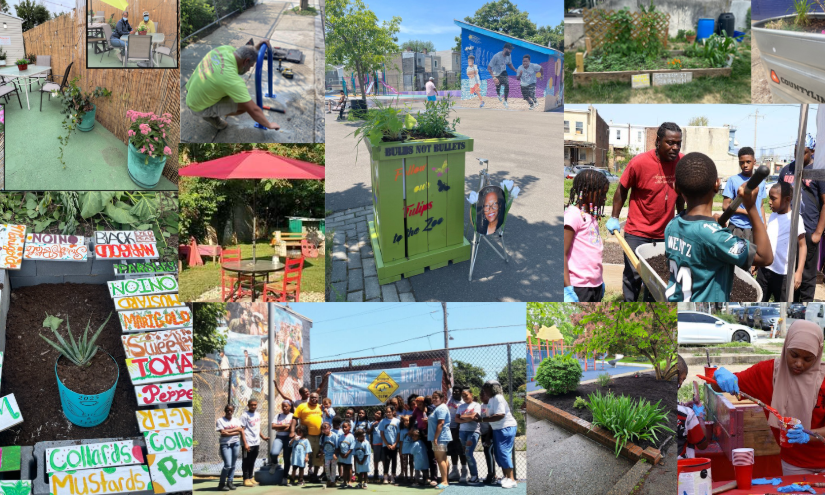
Feet First Philly Awards 16 Public Space Enhancement Projects to Improve Communities Across Philadelphia
After receiving over 70 applications for the Public Space Enhancement Program, a selection committee selected the 16 projects to be awarded funding to improve walkability in neighborhoods across Philadelphia. All of the funded organizations and their projects are located in communities that have experienced a lack of historical investment, or even active disinvestment in their public spaces.
Gifts from supporters like you are the most important dollars we receive because they allow us to respond quickly to urgent issues as they emerge rather than waiting for traditional grant funding.
MEMBER Q&A
Clean Air Council is so effective because our staff is a team of experts in their field and our members are so passionate about the environment. We wanted to share the expertise of our team by inviting members to ask about environmental issues they care about most. Below are just a few of the questions we received from dedicated members, like you.
Q: Does Clean Air Council do local air monitoring and do you have any takeaways from the Purple Air data? – Alex S, member since 2026 and Eunice A, member since 1988
A: Yes, the Council operates a network of around 60 PurpleAir brand particulate matter 2.5 (PM2.5) monitors in the Philadelphia region. You can view the entire network at here. We saw higher air pollution readings than local governmental monitors at times, due to capturing hyperlocal air pollution events. The data is clearly demonstrating that more local air monitoring is needed to keep communities safe from pollution.
– Russell Zerbo, Clean Air Council Advocate since 2012
Q: With the IRA gutted, what other resources are available to help residents wanting to switch to renewable options or Electric Vehicles? – Molly W, member since 2023
A: At the state level, all large electric utility companies offer energy efficient rebate and incentive programs under Pennsylvania’s flagship energy efficiency law, Act 129. These programs differ, but PECO, for example, offers a rebate for installing rooftop solar. Electric utility companies may pay customers with solar panels for the excess electricity generated (known as “net metering”) but check with your utility company to see what’s available to you.
– Alice Lu, Clean Air Council Policy Analyst since 2023
Q: Are there ways that we can, by negotiations, force the data centers to use renewable energy / help communities develop renewable energy? – Ann J, member since 2026
A: Data centers are being proposed at lightning speed, but we’re working with state lawmakers to prioritize bills that offer protections for residents and the environment. Local governments can also adopt zoning ordinances, which determine how land is used. Data center ordinances can spell out water usage standards, noise limits, setback requirements, and requirements for energy usage.
– Alice Lu, Clean Air Council Policy Analyst since 2023
Q: What is the current status of the role of the PM2.5 particles released into the air by burning organic substances? – Merv K, member and volunteer since 2008
A: In a regulatory sense, almost all counties in PA meet the 2012 National Ambient Air Quality Standards (NAAQS) for PM2.5. In 2024, the EPA finalized a stricter standard based on rigorously vetted health data, however, the current administration asked the court to revert back to the old standard. It also failed to identify which areas do not meet the new standard, a necessary step to trigger air quality improvement measures. Clean Air Council and other groups are fighting to ensure that EPA retains and enforces the new standard. Specific regulations regarding burning organic waste are usually local.
– Nathan Johnson, Clean Air Council Engineer since 2017
Q: How can we streamline the permitting process for solar energy in PA to make it the cheapest, fastest, cleanest way to generate electricity? – Madeline D, member since 2023
A: There are several permitting barriers for large-scale solar in PA. For one, the interconnection authority PJM needs to expedite and solve its ‘queue’ approach that delays every solar project 5-7 years. The legislature also needs to create a centralized siting standard for solar farms because local zoning ordinances often take the form of de facto bans on solar. Finally, solar developers could do a better job of working with residents to offer comprehensive community benefits and reduce local opposition.
– Tom Pike, Clean Air Council Director of Campaigns since 2025
IN THE NEWS |
THE GUARDIAN
US leads record global surge in gas-fired power driven by AI demands, with big costs for the climate
“The coal plant was an environmental monstrosity, but it was a pillar of the local economy and some people are nostalgic for that,” said Clean Air Council Director of Campaigns Tom Pike, and continued with “But no one wants to live next to a datacenter.
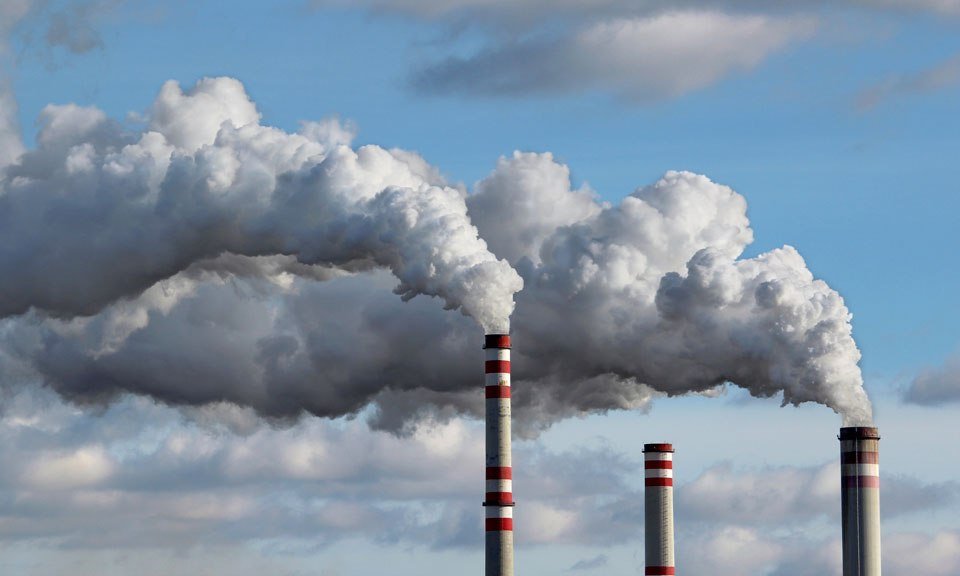
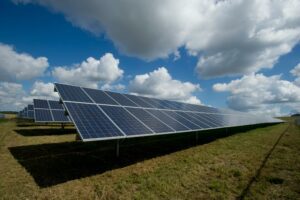
Environmental groups, clean energy advocates applaud approval of project that could power 200,000 homes
[RUSH TWP, CENTRE COUNTY, Tue. Dec 9, 2025] — In a 2-1 vote, the Rush Township Supervisors in Centre County, Pennsylvania approved the pending permit for the renewable energy project known as Black Moshannon Solar.
The proposed solar project would generate 265 megawatts of electricity, enough to power 200,000 homes annually. At the same time, the project is being heralded for utilizing nearly 2,000 acres of toxic mineland, reclaiming otherwise unusable land, and including mineland clean-up as part of the project’s development. The project’s developers have committed to introducing pollinators and pollinator-friendly ground cover beneath the solar arrays, conducting water quality and soil studies throughout development and operations, and taking steps to enhance the soil by using lime to neutralize mining contamination and encourage vegetation to grow on the site.
The Black Moshannon Solar project is also expected to provide more than $5 million in tax revenue to support the Phillipsburg-Osceola Area School District and more than $700,000 in direct tax payments to Centre County.
In response to the approval of the permit proposal by Rush Township, statewide environmental group leaders and nonprofit clean energy advocates release the following statements:
“The bipartisan group of Rush Township Supervisors who got this proposal over the finish line should pat themselves on the back for this groundbreaking project,” stated David Musar, Executive Director for the statewide nonprofit organization PennEnvironment. “We are hopeful that other local government officials across Pennsylvania will follow Rush Township’s lead and implement similar, much-needed solar projects all across the Keystone State.”
“The Rush Township Supervisors are establishing productive farmland and sustainable energy infrastructure for future generations,” noted Jim Gregory, Executive Director, Conservative Energy Network-Pennsylvania. “In forty years, their forward-thinking decisions will be recognized as catalysts for environmental protection, public health improvements, and economic prosperity. The Conservative Energy Network-Pennsylvania commends their responsible leadership and dedication to the community’s long-term well-being.”
“The Black Moshannon Solar project is a perfect example of how renewable energy, natural resource conservation, and community benefits can align. This truly is a win-win for the community,” stated Nate Reagle, the Sierra Club Pennsylvania Chapter’s Clean Energy Program Advocate.
“As veterans, we understand what it means to serve something greater than ourselves,” said Moises Montalvo, Pennsylvania Lead Organizer for Veterans Power America. “Projects like Black Moshannon Solar give us a chance to continue that service — by strengthening our nation’s energy security, creating jobs for working families, and leaving behind a cleaner, safer country for future generations.”
“Approval of the Black Moshannon Solar project is a victory for the people of Rush Township, a victory for clean energy, and a victory for a sustainable economy,” stated Tom Pike, Clean Air Council Director of Campaigns. “This is the kind of forward-thinking work that communities across the Commonwealth should be looking to replicate.”
“This project is a powerful example of how local communities and elected officials are coming together to embrace solar energy. By redeveloping polluted lands for clean energy production, we can transform environmental liabilities into long-term economic and environmental assets, all while helping to lower rising energy costs for Pennsylvanians. It’s a no-brainer, and we hope other communities across the Commonwealth will join in realizing the firsthand benefits of going solar,” said Abby Jones, Vice President of Legal & Policy at PennFuture.
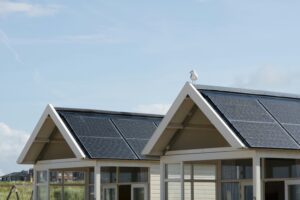
On January 1, 2026, the federal government’s “Big Beautiful Bill” (BBB) will end a major financial perk for US homeowners: the 30% residential solar tax credit. On average, this credit saved homeowners $7,500 when installing panels and an additional $9,000 in electricity savings.
Wondering if you should still invest in solar panels? The answer is yes. Panels installed and turned on before the end of 2025 will still get the tax credit. And even if you miss the end of year deadline, it is still worth buying panels because we still have fair net metering in PA (getting credits for your solar energy!).
Read on to learn how the BBB will impact your energy bill and how you can lower costs by investing in solar.
How does the BBB cut the solar tax credit?
The bill ends the residential tax credit of 30% for any clean energy expenses, such as solar panels, paid for after December 31, 2025. Homeowners who install solar panels on or after January 1, 2026 will not receive the 30% federal tax credit. Crucially, the 30% credit only applies to solar panel purchases, not leases.
Why will the BBB raise individuals’ energy bills?
Research from Energy Innovation, Rhodium, the REPEAT Project, and plenty of other groups all indicate that the BBB will raise our electricity costs. Meanwhile, America is about to need more electricity than ever before. AI companies are building data centers all over the country that are “on course to account for almost half of the growth in electricity demand.” Frequent heat waves are also driving up electricity demand due to air conditioning use.
Economics 101 teaches us that high demand and low supply lead to high prices. So with this high electricity demand, the best way to keep energy prices low is to maintain a healthy supply of energy sources.
The BBB takes the opposite approach. It limits our ability to access energy by making clean energy more expensive with tax credit cuts and exclusively benefiting fossil fuel companies—providing generous tax deductions, federal land and water leases, methane fee eliminations, among other perks.
Fossil fuels are more expensive to generate because companies have to extract and transport the fuel. Their pricing is also volatile because the fuel supply is limited and dependent on global events. Just a few years ago, the Russia-Ukraine war spiked gas prices because so many countries depended on oil from the region.
Solar lowers energy bills because it’s cheaper to operate than fossil fuel generators, thanks to improved panel technology and efficiency in recent years. In 2023, the International Energy Agency (IEA) reported that an estimated 96% of new solar and wind plants had lower generation costs than new natural gas and coal plants, and 75% of them produced cheaper energy than the natural gas and coal plants. These financial benefits are exactly why so many countries across the world are investing in solar energy—including China, which just opened the world’s largest solar farm.
3 steps for getting solar panels (and saving as much as possible)
Prepare for rising electricity costs by investing in solar ASAP. With or without the tax credit, solar panels will cut your electricity costs thanks to PA’s fair net metering (more on that below!). Maximize these savings by following these tips throughout your solar panel process.
1. Collect installer recommendations and quotes ASAP
In an ideal world, you’re able to buy and install solar panels before the end of 2025 and get the 30% residential solar tax credit. That timeline is tight, though—especially since the full process usually takes 6 months, and many people will be trying to get the tax credit.
If your goal is getting the credit, you’ll need to find potential installers ASAP by:
- Asking local friends and family with solar panels for installer recommendations. A referral you trust is by far the fastest way to find a reliable solar installer.
- Using an online solar quote comparison tool, like EnergySage or Solar.com. Pick the top 5 to 7 quotes based on your budget. If you’re overwhelmed by the information in each quote, this resource can help you decipher the details.
- Reading online reviews to narrow down your picks. The solar quote comparison tools, Yelp, and Google are all great resources for finding installer reviews. Check what buyers say about each installer’s quality of service and typical timelines, so you can gauge whether completing your panels by 2025 is realistic.
Pick your top 3 installers after following the steps above, and call each one to set up consultations.
2. Determine the best way to pay for your panels
Solar panels are a major purchase, like a car, so most people end up financing them rather than buying them upfront. If you go this route, ask each installer at their consultation if they can set a payback period length that sets the monthly rate at the average amount of your monthly electricity bill. This setup essentially makes the panels free.
Of course, this monthly rate will change depending on whether you receive the federal 30% tax credit by installing the panels before 2026. Stay on the safe side by assuming you won’t receive the credit when evaluating monthly payments and payback period lengths. This approach will leave you happy with your installer agreement regardless of whether you make the 2026 deadline. And if you do receive the credit, you get the benefit of a lower monthly payment and/or a shorter payback period.
If you don’t want to finance your panels or pay for them upfront, some installers offer alternative ways to generate and use solar energy at your home. A power purchase agreement allows you to purchase solar energy generated at your home for a set period while the installer owns and maintains the panel system.
Or, an installer may offer a lease agreement. Never sign a solar lease with escalator pricing, which lets the provider increase the rate over time. Ensure you’ll save money over your entire lease agreement by only agreeing to a flat monthly rate.
Be sure to closely read the paperwork of your installer agreement so you understand the terms, particularly if you choose one of these alternative options.
3. Sit back, relax, and enjoy your solar savings
Choose one installer based on the consultations, and they’ll handle the remaining steps of the process. In addition to handling the physical installation, your solar company will manage the various permits and certifications that are required to get your new solar panels up and running (and connected to the grid).
Once your solar panels are installed, it’s time to enjoy net metering! In PA, net metering is thankfully a fair 1-to-1 credit system–meaning, solar users are paid the same per kilowatt hour as they would have been charged to consume that kilowatt hour. Solar installers here will automatically set up net metering, but this benefit is also common in many other states. If you live outside of PA, be sure to ask your installer (1) if you’re eligible for net metering and (2) if so, what kind of support they offer to set it up for customers.
Can’t buy or lease panels? Demand community solar!
If buying or leasing panels doesn’t feel right for you, don’t count yourself out of solar! Consider community solar—a system where residents subscribe to a local solar farm and receive credits on their energy bill.
Community solar isn’t available in PA yet, but Clean Air Council is hoping to change that. Take action and tell your local PA politicians you want them to support legislation that allows community solar.
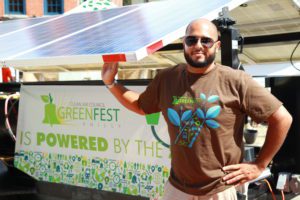
The Energy Co-op is honored to partner with the Clean Air Council to participate in this year’s GreenFest Philly. Both organizations have a long history of advocating for a cleaner future and the Co-op to excited to celebrate the common values that unite and grow our community. As the Clean Air Council celebrates its 50th anniversary, The Co-op is proud to be a supporter to allow the Clean Air Council to continue its mission for another 50 years.
Based in Philadelphia, The Energy Co-op is the region’s only non-profit, member-owned energy supplier. Established in 1979, The Co-op found a better way to buy energy. The Co-op offers clean electricity, green natural gas, bio heat and standard heating oil. By being a cooperative member and simply paying your energy bill, you can be sure that you are making a lasting impact. Don’t just choose your energy company; own it. You can join the Philadelphia Energy Co-op through their web site at www.theenergy.coop or by calling them at 215-413-2122.