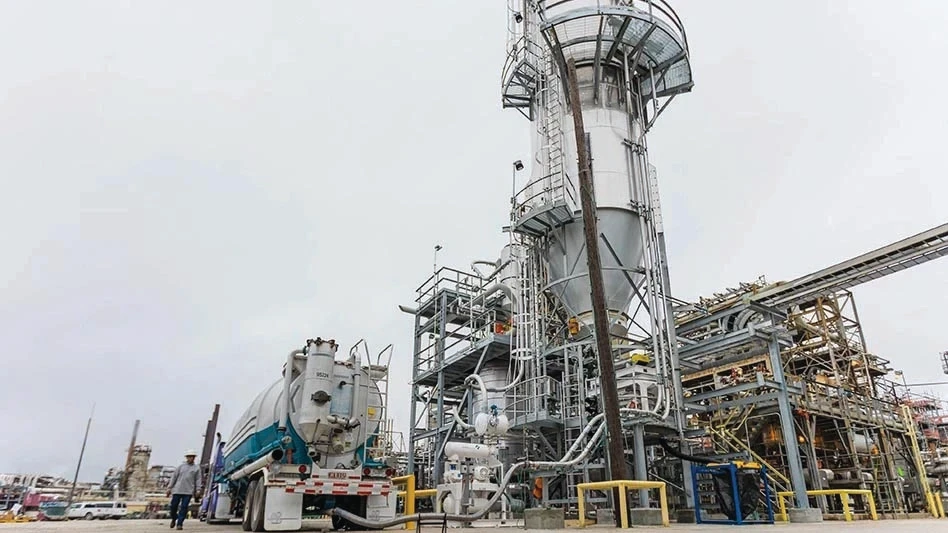
(August 20, 2025) The fight to preserve Pennsylvanians’ right to clean air, safe water, and a healthy environment won another huge victory this week as Alterra Energy announced it had ended plans to open a facility in Sugarloaf Township.
Alterra was hoping to open a “chemical recycling” facility in this rural area of Luzerne County. Despite dubbing its work “recycling,” however, Alterra’s rebranding of outdated trash incineration is no solution for the climate crisis. The plant would have been conducting plastic pyrolysis, a way of cutting chemical bonds with heat powered by burning fossil fuels. The “recycled” plastic this method produces is actually mostly made of new fossil fuel-derived materials and is, at most, 10% recycled material.
Its byproducts are even worse: toxic chemicals that are linked to health problems like cancers, liver and kidney damage, birth defects, nervous system issues, reproductive problems, and respiratory issues. This facility, which would have operated around the clock, would have produced chemical pollution in the air and water, and would have generated plastic waste that includes the worst of the worst pollutants: known carcinogen benzene, dioxins, PFAS “forever chemicals,” and volatile organic compounds or VOCs.
Not only would facility employees have been exposed to plastic dust and chemical vapors on the job, but they would also be at risk of dangerous fires. Toxic and very flammable synthetic oil would have been stored in two 185,000-gallon tanks on the property before being transported in trucks and rail cars. On top of these hazards, such a plant would have been a nuisance to the residents of Sugarloaf, bringing traffic, noise, light, and air pollution, and damaging rural roads.
Members of the Luzerne County Community Coalition were vocal in their opposition to this proposed site and are celebrating this news. Local residents collaborated in their organizing with neighbors from nearby Northumberland County who just last year stood strong against a similar proposal for their area from Texas-based company Encina. Sugarloaf even had support from a resident of Akron, Ohio, where Alterra has been operating an incineration plant whose permit renewal was loudly opposed by the community this summer.
Clean Air Council and its partners – including Beyond Plastics, Save Our Susquehanna, Moms Clean Air Force, Physicians for Social Responsibility Pennsylvania, and Environmental Health Project – were proud to support the Luzerne community as they sought to understand the potential harms of Alterra’s proposed facility and the influence they might wield. The Council commends this level of passion and commitment to a healthy environment and hopes to see this type of collaboration continue throughout the Commonwealth.
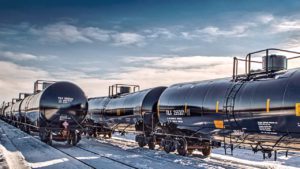
WASHINGTON, DC (December 14, 2023) – Today, the United States Environmental Protection Agency (EPA) announced that vinyl chloride is a candidate for high-priority designation under the Toxic Substances Control Act (TSCA). The primary goal of TSCA is to regulate the introduction of new or existing chemicals into commerce to ensure that they do not pose an unreasonable risk to human health or the environment. If EPA finds vinyl chloride presents unreasonable risk, it must start a process of developing a risk management rule to eliminate all risks that it found to be unreasonable. Risk management may take many forms including, but not limited to, bans or partial bans, phase-outs, restrictions on manufacturing, processing, distributing, or disposing – including volume restrictions and prohibitions on release or discharge. The public will have the opportunity to comment on the proposed risk management rule.
Matt Walker, Clean Air Council Advocacy Director, issued the following statement:
“Clean Air Council is very pleased that EPA has selected vinyl chloride as a candidate for high-priority designation under TSCA. Vinyl chloride is a known human carcinogen and can cause other serious health harms. In communities that live in the shadow of petrochemical facilities, the harms from vinyl chloride exposure are compounded by exposures to other other toxic chemicals and stressors. EPA must consider these cumulative risks in its analysis. As the disaster in East Palestine, Ohio demonstrated, people living along rail lines used to transport vinyl chloride are in danger of significant exposures to this toxic chemical. It will be critical for EPA to evaluate these risks.”
