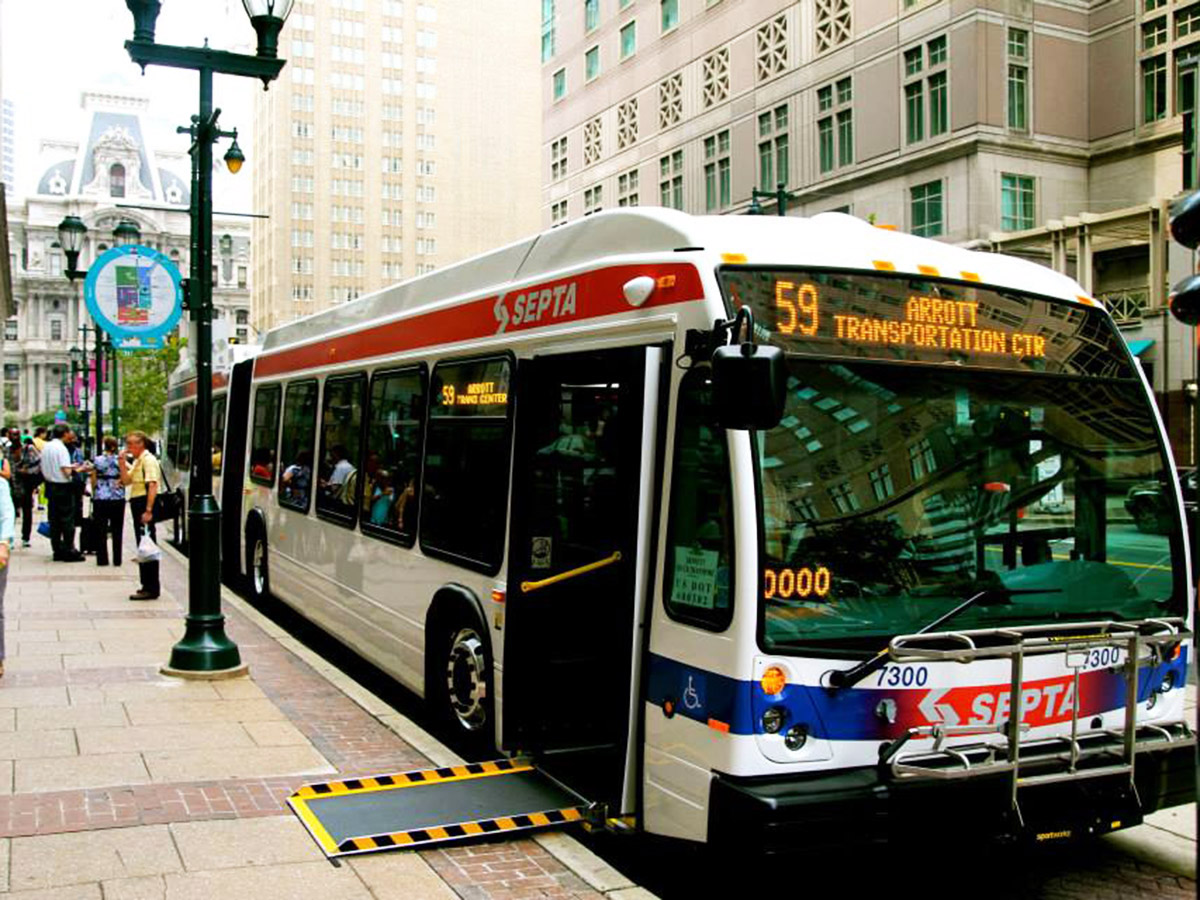
Using public transportation like trains and buses is one of the greenest ways to commute. By riding together instead of in individual cars, we save energy and emissions — and even money! But, as any commuter knows, trains and buses don’t always run on time. People often hesitate to rely on mass transit because they worry about being late to work or being stranded in an emergency without a car nearby.
That’s what the Delaware Valley Regional Planning Commission’s Emergency Ride Home program is all about, and Clean Air Council has just expanded it with a pilot project in Media, Pennsylvania. The Emergency Ride Home program uses cost reimbursement to support transit riders when emergencies disrupt their commute plans and serves those who live and/or work in southeastern Pennsylvania.
This new pilot specifically serves transit riders on four routes (SEPTA bus routes 110, 111, 114, and 117) that access Fair Acres Geriatric Center in Media. Qualifying commuters can receive an Uber voucher of up to $50 during an emergency—like when transit is seriously delayed, canceled, or can’t get you to the site of the emergency—and can redeem a voucher up to two times for the duration of the program through June 30, 2026.
If you’ve ever wanted to try taking SEPTA to work or around town but were afraid to take the plunge, signing up for this program might just put your mind at ease. Interested? Find out more below!
Who Qualifies for the Pilot Program?
To participate in this program, you must:
Be dedicated to taking SEPTA bus routes 110, 111, 114, and/or 117 at least twice a week to work
OR Live or work within the Fair Acres region
What Counts as an “Emergency”?
- Unexpected personal or family emergency or illness
- Unscheduled overtime
- If a rider cannot reach the site of the emergency via transit in a timely fashion
- If the rider’s regular route is delayed for over 30 minutes or cancelled, and this will cause an unsafe situation or undue expense for the rider (e.g. late fees for daycare or missed medical appointment)
How Do I Participate in the Pilot?
Step 1: Check your eligibility, register, and complete your profile at ShareARide.AgileMile.com/CAC
Step 2: In a qualifying emergency situation, request a free ride (up to $50) through the Share-A-Ride website. You will receive a unique code to use when paying through the Uber app.
Step 3: Download the Uber app and create an account.
Step 4: Use the Uber app to schedule a ride and apply your unique code at checkout.
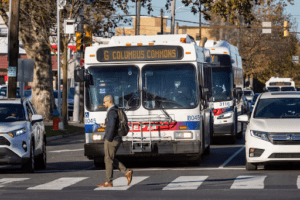
PHILADELPHIA, PA (Thursday, April 10, 2025) SEPTA is bleeding, and we need to stop the damage. In the last decade, the funding formula for public transportation has remained stagnant, even as costs for transit agencies have continued to rise. Now we are fully at a crisis point: SEPTA has announced fixed route service cuts up to 45% and fare increases of 21.5%. The impacts on disabled riders would be even more profound, with 40,000 paratransit trips per year no longer served by SEPTA ACCESS, and fares increased by 35%. This would effectively kill public transit in our region, and the ensuing damage to our riders, our economy, our healthcare system, our road congestion, and air quality is incalculable.
This is not just a Philadelphia issue. In all 67 counties of the Commonwealth, public transportation provides critical access for our elders, youth, disabled community members, and households without access to a personal vehicle. Transit systems statewide are hitting a funding “cliff,” which would devastate communities already suffering under similar cuts enacted over the past several years due to funding austerity. For instance, without new funding from the state, Pittsburgh Regional Transit will cut fixed route service by up to 40% with an additional 9% increase in fares. This is on top of 20% service cuts over just the last 5 years in Allegheny County. The lack of dedicated, expanded transit funding affects people riding to work in Allentown on LANTA, elders moving around their community safely in Erie, and disabled community members using paratransit in Harrisburg. The funding for all our transit agencies is tied to the same source, so the solution must be statewide, with input and support from communities all across the Commonwealth.
Transit riders and workers are ready with a response that meets the scale of the crisis. Over the last several years, our statewide coalition Transit for All PA! has been organizing for a new, dedicated state funding source to fund the transit services riders across the Commonwealth need. We are a coalition of thousands, hailing from Philadelphia to Pottstown, Bellefonte to Bellevue. And together, we have a shared demand: for state legislators to pass a new, dedicated funding package for public transit, sufficient to restore transit service across the state to 2019 levels– and to expand transit service in communities outside Pittsburgh and Philadelphia by an additional 10%. In the last three weeks, more than 10,000 Transit for All PA! supporters have contacted their state legislators and leadership in the House and Senate with this demand. This Transit for All PA funding package would go beyond austerity, and ensure transit funding stability and service restoration for all 67 counties statewide.
Better transit- not worse- is possible, is necessary, and is transformative. We’re ready to bring this challenge to our state elected leaders: will you meet this moment with us?
“It’s not enough to say that Philadelphians depend on SEPTA. SEPTA is part of the fabric of this city, and these cuts will have disastrous impacts on the quality of life in the Southeast, not to mention the larger state’s economy. It’s time for Harrisburg to stand up and say no budget without transit funding.” – Transit Forward Philadelphia
“Dependable public transit is the backbone of our region, connecting all neighborhoods to each other. With these proposed cuts and fare increases, our residents, environment, and economy would be devastated,” said Titania Markland, Clean Air Council’s Sustainable Transportation Program Manager. “We need a reliable funding source for public transit so we can get to where we need to go in a sustainable and equitable way.”
