Climate Resilient Communities Project Highlights Climate and Industrial Risks in Southeast Pennsylvania
Communities along the Delaware and Schuylkill Rivers face growing threats from flooding, extreme heat, and industrial pollution. A new report and website from Clean Air Council explores how these risks affect five communities in Philadelphia and Delaware County and outlines ways to help residents prepare for a changing climate.
Launched in 2022, Clean Air Council’s three-year Climate Resilient Communities Project brought together residents of Marcus Hook, Trainer, Chester, Eastwick, and Grays Ferry to better understand local climate risks and develop community-driven solutions.
Working with Olin Design Studio, the Council combined climate modeling, environmental research, and community input to look at how existing industrial pollution and increasingly severe weather could affect public health, infrastructure, and neighborhood safety.
When Climate Risks and Industrial Pollution Overlap
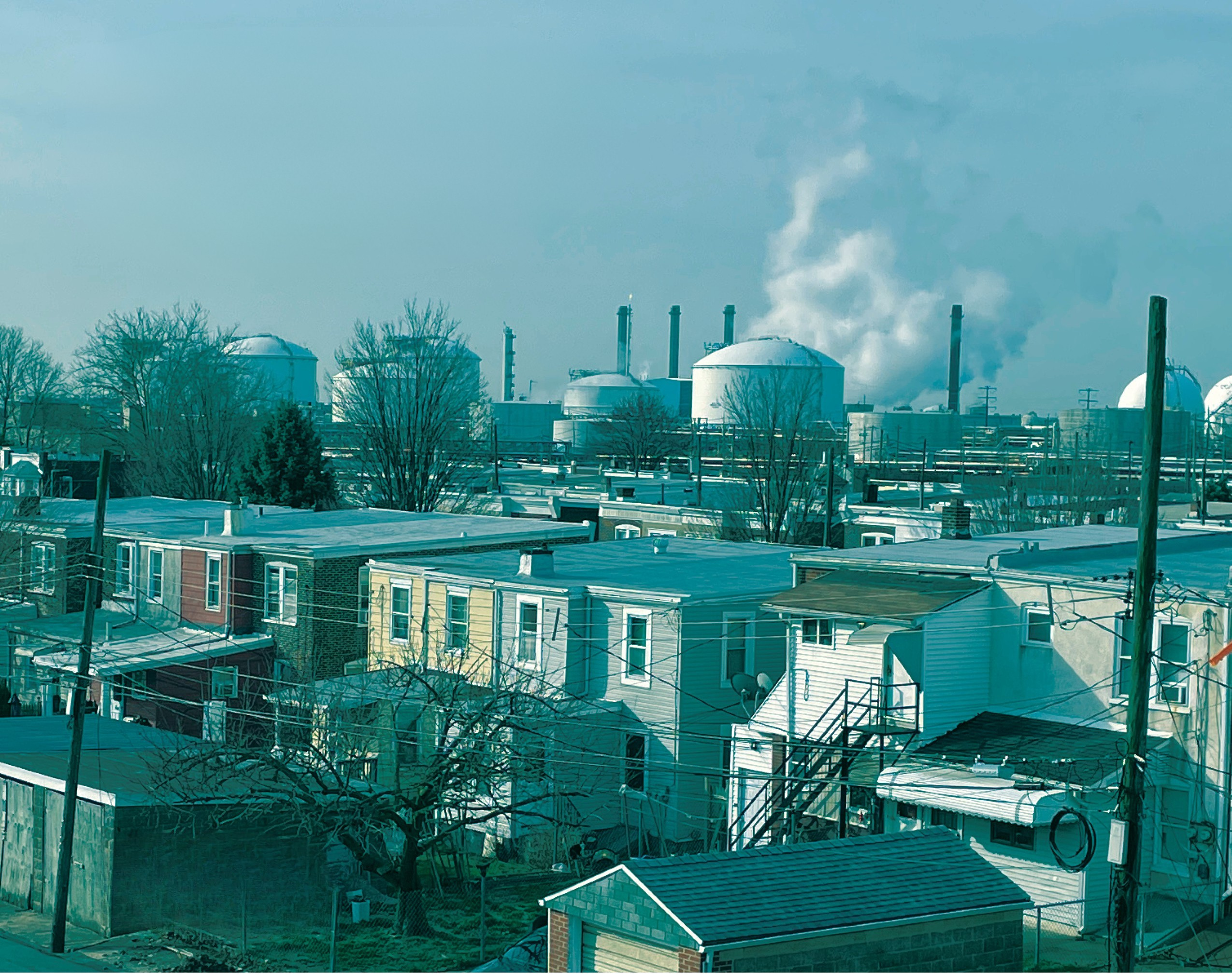
One of the project’s key findings is that climate change can make existing industrial hazards more dangerous. Flooding and severe storms can damage industrial facilities, potentially releasing harmful pollution into nearby neighborhoods and waterways.
The study identified more than 556 industrial facilities and brownfield sites across the project area, including refineries, chemical facilities, hazardous waste sites, and other industrial operations.
The project also highlights how those risks vary by neighborhood. Eastwick faces extensive flooding, while Chester and Marcus Hook have industrial facilities located in areas prone to flooding. In Grays Ferry, limited tree canopy and extensive paved surfaces contribute to extreme heat, while redevelopment of the former Philadelphia Energy Solutions refinery presents ongoing environmental concerns.
Turning Community Knowledge Into Action
Throughout the project, residents participated in workshops and meetings, reviewed climate data, and helped identify neighborhood priorities. Their contributions resulted in a climate resilience report and website with recommendations tailored to each community.
The recommendations address immediate neighborhood needs as well as larger regional and policy changes, including improving emergency preparedness, expanding access to green spaces, strengthening community connections, and reducing risks associated with industrial development.
Clean Air Council also worked with community partners to implement local projects, including improvements to Sun Village Park in Chester and Wilcox Park in Trainer, along with climate information stations and neighborhood resources.
Review the Findings and Recommendations
Clean Air Council has developed a comprehensive website featuring the project’s research, community profiles, climate risk maps, and recommendations for all five focus communities. It includes information about industrial hazards, current and projected flooding, extreme heat, and strategies communities and decision-makers can pursue to build long-term resilience.
