
She Saw Workers in a Stream. The Next Day, She Learned a Pipeline Had Leaked.
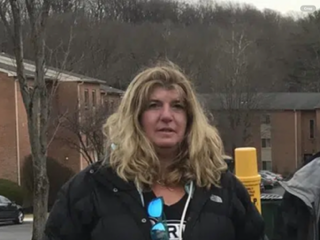
In April 2015, Lora Snyder was driving home late one evening when she saw something that didn’t make sense: workers in headlamps wading through a stream on her street in Edgmont, Delaware County.
She pulled over and asked what was going on.
“Everything is fine,” one worker told her. “We’re just doing routine maintenance on the sewers.”
But the neighborhood didn’t even have sewers.
The next morning, Lora learned the truth. The workers were employed by Sunoco, and there had been a pipeline leak — jet fuel had spilled into the stream and surrounding ground.
“I will never forget the strong smell of petroleum in the air the next day,” she said. “It made it hard to even stay outside.”
Months later, Lora learned that the same 90-year-old pipeline was slated to be repurposed to carry highly volatile liquids, primarily ethane used to manufacture single use plastics. A future leak could be catastrophic.
Lora, a licensed occupational therapist with a background in STEM and a strong commitment to her community, knew she had to get involved. She joined the Middletown Coalition for Community Safety to better understand the risks of the Mariner East pipeline system.
A Pipeline Through Delaware County
By 2017, construction began on the Mariner East 2 and 2X pipelines in Delaware County. The 350-mile project would transport highly volatile liquids from Ohio to an export terminal in Marcus Hook, the first ethane export operation of its kind in the United States.
“We knew we were guinea pigs,” Lora said. “Highly explosive material running through a densely populated region had never been done before.”
For Lora, the risk was personal. The pipeline runs beneath her neighbor’s backyard.
Over the next several years, the impacts became clear. Construction led to repeated drilling spills, or “frac-outs,” and sinkholes forming above active pipelines, raising the risk of a catastrophic explosion.
The pipeline construction process diminished Lora’s and her neighbor’s water quality and yield, forcing her and neighbors to use only bottled water for consumption. Private well water contamination was well documented throughout many communities during the pipeline construction.
Community Organizing Works
In response, residents organized. Lora became active with Del-Chesco United for Pipeline Safety, a grassroots group working to monitor the project and protect community safety.
She learned to operate a drone and helped document violations, capturing images of sinkholes, spills, and construction impacts.
For seven years, community members tracked and reported these issues.
Their efforts mattered. In October 2021, the Pennsylvania Attorney General’s office announced 48 criminal charges against Sunoco Pipeline L.P. and its parent company, Energy Transfer, for environmental crimes related to pipeline construction.
The work of community advocates, alongside legal action by Clean Air Council and other organizations, led to a major victory in 2024: the Pennsylvania Public Utility Commission enacted stricter regulations for highly volatile liquid (HVL) pipelines, including stronger safety standards and expanded emergency responder training.
“Confronting the Mariner East project was essential to making sure these protections were put in place,” Lora said. “There will never again be another Mariner East not subject to stronger regulations.”
Fighting for a Better Future
Today, Lora continues that work. She shares what she’s learned with other communities and works with groups like Marcus Hook Area Neighbors for Public Health to address pollution across Delaware County. Cancer and asthma rates in these communities are significantly higher than the national average, so the stakes remain high.
Lora was a co‑investigator in the ASSESS Johns Hopkins study that looked at how pollution and everyday social and economic pressures affect people’s health. Working with the Clean Air Council and local residents, the research helps to promote passage of laws that give heavily affected communities more say in environmental decisions.
As new polluting projects are proposed, Lora remains committed to enforcing Article 1, Section 27 of our PA Constitution , which is the right to clean air, water and the preservation of our natural resources.
“I have hope because of our community and our unity,” she said. “We’re all breathing the same air and drinking the same water. We can’t accept the level of pollution we’re living with now, let alone more.”
