By Teresa Hong and Alexander Chong – Clean Air Council Bridging the Gap Drexel University Interns
“Today, maintaining existing trails is equally as important as building new trails.”
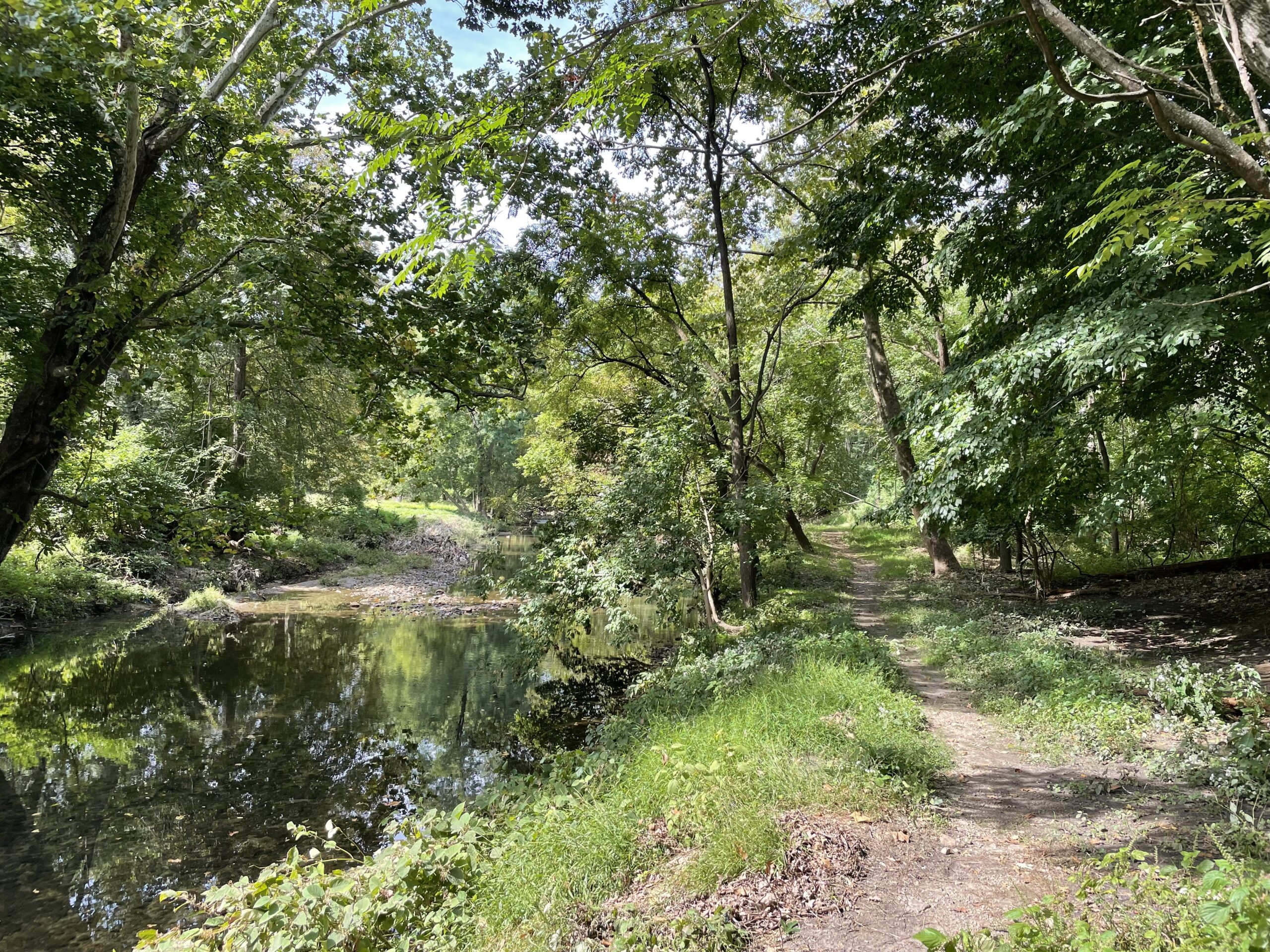
That quote from the Pennsylvania Environmental Council’s (PEC) trail sustainability page hits on an often-overlooked truth: trails need regular care. Sustainability isn’t just about new growth—but also about upkeep.
In its Trail Maintenance Resource Guide, PEC illustrates why trail sustainability and maintenance are so important. A lot of energy goes into building trails and parks—budgeting, planning, construction—but over time, those features wear down. Keeping trails in usable condition takes ongoing effort. Think of it like a daily shower—sometimes you just need a rinse to feel refreshed. And who doesn’t feel better after a clean-up?
When trails are neglected, issues pile up. Degraded trail paths, worn-down amenities, and broken safety features all need attention to keep trails maintained, or even improve it. Smaller maintenance issues like broken lights impact safety and vandalized signs can prevent vital information. Natural debris or blockages can make sections of trail inaccessible, especially wheelchair-accessible paths.
Taking care of these problems early can help keep costs low for the city and its taxpayers. It’s much cheaper to maintain a trail than to tear down a worn-out structure and start over. Good maintenance also helps prevent damage to nearby infrastructure, like roads or buildings by preventing spillover. But to preserve and maintain, you need a good system of documentation for track trail quality, logging changes to quality and reporting to let staff know of issues. Which introduces PEC’s new trail maintenance system.
Because public resources for trails are often limited, PEC developed a new tool called the Trail Maintenance Toolkit (TMT). This toolkit is designed to help document and categorize park trails and structures. It’s a great starting point for trail upkeep.
We first learned about the TMT through a webinar on PEC’s trail sustainability page. It turned out to be a great introduction for understanding the mindset behind the tool. A lot of positive repairs have happened on trails, and this tool is a way to monitor trails qualities and assets. For further insights on the TMT, PEC offers an online trail assessment guide, a podcast episode, and a recorded version of the Trail Maintenance Webinar on their YouTube channel. For us, getting into the rhythm of upkeep and learning the language of documentation really helped get us in the right headspace for trail maintenance.
Using the TMT on site, we became obsessed with data collection. Like a new video game, we did not want to leave any stone unturned. We would often go up and down the trail trying to consistently document resources and assessments, knowing this data may be important for regular maintenance of the trail. Knowing that we made an impact has made all the difference.
The TMT will soon be publicly available online on the web and mobile app!
Monday September, 9th 2024 | Will Fraser
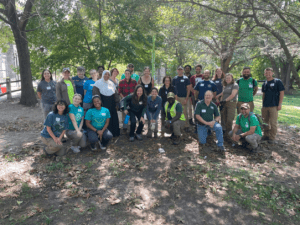
Clean Air Council recently held a trail maintenance workshop as part of our work with the Circuit Trails Maintenance Committee. The workshop was funded by We Conserve PA and DCNR was held at Cobbs Creek Community Environmental Center and offered community members, volunteers, and trail managers the opportunity to learn from local, regional, and national trail experts including Friends of the Wissahickon, Fairmount Park Conservancy, Morris County Parks Commission, National Park Service, and Appalachian Mountain Club.
The full day workshop was split into a morning classroom session and afternoon hands-on field session. Three specific maintenance topics were identified by a regional trail manager survey prior to the workshop: volunteer management, stormwater management, and vegetation management. Attendees learned basics on volunteer management including recruiting, training, and retaining volunteers and how to set up a volunteer day from start to finish including a breakdown in the types of tools used for trail maintenance. Workshop attendees learned about identifying common native and invasive plants and how to properly remove invasive plants with gloves and shears provided to them as part of the workshop. Participants also gained an understanding of ways in which stormwater can affect trails and learned how to identify stormwater runoff erosion and different solutions to prevent stormwater damage.
In addition to the workshop offering education on specific trail maintenance topics it also provided the opportunity for community members, trail managers and government and municipal partners to further connect on trail maintenance issues. Built-in breaks during the workshop allowed participants to discuss trail maintenance challenges and successes and share lessons learned from their experience while hearing from other attendees.
66tyThank you to We Conserve PA and the Pennsylvania Department of Conservation and Natural Resources for funding this workshop and to the speakers who brought their passion, skills, and expertise to the workshop. A special acknowledgement to Friends of the Wissahickon and Pennsylvania Recreation and Park Society for helping plan and organize the workshop and to Cobbs Creek Community Environmental Center for hosting.
