Our Summer Experience with PEC’s New Trail Maintenance Toolkit
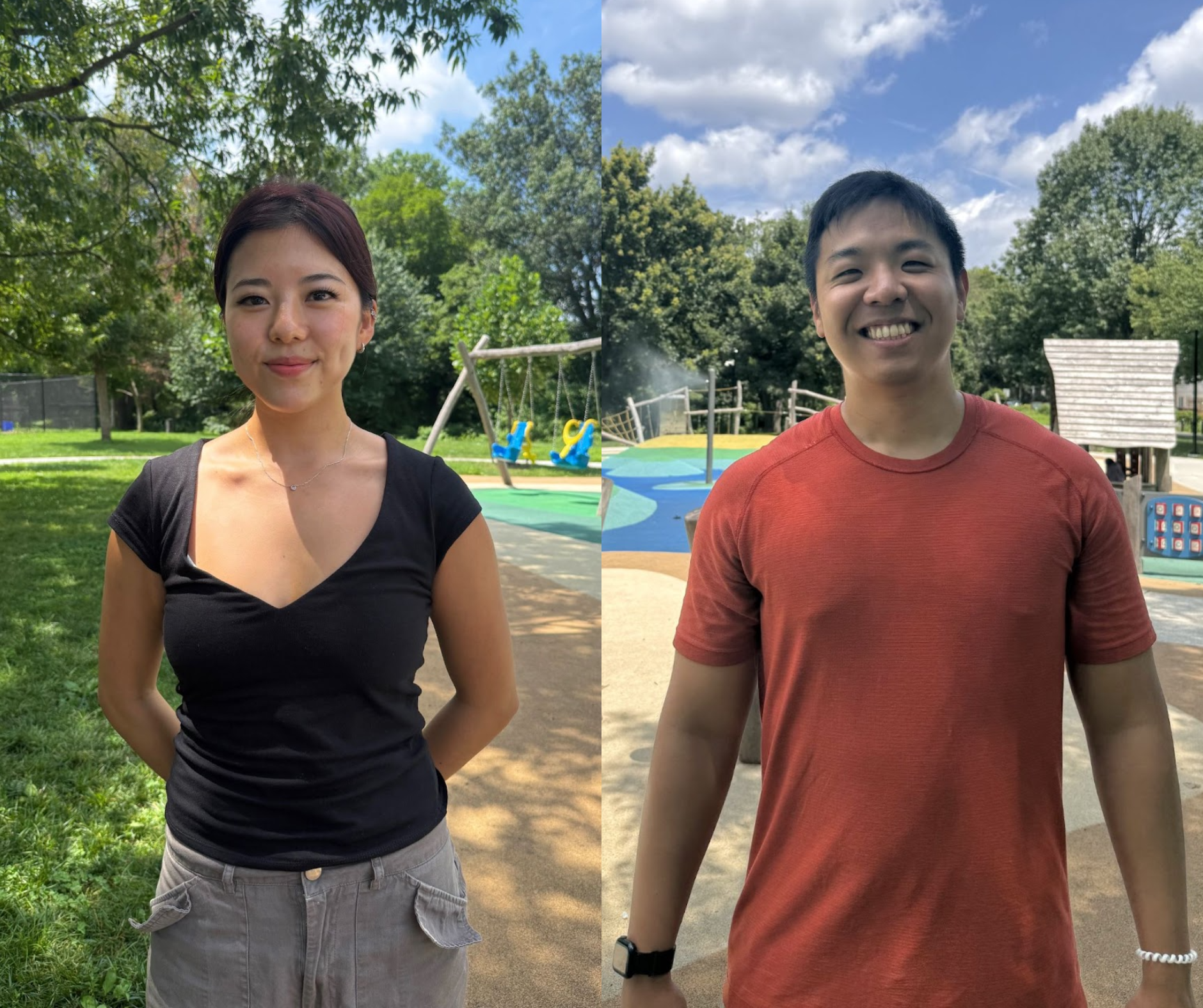
By Teresa Hong and Alexander Chong – Clean Air Council Bridging the Gap Drexel University Interns
Environmental justice is undeniably an important social determinant of health. As medical students, we recognize that where people live and the resources they can access have a direct impact on their physical and mental well-being. To better understand how these factors play out in the community we serve, we spent a summer working with the Clean Air Council, focusing on an often overlooked resource in Philadelphia: trails.
Our project centered on supporting trail longevity using a new mobile app called the Trail Maintenance Toolkit (TMT). This app, developed by the Pennsylvania Environmental Council, allows users to document, assess, and geolocate trail infrastructure, from benches and lighting to drainage features and debris. Our focus was the Cobbs Creek Trail, an area that is both underserved and historically underfunded. Trails like Cobbs Creek are more than recreational paths; they’re vital community assets. Everyone deserves access to safe, well-maintained green space. In fact, access to green space has been linked to lower rates of diabetes, heart disease, and even premature death. These are chronic conditions that disproportionately affect Philadelphians. In this way, trails like Cobbs Creek can serve as preventative medicine, especially in neighborhoods with limited health resources.
At first, the work of documenting the trail was a bit daunting. We were unfamiliar with terms like inlets, which direct water off the path, and bollards, which block unauthorized vehicles from entering pedestrian areas. We had never walked the full trail before, and we weren’t sure what to expect. But the app quickly proved to be intuitive and well-organized. Using geolocation, we could drop points of interest directly onto the trail map and categorize them by type and condition.
The main categories for points of interest include:
| Trail surface | Trail amenities | Drainage features | Debris | Trail support |
| Trail structure | Signage | Vegetation Management | Environmental concerns | Trail crossings |
Each category is color-coded and can be broken down into subcategories. For example, “Trail amenities” includes:
| Benches | Litter receptacles | Bike racks | Bike repair stations | Lighting |
| Picnic tables | Other seating | Drinking fountains | Bollards | Other |
Each point also includes notes, condition ratings, photos, and the suspected source of any damage. You can also attach files or add more detailed descriptions. The webinar has a good breakdown for categorizing the condition of assets.
One thing we quickly learned was that it’s easy to overlook features when you’re not actively looking. Early on, we only recorded things that were broken or needed repair. But we realized that documenting well-maintained structures—bike racks, benches, light poles—was just as important. A full picture of trail health includes the good as well as the bad. We aimed for full completion, hoping to record every visible trail detail, no matter how small. It became both a learning process and a deeply rewarding one.
The TMT helped us see the trail differently. We began to notice swales, which are shallow, vegetated channels that manage water flow, and subtle erosion on the trail surface. We spotted features like signage and drainage systems that had gone unnoticed before. What once felt like a walk in the park became a meaningful exploration of urban infrastructure, public health, and community investment.
By the end of the project, we were proud of what we had contributed. Our documentation will inform real maintenance and improvement efforts, helping ensure Cobbs Creek Trail remains safe and accessible for years to come. But beyond that, the experience gave us a deeper appreciation for how environmental justice intersects with healthcare. The Trail Maintenance Toolkit has real potential to create positive change in the Cobbs Creek community, and we are proud to have played a part in that process.
