“The Hub” is a weekly round-up of transportation related news in the Philadelphia area and beyond. Check back weekly to keep up-to-date on the issues Clean Air Council’s transportation staff finds important.
Are you in the Lehigh Valley area or the Lancaster area? Please take a transit survey from Transit For All PA, to help us better understand transit needs for users in the area. Lehigh Valley survey link and Lancaster area survey link.
Keep Paratransit and Shared-Ride moving by signing onto this organizational letter!
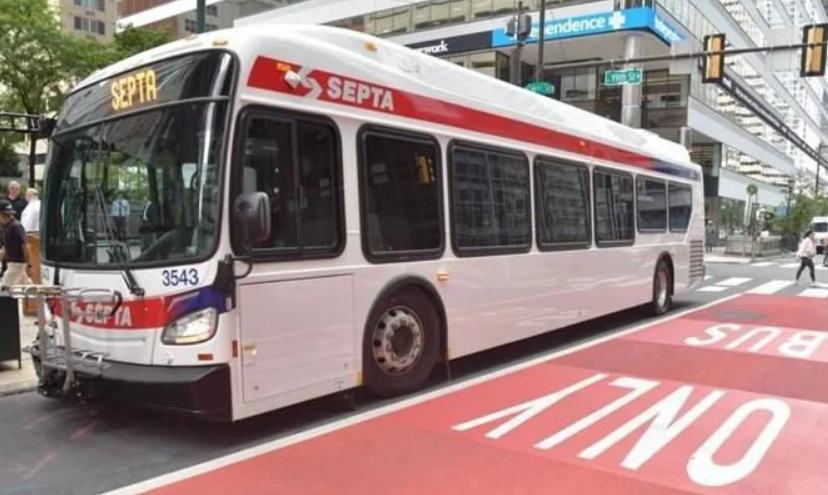
Philadelphia Tribune: Opposition builds against school district’s fare evasion program – The proposed fare evasion enforcement program tied to the School District of Philadelphia is being flagged as a system that unfairly punishes students, and could push them into the criminal justice system for just trying to get to school. Transit advocates warn that despite the intention to curb SEPTA revenue losses, this plan is not the best path forward. SEPTA student fare cards are extremely limited in their use, with restrictions based on geography, times of day, and not allowed at all on weekends or summer breaks. Advocates warn that the program will disproportionately target students of color and low-income families, and the solution is to expand transit access and education, rather than punishment.
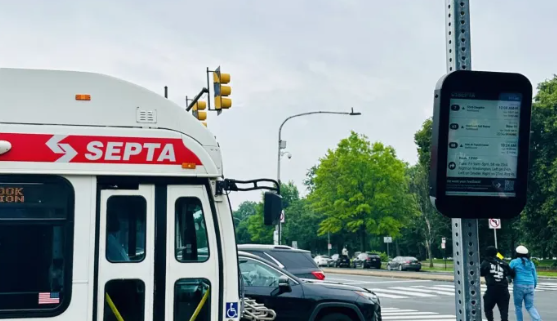
NBC Philadelphia: SEPTA installs first real-time arrival display at South Philadelphia bus stop – Riders that take the bus at Broad and Oregon are the first to receive a real-time information display, as part of a pilot program by SEPTA. SEPTA said that 9 more devices are to be installed at bus stops and to T, G, D, and M Metro stations. The screens use solar power and e-paper technology, making them visible even in bright sun. They are small enough to be mounted on stop sign poles, and have a text-to-speech bubble, to help low-vision riders. SEPTA is asking for feedback from riders through https://wwww.septa.org/initiatives/better-bus/epaper/.
NBC Philadelphia: Philly’s annual Ride of Silence honors cyclists, calls for safer streets – On Wednesday night, cyclists met at City Hall for the 22nd annual Philly Ride of Silence to honor cyclists killed or injured. 15 cyclists have been killed by motorists in the Delaware Valley region this year alone. Cyclist advocate group Bicycle Coalition of Greater Philadelphia has worked with lawmakers and the PPA to expand protected bike lanes, and ticket vehicles that idle in them. The PPA has issued close to 30,000 violations since the enforcement unit was created in 2023. Advocates hope to see further protections for cyclists and pedestrians throughout the city in the near future.
Other Stories
PhillyVoice: Uber escalates ad campaign against Mayor Parker’s $1-per-ride tax as vote looms
BillyPenn: Philly’s 100 Steps restored after a hasty gray paint job sparked outrage
Pennsylvania Capital-Star: Those potholes in your street reveal a money problem for cities and states
PhillyVoice: New Hope Railroad now has scenic pedal-bike tours that wind along heritage tracks in Bucks County
The Inquirer: Philly’s airport just lost Spirit Airlines. Another low-cost airline is moving in.
Centre Daily Times: PennDOT highlights $212M in central PA projects. What’s happening in Centre County?
The Inquirer: All-electric Volvos now pull some of the famed tram cars on the Wildwoods boardwalk
Streetsblog USA: America Keeps Building Stadiums Like Transit Doesn’t Matter
Clean Air Council joined the Bicycle Coalition and other Vision Zero Alliance advocates for a day of action on Tuesday, April 30th in Harrisburg. Advocates spoke to State Representatives and Senators about critical legislation needed to make streets safer for all road users.
If passed, this legislation would allow comprehensive integrated protected bike lane networks throughout Pennsylvania, create safe cycling and pedestrian spaces, and reduce dependence on automobiles. Protected bike lanes make bicycling safer, and are one of the best ways to protect pedestrians.
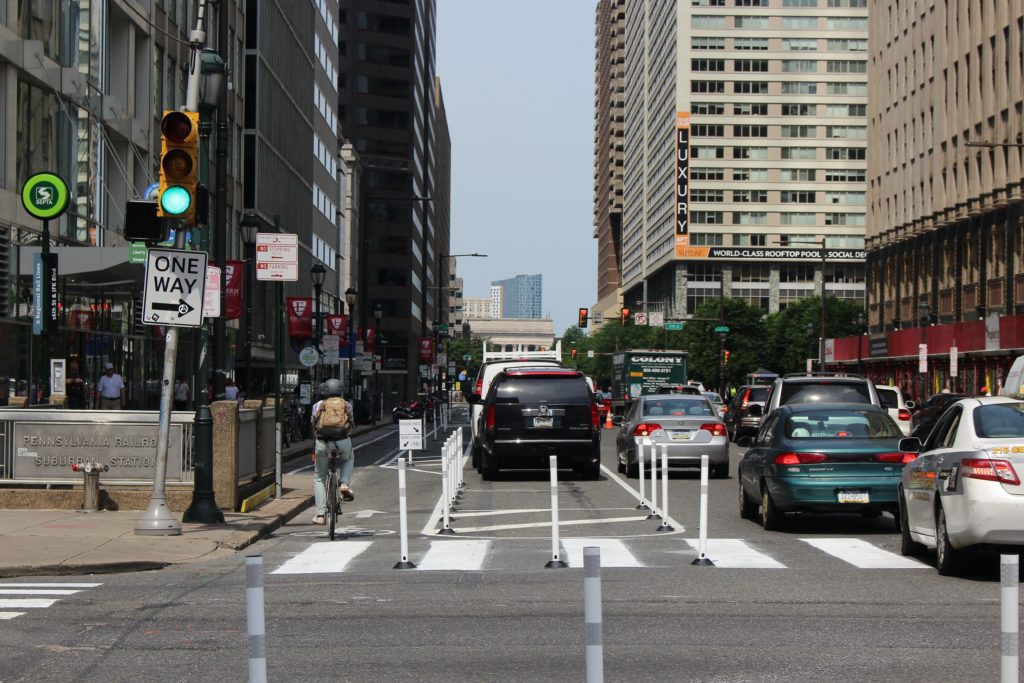
Pennsylvania State Senate Bill 565 (SB 565) and its companion House Bill 792 (HB 792) would allow pedestrian plazas and bike lanes on state roads to be separated and protected by parked cars. The bill was sponsored and introduced yesterday by 1st District State Senator Larry Farnese of Philadelphia.
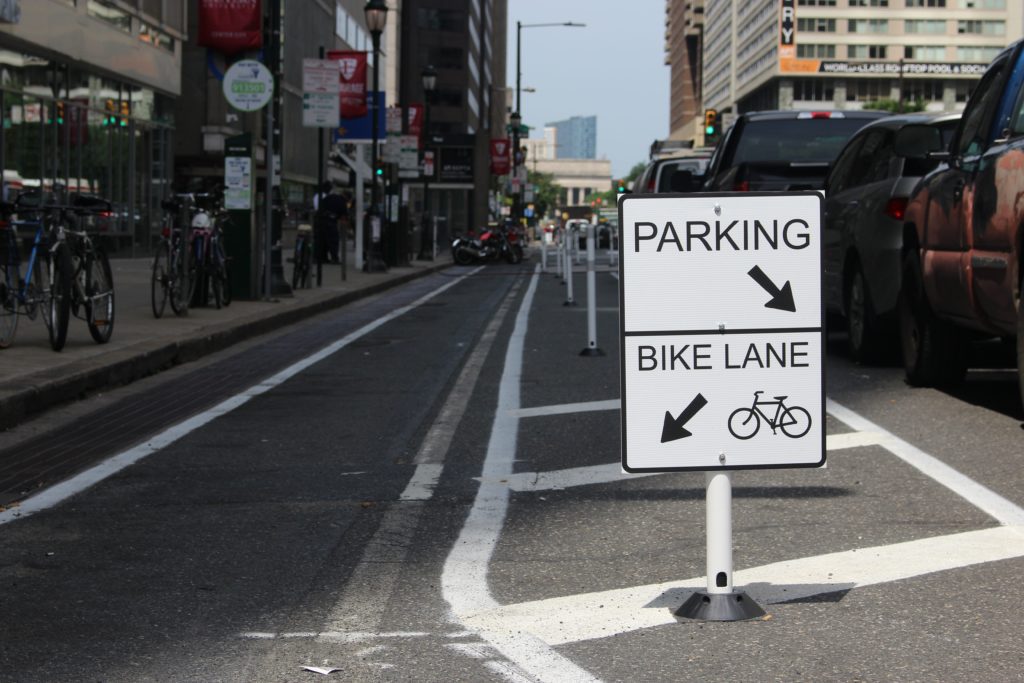
On state roads, pedestrians are 6.5 times more likely to die in crashes than non-pedestrians. While similar numbers of pedestrians involved crashes occur on local roads, 75% of pedestrian crashes that result in a fatal injury are on state roads. Protected bike lanes reduce traffic speeds by narrowing the road, calm intersections by reducing the turning radius, and create a shorter crossing distance for pedestrians.
House Bill 37, another important bill the Council advocates for, would ban hand-held cell phones while driving. The Fredricks family, whose daughter Emily was killed on her bicycle by a distracted driver while biking in the bike lane near 11th and Spruce Streets in Center City, spoke to legislators about their daughter and asked Senators and Representatives to pass legislation to prevent other families from experiencing similar tragedies. Distracted driving caused by cell phone use is a major cause of bicycling and pedestrian fatalities in Pennsylvania, and quadruples the risk of a crash. The Council asked legislators to join neighboring states New Jersey, Delaware, and Maryland in banning hand-held phones while driving.
The Council also asked legislators to bring two bills to the floor that would have a major impact on road user safety. The first, a radar bill, (HB-1275) would allow municipal police to use radar technology. Pennsylvania is currently the only state in the country that does not allow municipal police from using radar to detect vehicle speeds. Speed is the largest predictor of how serious a crash can be. The difference of just 5 or 10 miles an hour can mean life or death.
Pennsylvania can more effectively slow drivers down by putting radar technology in hands of law enforcement across the Commonwealth. The second bill, yet to be introduced, would protect vulnerable road users including pedestrians, motorcyclists, horse and carriages, farm equipment, and others by requiring a minimum of four feet to pass. Many parts of the state do not have sidewalks, especially on the particularly dangerous state roads, and vulnerable road users must be afforded the protection of a minimum passing distance.
Creating safer roads for everyone is a common theme throughout all the bills presented to legislators on this day of action. Everyone has the right to travel safely, and a bipartisan focus on reducing traffic deaths, will create safer roadways for all users.
Exactly 17 days passed since Emily Fredricks was struck and killed by a private garbage truck while riding in the bike lane along Spruce Street before another cyclist was again struck by a turning truck while riding in a bike lane. This time the crash occurred near 13th and Pine Streets, just a couple blocks from where Fredricks was killed, and is once again igniting the call for more protected bike lanes throughout Philadelphia.
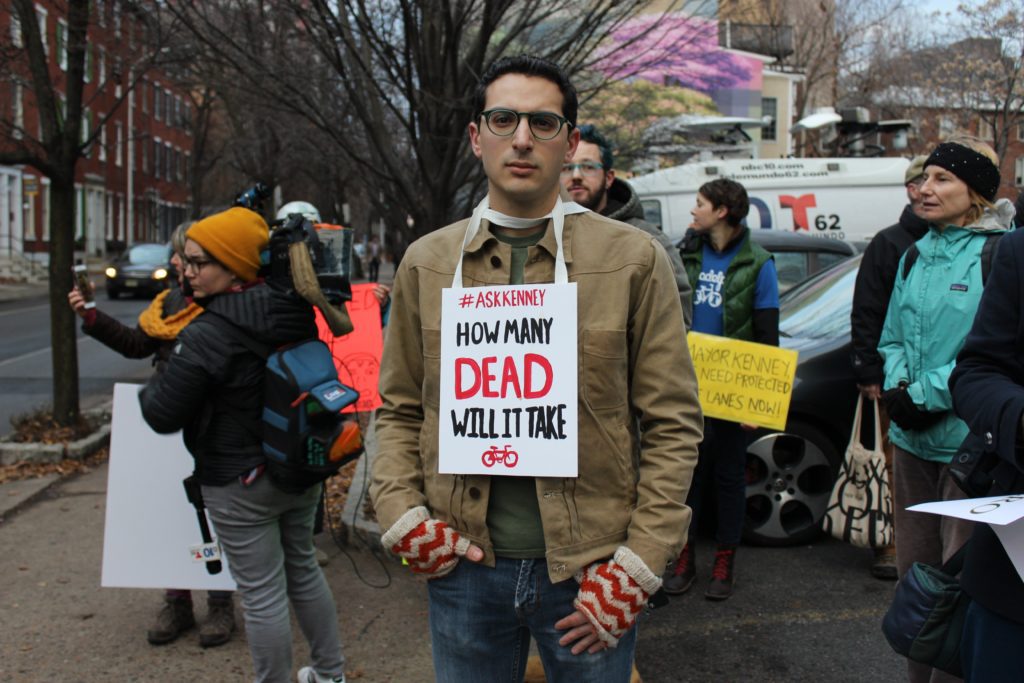
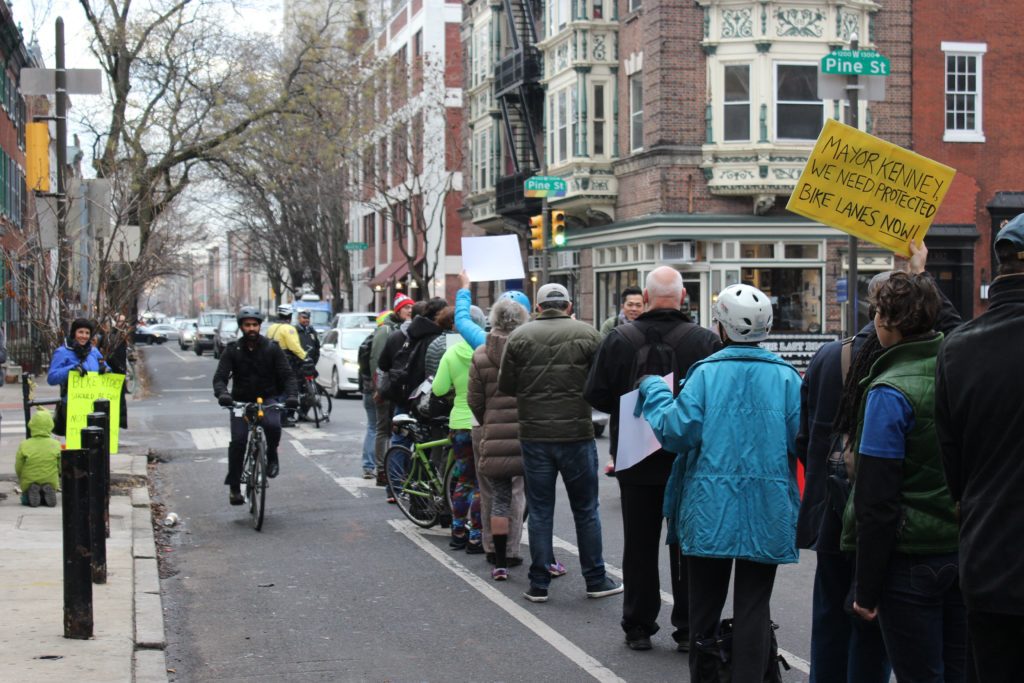
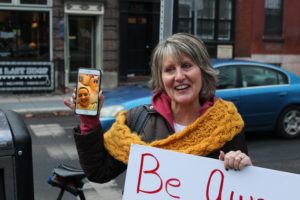
This morning, over 100 people gathered today to again form a human barrier between traffic and the bike lane along 13th Street, and show support for Becca Refford, 24, who was commuting to work when she was hit. Refford waved and smiled at the people who made the human bike lane from her hospital bed via Facetime.
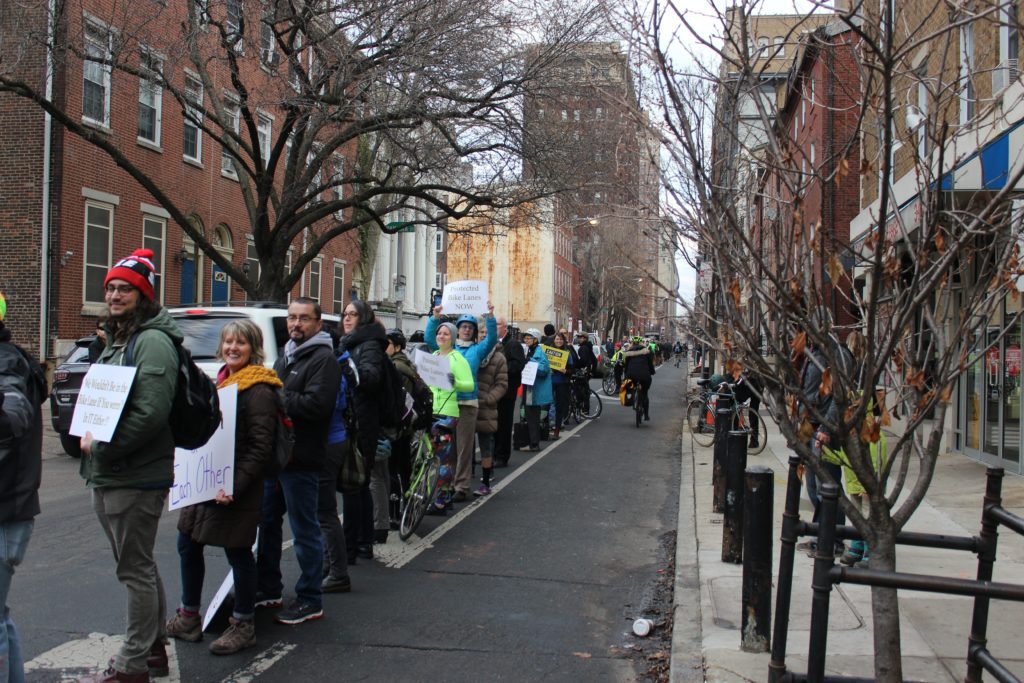
Another serious crash so soon after the death of Emily Fredericks should make clear that paint-buffered bike lanes are not good enough protection on the most used, high traffic streets in Philadelphia.
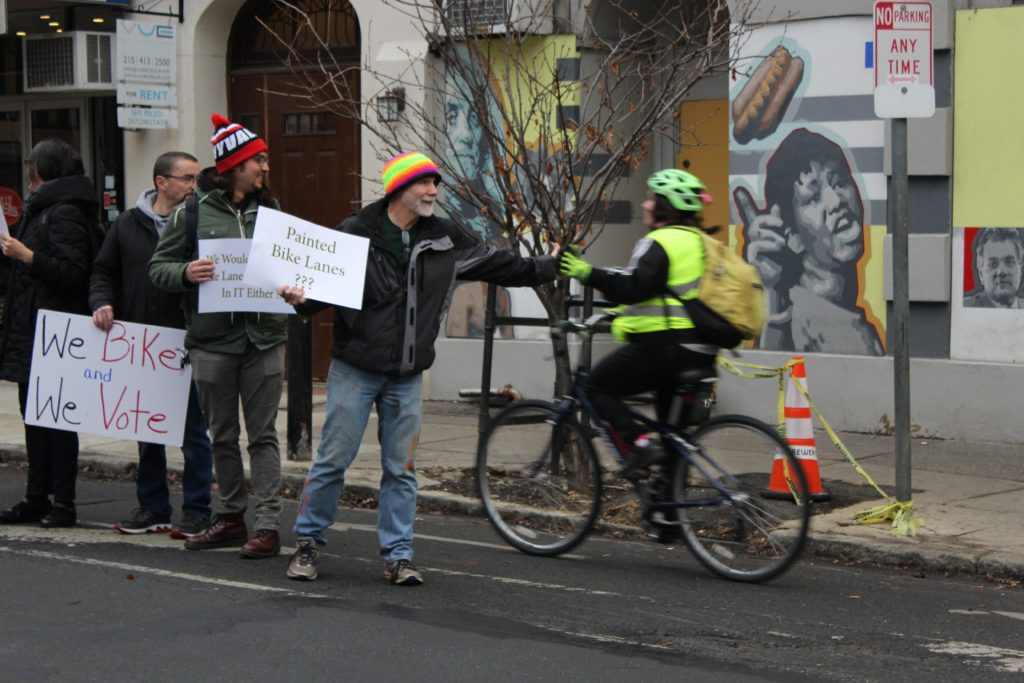
Last week, the City took a small step by committing to a short section of protected bike lanes on South Street and 27th Street near the South Street Bridge. Unfortunately this is a compromise from the original plan to include a protected bike lane along Lombard Street as well.
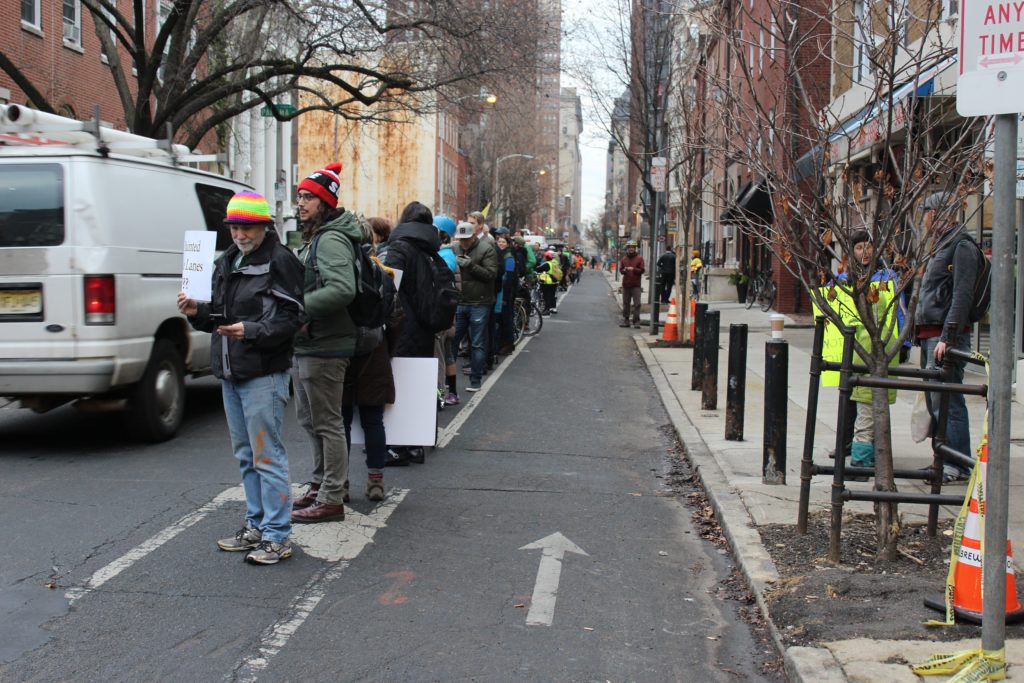
Spruce Street, Pine Street, Lombard, and 13th Street are some of the most highly traveled bike lanes in Philadelphia. It is important that these roads be upgraded from lines of paint to physical barriers, the past three weeks have clearly demonstrated the need. Call Councilmen Kenyatta Johnson and Mark Squilla to thank them for the small addition to the City’s protected bike lane network, and demand that they take further steps to rapidly install protected bike lanes on all of center city’s bike lanes.