(May 22, 2026) — Last Wednesday, the Pennsylvania Public Utility Commission (PUC) released its final large load model tariff that guides utility companies on how to handle large data centers. Hyperscale data centers will consume unprecedently large amounts of electricity, which makes them “large load” customers for utility companies.
This anticipated high electricity consumption is driving the need for significant grid upgrades and increasing energy demand, both of which raise energy costs for everyone. This PUC policy is a critical first step toward better protecting Pennsylvanians from shouldering the cost of large-scale data center development.
At a time when our lawmakers are scrambling to catch up to data center growth and energy demand, the PUC’s forward-thinking policy outlines certain standards that, if adopted by utilities, can improve transparency, better support low-income customers, and prevent infrastructure costs incurred for data centers from shifting onto everyday residents and small businesses.
These guidelines are an important step, but the PUC failed to act on key clean energy and reliability issues in this policy. Pennsylvania is at a crossroads where, without proper policy and regulations, data center buildout will create more fossil fuel generation, and lock in a future of environmental, climate, and public health harms.
Despite this, the PUC evaded any recommendation for data centers to bring their own clean energy sources online, which would both improve grid reliability and avoid emitting pollution. Similarly, the PUC failed to address whether data centers should interrupt or reduce their energy usage during periods of high energy demand.
The PUC does not yet have the authority to directly regulate data centers and set binding requirements, so these guidelines are only effective if the utilities choose to adopt them in their future rate proceedings. Currently, there is proposed legislation that, if passed, would direct the PUC to create binding regulations for data centers.
“Pennsylvanians are already paying for data center buildout through increased energy costs,” Alex Bomstein, Executive Director of Clean Air Council, said. “Until our decisionmakers take real, binding steps toward strong regulations on data centers, Pennsylvanians will continue to bear the burden of rising energy costs.”
Bomstein pointed out that the PUC’s large load model tariff sets a floor for how utility companies should think about their requirements to ensure data centers pay their fair share, but it misses the opportunity to provide guidance on the importance of clean energy in this conversation.
“It is critical that lawmakers and regulators act swiftly to build on this foundation and pass policies that will provide meaningful protections from rising energy costs due to data centers,” Bomstein said.

Marple Township, Delaware County, PA (February 27, 2025) – Green Amendments For The Generations, Delaware Riverkeeper Network, Citizens for Pennsylvania’s Future, and Clean Air Council, jointly filed an amicus brief in support of intervenors appealing to the Commonwealth Court regarding the Pennsylvania Public Utilities Commission’s (“PUC”) obligation to consider climate change impacts in its environmental reviews pursuant to Article I Section 27 of the Pennsylvania Constitution, otherwise known as the Pennsylvania Green Amendment or the Pennsylvania Environmental Rights Amendment.
The Pennsylvania Green Amendment, first passed in 1971, states that “The people have a right to clean air, pure water, and to the preservation of the natural, scenic, historic and esthetic values of the environment. Pennsylvania’s public natural resources are the common property of all the people, including generations yet to come. As trustee of these resources, the Commonwealth shall conserve and maintain them for the benefit of all the people.” The Amendment was given legal life in 2013 when Delaware Riverkeeper Network, Maya van Rossum – the Delaware Riverkeeper, multiple municipalities, two municipal officials, and a physician used it to challenge unconstitutional pro-fracking legislation known as Act 13.
The amicus brief submitted today is the latest development in the ongoing litigation of Township of Marple v. Pennsylvania Public Utility Commission, in which the Township challenged a PUC-granted petition that exempted PECO natural gas infrastructure from local zoning laws. The Township argued that among other things, the PUC erred when it granted the petition because it declined to consider the potential negative environmental impacts on the public health, safety and welfare of the proposed project; and it challenged the PUC’s finding that the proposed facility was reasonably necessary for the convenience or welfare of the public– which was the basis for granting the petition in the first place.
The case was brought before the Pennsylvania Commonwealth Court, which confirmed in 2023 that the PUC, as is the case with other Pennsylvania government bodies, must ensure that its actions and decisions comply with the constitutional mandates included in the Pennsylvania Green Amendment. As a result, the court vacated the petition and sent the matter back to the PUC with instructions that it issue an Amended Decision “which must incorporate the results of a constitutionally sound environmental impact review as to the proposed siting”. Green Amendments For The Generations, Delaware Riverkeeper Network, Citizens for Pennsylvania’s Future, and Clean Air Council previously filed an amicus brief in support of the intervenors, providing guidance to the PUC on how they may conduct such a review.
Since the first amicus was filed, the PUC has essentially declined to evaluate the climate change impacts of the proposed infrastructure, and has claimed that portion of the review to be the responsibility of the legislature and other state agencies. Once again, the intervenors appealed to the Commonwealth Court challenging this omission from the PUC’s environmental review. The amicus brief filed today details why climate change impacts must be considered in a constitutionally adequate environmental review. It also clarifies that the PUC has an independent obligation to evaluate the climate change impacts where no other agency has reviewed them.
“The Commonwealth Court sent a clear message to the PUC and other Commonwealth agency officials that they must independently and substantially consider the Pennsylvania Green Amendment and the environmental impacts of their projects before they can move forward,” said Maya K. van Rossum, Founder of Green Amendments For The Generations and The Green Amendment Movement, and Leader of the Delaware Riverkeeper Network and the Delaware Riverkeeper. “The PUC must follow through on its constitutional obligations to honor the inalienable rights of Pennsylvanians to pure water, clean air, stable climate, and healthy environments.”
“The PUC failed to complete the task the Commonwealth Court set to it–to perform a constitutionally sound environmental review of the whole project, consistent with its obligations as a trustee of our public natural trust,” said Jessica O’Neill, Managing Attorney for Litigation for PennFuture. “With climate change already substantially affecting the Commonwealth, the implications of climate impacts from this project must not be ignored.”
“With the climate degrading every year, blatantly setting aside our constitutional environmental rights is dangerous and shortsighted,” said Alex Bomstein, Clean Air Council Executive Director. “PUC must remember the public part of its name and its mission to ensure utility service that is both reliable and safe.”
Read the full amicus brief here.
Background: Pennsylvania is one of only three states with a Green Amendment, the other two being Montana and New York. The Amendment gives highest constitutional standing to peoples’ inherent rights to clean air, pure water, stable climate, and healthy environments, and creates an obligation on state governments to consider such protections in all decision-making processes.
The Pennsylvania Green Amendment sat dormant for many years until 2013, when Delaware Riverkeeper Network won a watershed legal victory that struck down pro-fracking legislation that violated the environmental rights that are protected to the highest legal degree in the constitution. This victory inspired the nationwide Green Amendment movement, which now has engagement from over half of the country, including proposed amendments in 19 states and another eight states in the organizing stages.
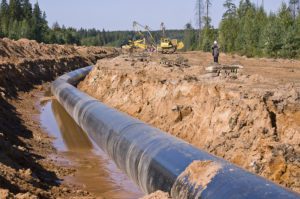
September 27, 2024 – For years, pipeline companies like Energy Transfer have built and operated dangerous pipelines throughout Pennsylvania, without adequate safety oversight. Now, new rules passed by the Pennsylvania Public Utilities Commission (PUC) go a long way to addressing safety and environmental concerns associated with hazardous, highly volatile liquids pipelines like Mariner East. While not perfect, these groundbreaking new rules put Pennsylvania at the forefront of safety – protecting homes, schools, and places we gather that are in close proximity to such pipelines.
These new rules are a direct result of the tireless work of residents and the legal and advocacy work of Clean Air Council and our partners. From contaminated wells to sinkholes to the potential for leaks and explosions, residents have raised the alarm on the dangers of hazardous liquids pipelines and the need for better regulation by state agencies. Clean Air Council has supported residents in their advocacy and legal efforts to challenge the weak regulation and enforcement that puts communities at risk. The new regulations cover construction, operation and maintenance, leak detection, emergency notification, accident reporting, and enforcement mechanisms.
The potential accidents and disasters associated with pipelines like Mariner East are unacceptable and we are confident that these new rules will be more protective and help us breathe a sigh of relief. While this is a significant victory, the Council will continue to watchdog the PUC and pipeline safety across the state. No one should be in harm’s way of any dangerous pipeline infrastructure.
