Philadelphia and Delaware County are uniquely vulnerable to impacts of climate change, even compared to the rest of Pennsylvania. Residents in communities along the Schuylkill and Delaware Rivers face extreme heat and flooding risks compounded by the large amounts of polluting industrial facilities in densely populated riverfront areas.
Clean Air Council’s three-year Climate Resilient Communities project brought together residents in South and Southwest Philadelphia as well as Chester, Trainer, and Marcus Hook in Delaware County to address the combined risk of climate change and pollution. The Council’s forthcoming Climate Resilient Communities report, developed by landscape architects at Olin Design Studio, provides key findings and recommendations to address the risks and build climate resiliency.
One of the key findings of the study is that riverfront industrial infrastructure can cause dangerous public health conditions, like increased air and water pollution, during extreme heat and precipitation events. Recommended resiliency strategies include strengthening connections between local leaders, neighbors, and community groups and the expansion of storm shelters, cooling centers and air conditioned recreational space.
Over the course of three years, Clean Air Council and community partners surveyed residents and hosted regular meetings in each focus neighborhood. Residents reviewed local climate models, identified locations most impacted by heat and flooding, and provided extensive feedback on resilience strategies that would have the greatest impact in their communities.
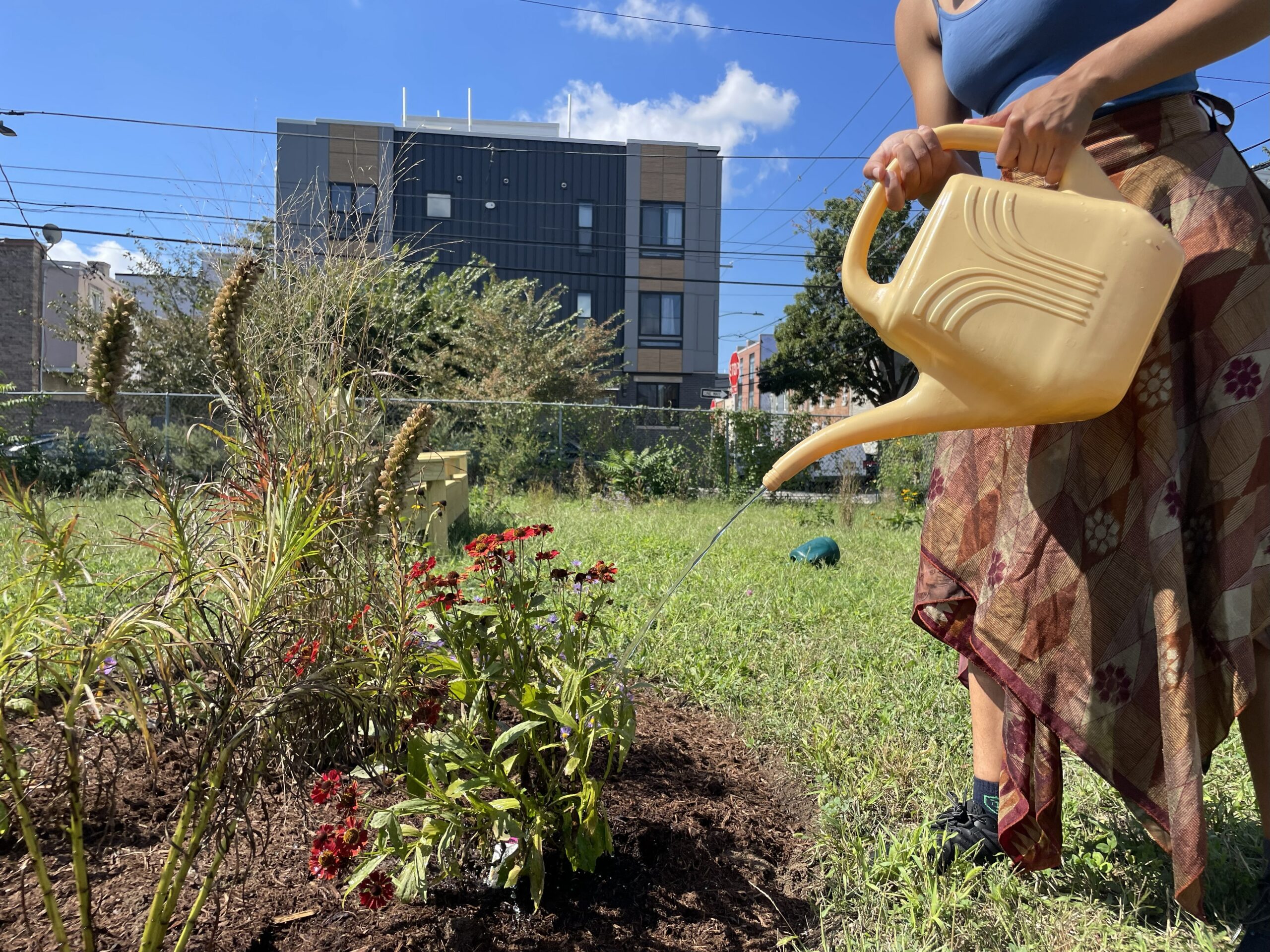
Council staff then worked with residents and partners in each neighborhood to develop green infrastructure projects to mitigate heat and flooding impacts and support climate resiliency. Ideas for projects included transforming vacant lots into community gardens, adding native trees and pollinator plants to local parks, and transforming existing parks into naturescapes for families and children to enjoy. Based on residents’ feedback, four climate resilient communities projects were implemented.
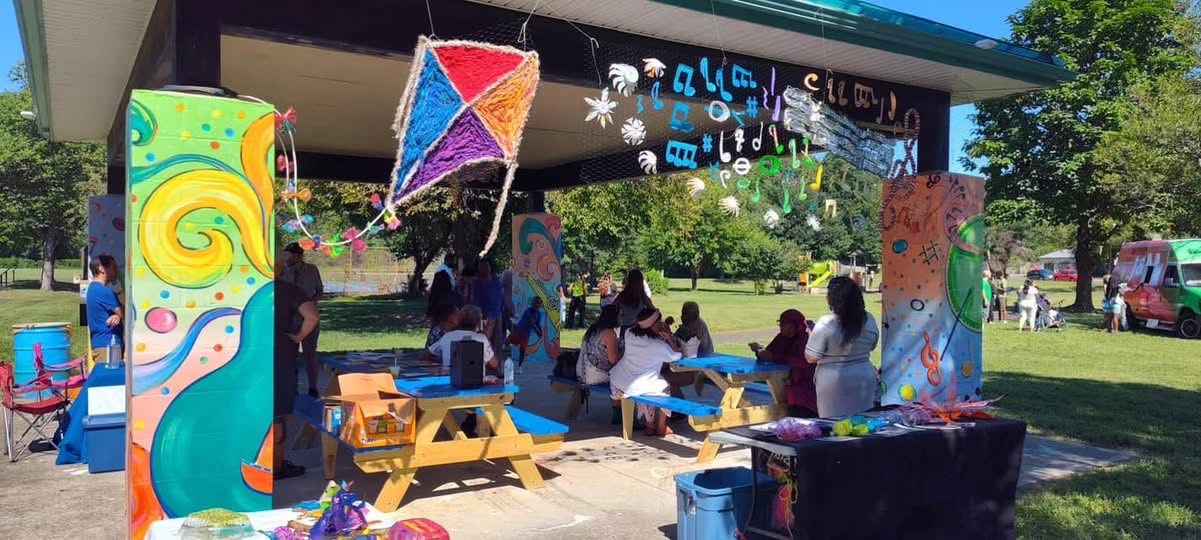
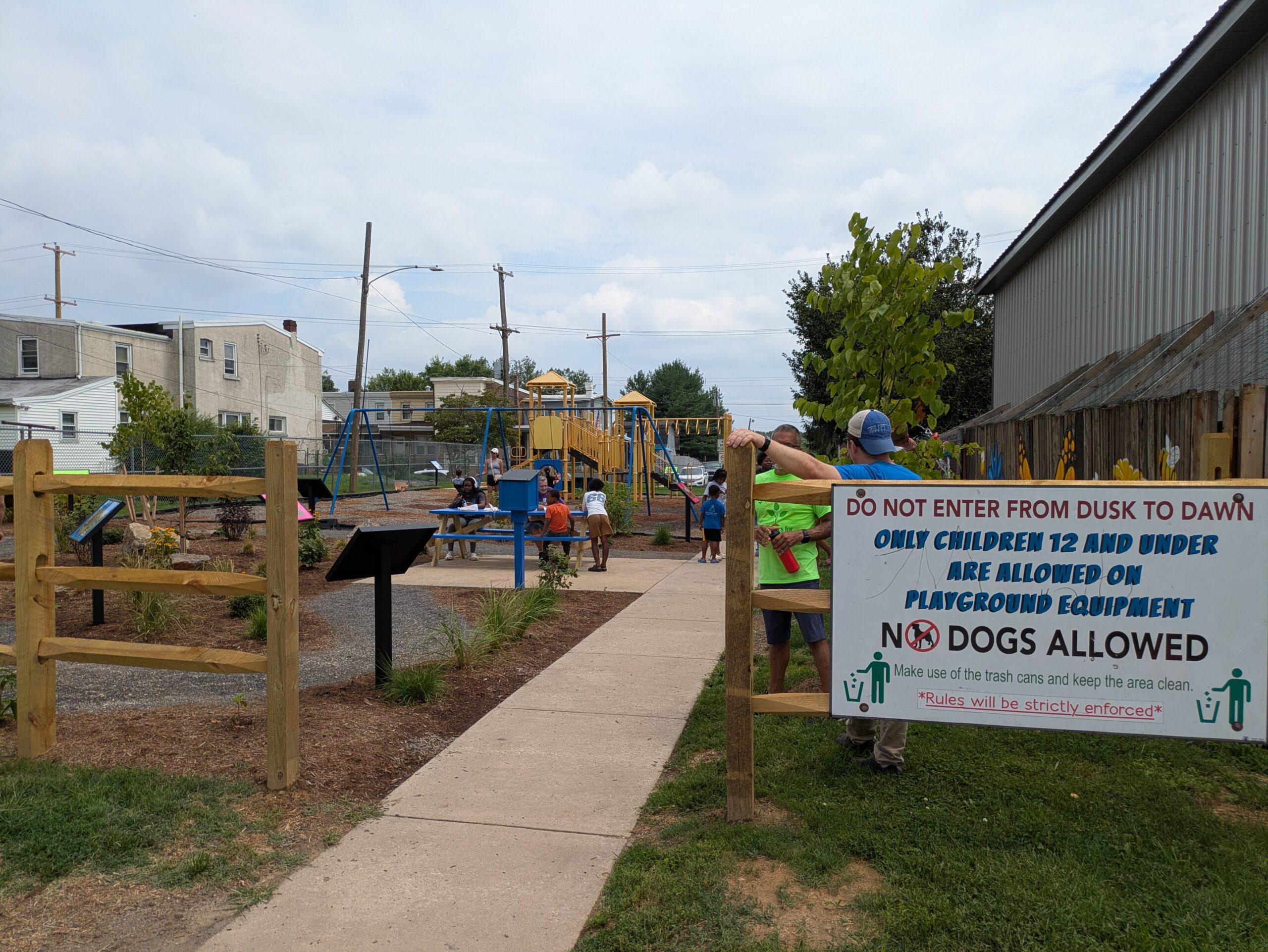
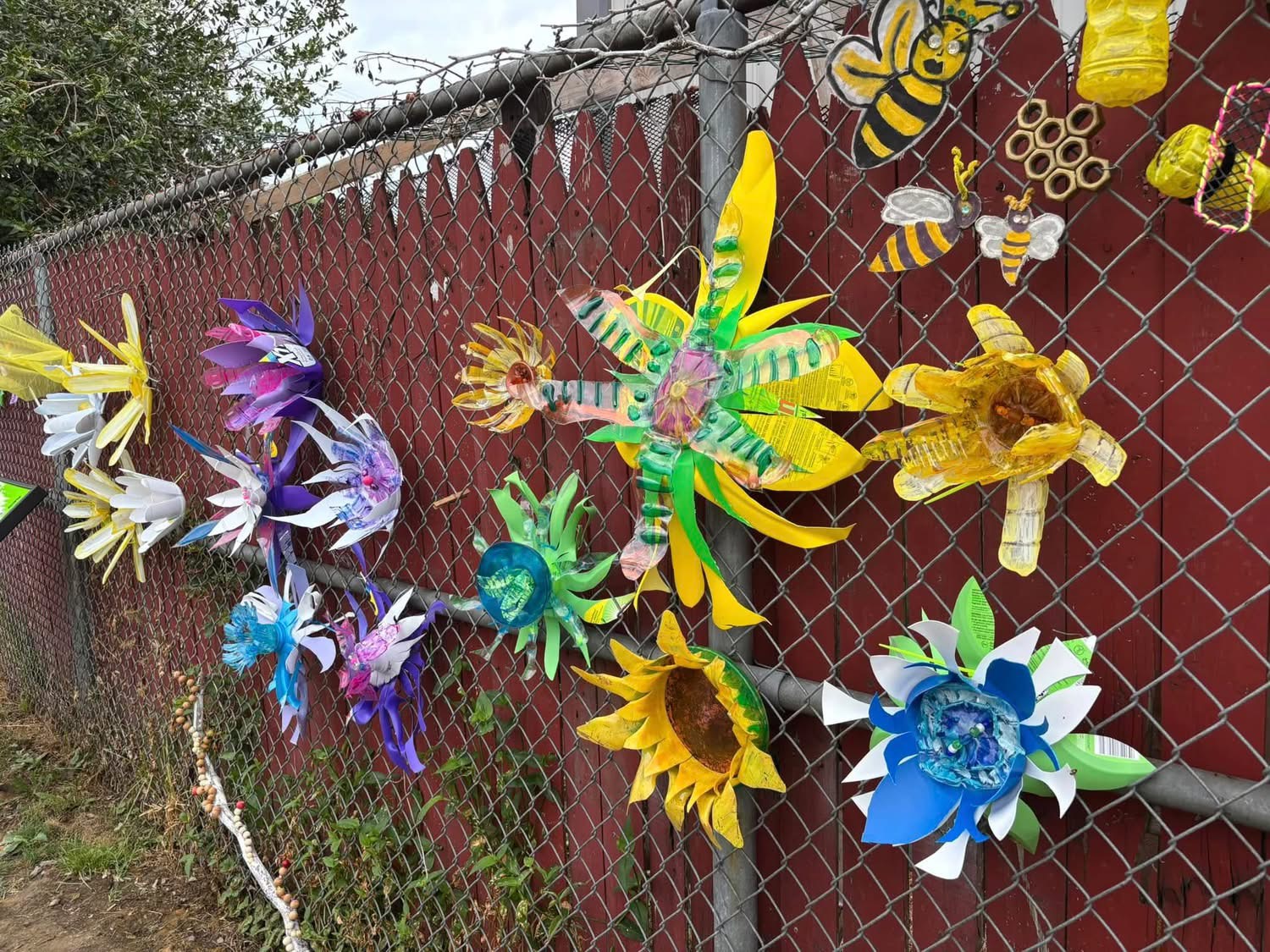
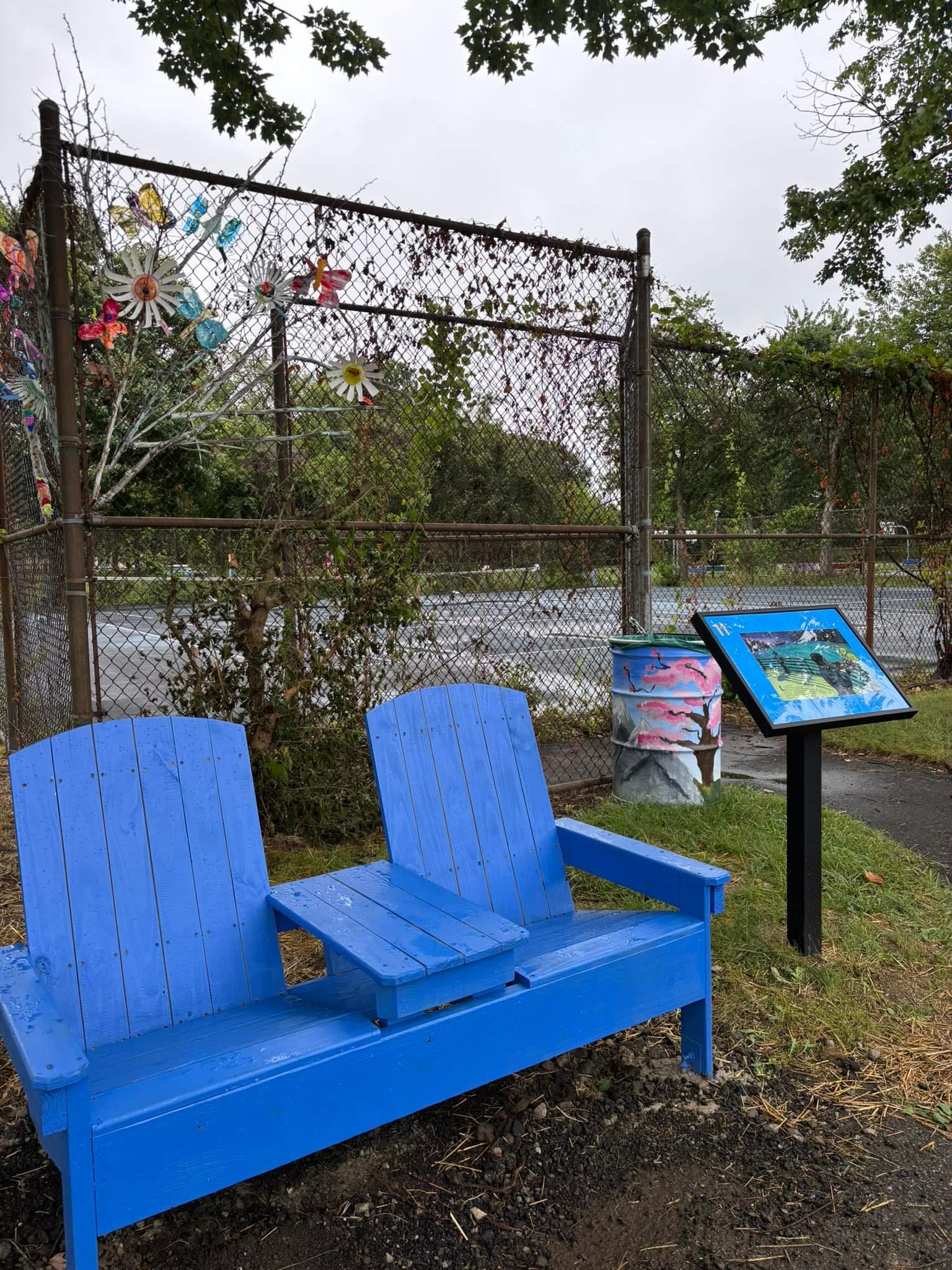
In Delaware County, the Council worked with the City of Chester, Legacy Arts Chester and Bonnie’s Community & Development Corp to make significant improvements to Sun Village Park, including a storybook walk and native pollinator garden, new picnic tables and benches, and vibrant mural and art installations around the park’s pavilion and tennis courts. The Council also worked with Trainer Borough, Marcus Hook Area Neighbors for Public Health, and the NMS Watersheds Alliance to install a storybook walk, native pollinator garden, native flowering trees, mural arts, and a free little library at Wilcox Park next to Monroe Refinery in Trainer. These revitalized park spaces in Delaware County provide residents with shaded spaces to connect with nature, art, literacy, and other neighbors. Respite and community gathering spaces help to build social connection and cohesion, which are vital to a community’s climate resiliency plan.
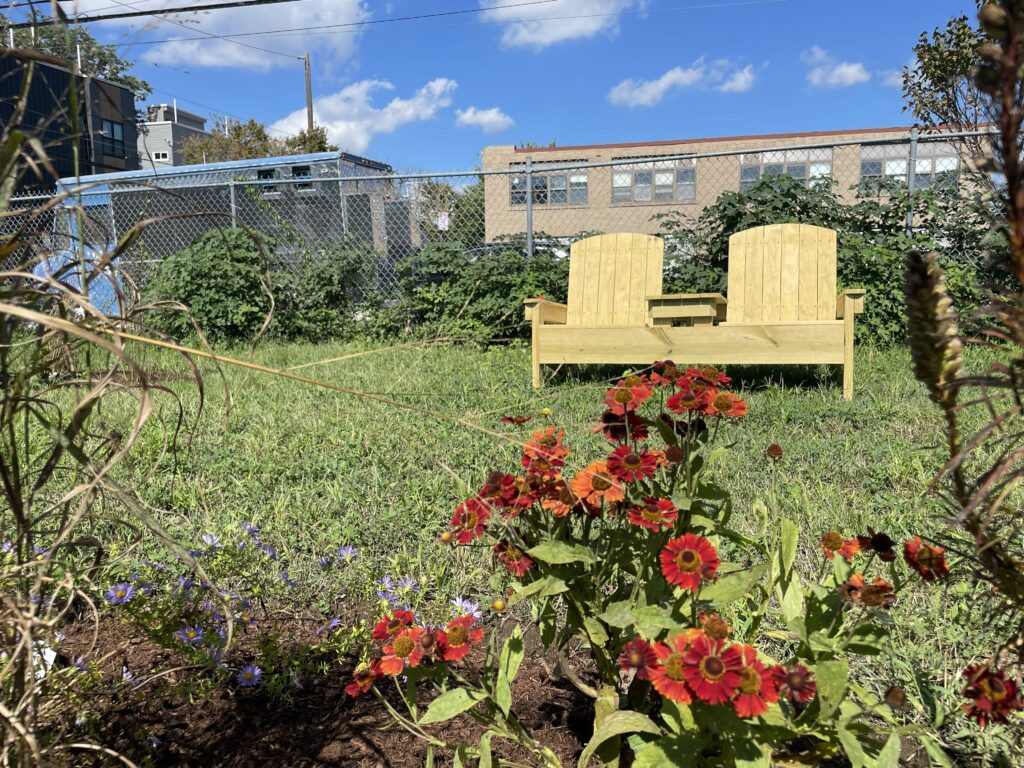
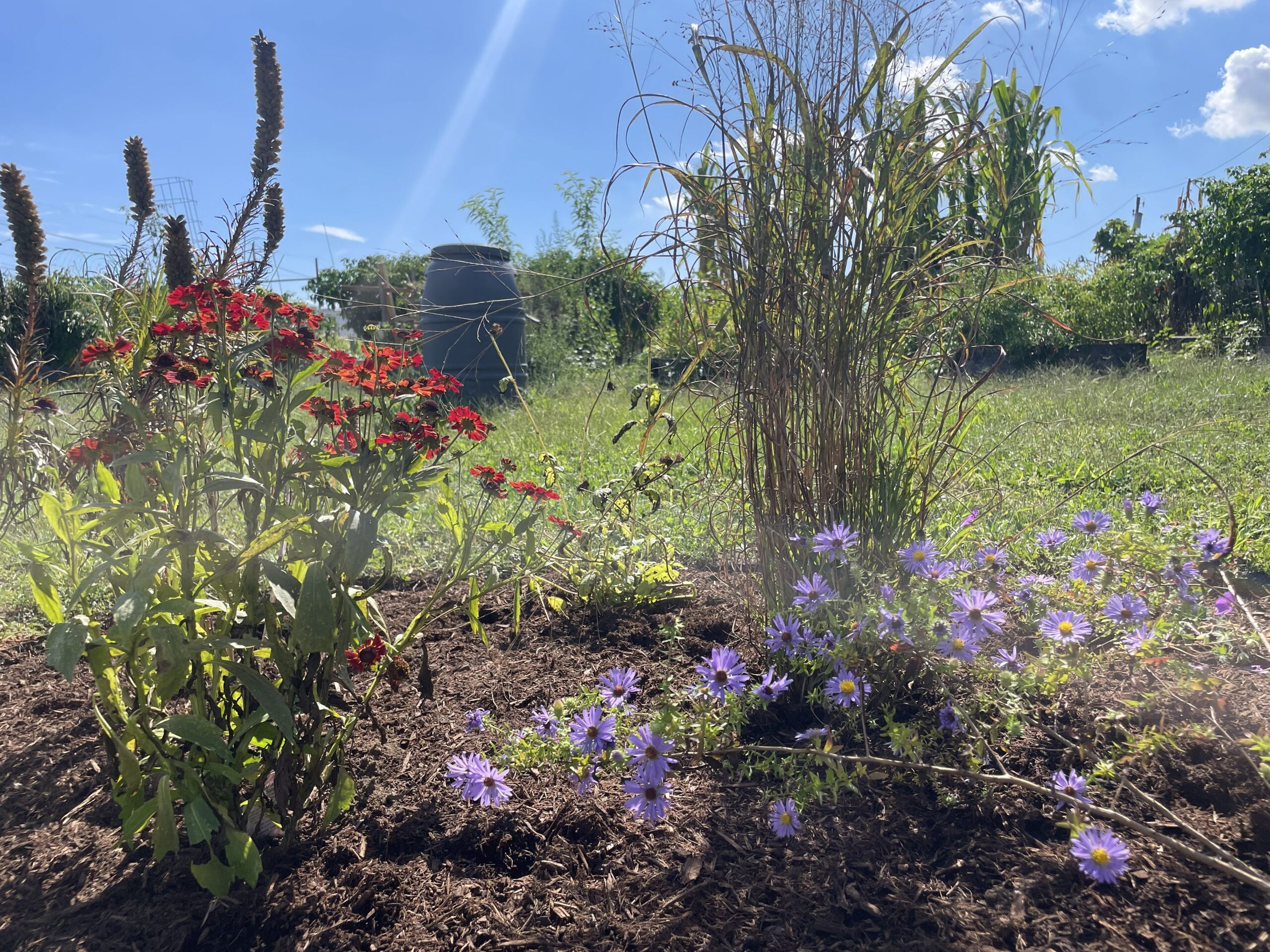
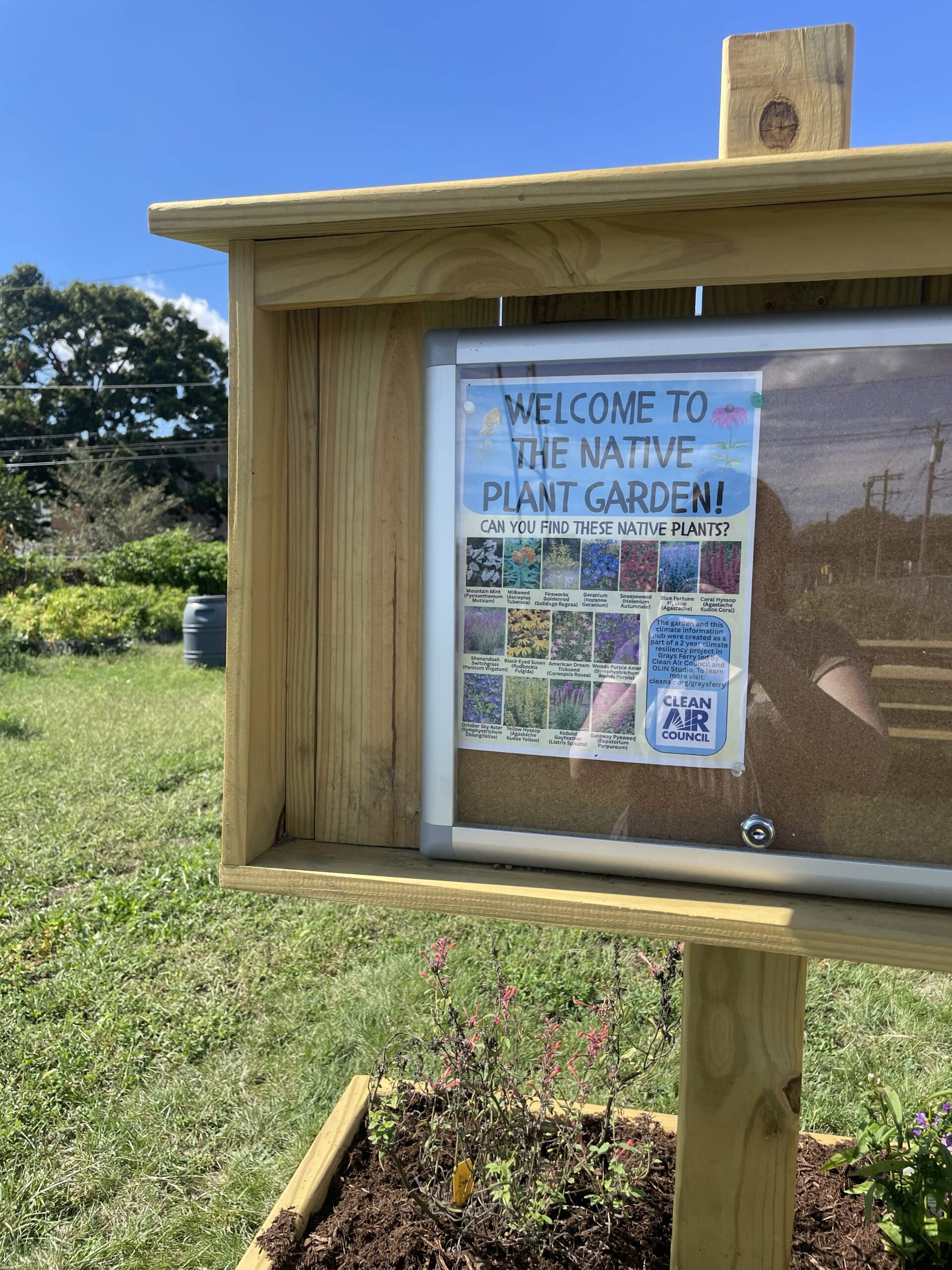
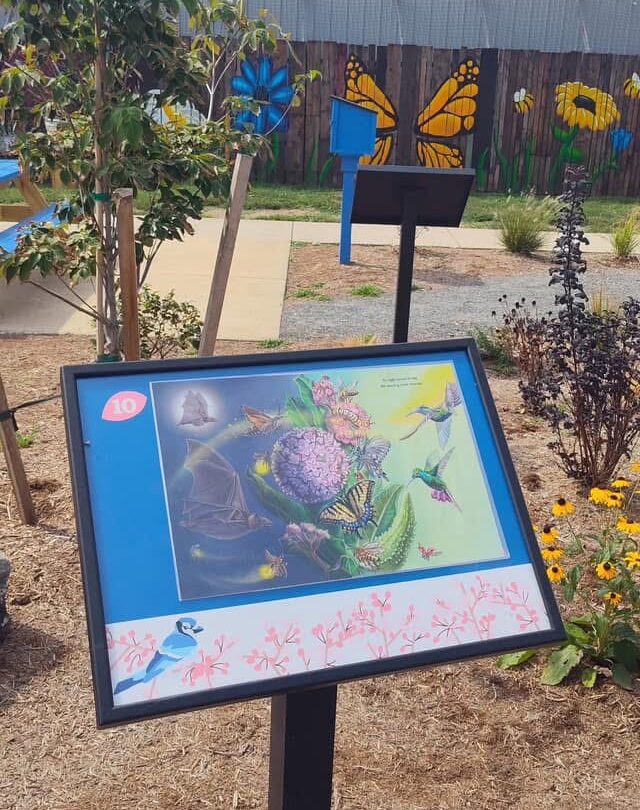
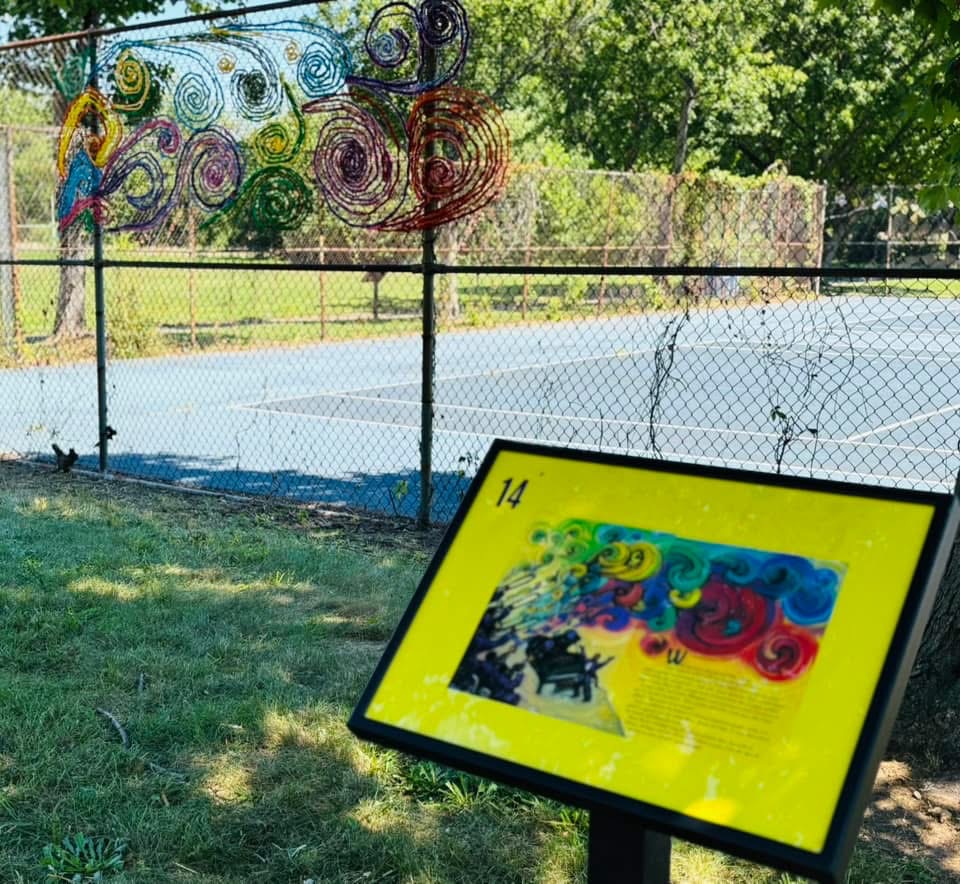
In South Philadelphia, the Council worked with the Church of the Redeemer Baptist’s Growing Together Community Garden to expand the existing native pollinator garden and create a gathering space for gardeners of the site’s over 200 plots. This included the installation of new picnic tables with shade umbrellas as well as several park benches. The creation of a community gathering space in the garden will support residents to further develop this local greenspace, which helps to cool the neighborhood and build community cohesion.
In addition to the pollinator garden and seating areas, Council staff worked with Philly Thrive’s Mutual Aid circle and the Tasker-Morris Neighborhood Association to create a climate guide of the Grays Ferry neighborhood that shows pollution sources as well neighborhood resources. The guide is featured in a custom made climate information station in the garden, which features a planter box as well as a space to distribute community flyers and pamphlets.
In Southwest Philadelphia’s Eastwick neighborhood, Council staff worked with Eastwick United, Eastwick Friends and Neighbors, and the Eastwick Recreation Center to place three additional climate information stations around Eastwick. These climate hubs (which are also public planters) inform residents about neighborhood meetings on local flood risks, illegal dumping, and other environmental health and climate issues. Council staff also worked with these organizations on a detailed climate guide of Eastwick that includes nearby environmental hazards as well as many local assets.
Clean Air Council will continue sharing the key findings and recommendations of the Climate Resilient Communities report with local decision makers, and will continue to work with local leaders to expand access to safe public amenities like parks and greenspaces while encouraging responsible development along local riverfronts. For more information please contact Advocate Russell Zerbo at rzerbo@cleanair.org, Philadelphia Organizer Jendaiya Hill at jhill@cleanair.org, or Delco Outreach Coordinator Alyssa Felix-Arreola at afa@cleanair.org
This Climate Resilient Communities project was made possible through a grant from the William Penn Foundation.
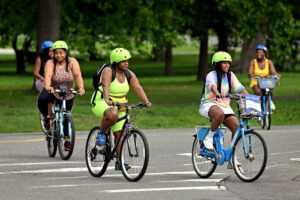
Black Girl Joy Ride, a proud mini-grant recipient from the Cobbs Creek Watershed Coalition, is more than just a bike ride—it’s a powerful movement rooted in community, empowerment, and outdoor exploration. Led by the inspiring Iresha Picot, this initiative aims to foster connection, promote wellness, and encourage the use of the Cobbs Creek Trail, one of Philadelphia’s most scenic urban greenways.
The inaugural ride and bike maintenance workshop took place on August 9th and brought together a vibrant group of riders for a day of education, exploration, and joy. Participants learned basic bike maintenance skills thanks to a hands-on workshop provided by Mittens Pop-Up Bike Shop, ensuring everyone felt safe and confident on the trail.
Following the workshop, riders took to the Cobbs Creek Trail, discovering the beauty and accessibility of this neighborhood gem while building meaningful connections with one another. Black Girl Joy Ride is open to all who support its mission and especially uplifts Black women and girls in reclaiming outdoor spaces for recreation, healing, and joy.
But the journey doesn’t stop here! Three more rides and workshops are planned for this fall, offering additional opportunities for the community to get involved. Whether you’re a seasoned cyclist or just getting started, these upcoming events will continue to offer free bike safety education, trail exploration, and unforgettable community experiences.
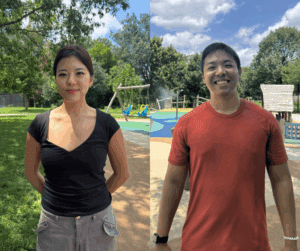
By Teresa Hong and Alexander Chong – Clean Air Council Bridging the Gap Drexel University Interns
Environmental justice is undeniably an important social determinant of health. As medical students, we recognize that where people live and the resources they can access have a direct impact on their physical and mental well-being. To better understand how these factors play out in the community we serve, we spent a summer working with the Clean Air Council, focusing on an often overlooked resource in Philadelphia: trails.
Our project centered on supporting trail longevity using a new mobile app called the Trail Maintenance Toolkit (TMT). This app, developed by the Pennsylvania Environmental Council, allows users to document, assess, and geolocate trail infrastructure, from benches and lighting to drainage features and debris. Our focus was the Cobbs Creek Trail, an area that is both underserved and historically underfunded. Trails like Cobbs Creek are more than recreational paths; they’re vital community assets. Everyone deserves access to safe, well-maintained green space. In fact, access to green space has been linked to lower rates of diabetes, heart disease, and even premature death. These are chronic conditions that disproportionately affect Philadelphians. In this way, trails like Cobbs Creek can serve as preventative medicine, especially in neighborhoods with limited health resources.
At first, the work of documenting the trail was a bit daunting. We were unfamiliar with terms like inlets, which direct water off the path, and bollards, which block unauthorized vehicles from entering pedestrian areas. We had never walked the full trail before, and we weren’t sure what to expect. But the app quickly proved to be intuitive and well-organized. Using geolocation, we could drop points of interest directly onto the trail map and categorize them by type and condition.
The main categories for points of interest include:
| Trail surface | Trail amenities | Drainage features | Debris | Trail support |
| Trail structure | Signage | Vegetation Management | Environmental concerns | Trail crossings |
Each category is color-coded and can be broken down into subcategories. For example, “Trail amenities” includes:
| Benches | Litter receptacles | Bike racks | Bike repair stations | Lighting |
| Picnic tables | Other seating | Drinking fountains | Bollards | Other |
Each point also includes notes, condition ratings, photos, and the suspected source of any damage. You can also attach files or add more detailed descriptions. The webinar has a good breakdown for categorizing the condition of assets.
One thing we quickly learned was that it’s easy to overlook features when you’re not actively looking. Early on, we only recorded things that were broken or needed repair. But we realized that documenting well-maintained structures—bike racks, benches, light poles—was just as important. A full picture of trail health includes the good as well as the bad. We aimed for full completion, hoping to record every visible trail detail, no matter how small. It became both a learning process and a deeply rewarding one.
The TMT helped us see the trail differently. We began to notice swales, which are shallow, vegetated channels that manage water flow, and subtle erosion on the trail surface. We spotted features like signage and drainage systems that had gone unnoticed before. What once felt like a walk in the park became a meaningful exploration of urban infrastructure, public health, and community investment.
By the end of the project, we were proud of what we had contributed. Our documentation will inform real maintenance and improvement efforts, helping ensure Cobbs Creek Trail remains safe and accessible for years to come. But beyond that, the experience gave us a deeper appreciation for how environmental justice intersects with healthcare. The Trail Maintenance Toolkit has real potential to create positive change in the Cobbs Creek community, and we are proud to have played a part in that process.
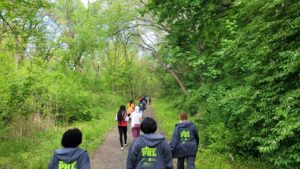
PHILADELPHIA, PA (July 19, 2024) Today, Clean Air Council announced a round of mini-grant funding for Cobbs Creek area community groups. The Council is offering $1,000 and $2,000 dollar grants for civic groups, educators, and organizations to grow or offer new programming and activities that increase community engagement in Cobbs Creek Watershed. Activities can include but are not limited to learning opportunities, events, stewardship, workshops, and beautification efforts.
“Mini-grant funding offers organizations and neighbors the opportunity to grow and create new connections to Cobbs Creek Watershed in ways they are interested in interacting with the natural environment, said Will Fraser, Clean Air Council Transportation Project Manager”
Clean Air Council’s Cobbs Creek Watershed Mini-grant Program is focused on supporting projects and local organizations that connect residents and neighbors to green space and water resources. Growing neighbors’ relationship with their surrounding natural environment can contribute to increased mental, physical, and emotional wellbeing, while creating stronger bonds to their watershed. Mini-grant funding is made possible by generous funding support from the National Fish and Wildlife Foundation and the US Fish and Wildlife Service.
Clean Air Council is available to meet and discuss proposals before July 24th, 2024 including questions about activities/programming, budget, and location of projects. Contact cobbscreek@cleanair.org to schedule a date and time to meet. All applications are due by Wednesday, July 31st at midnight. Interested applicants can submit an application at shorturl.at/gi2Kx or by emailing the completed questions in the RFP to cobbscreek@cleanair.org.
